No. 46
Pompeii

- Where
- Italy
- Built by
- Romans
- Era
- 600s BCE-79 CE
- Known for
- A Roman city frozen on a single day.
- How it ended
- Buried by Vesuvius in 79 CE.

Lyra Kael can take you here on the globe, tell you the story out loud and answer your questions. Start the time jump.
Background
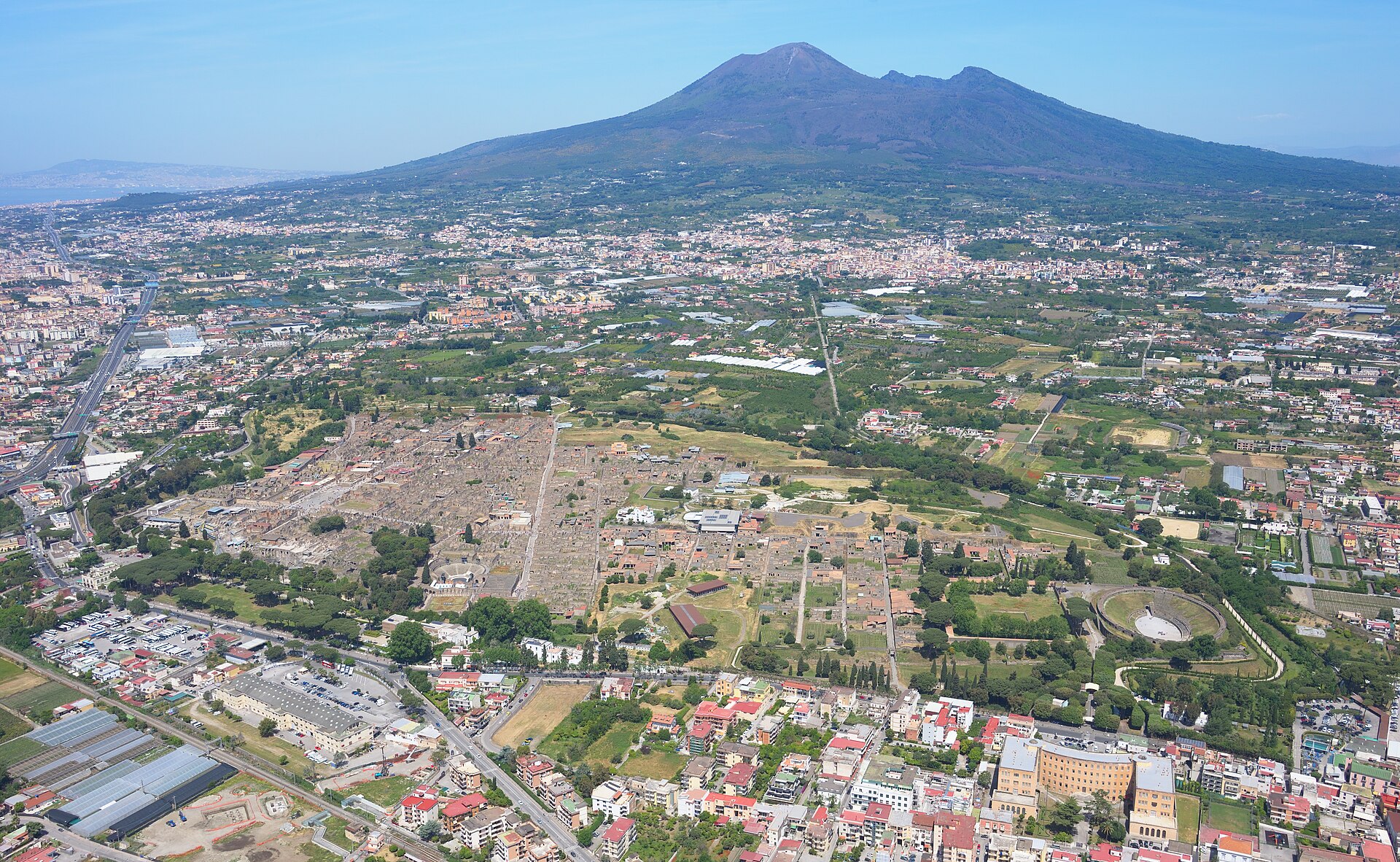
Pompeii ( ; Latin: [pɔmˈpei̯.iː]) was a city in what is now the municipality of Pompei, near Naples, in the Campania region of Italy. Along with Herculaneum, Stabiae, and many surrounding villas, it was buried under 4 to 6 m (13 to 20 ft) of volcanic ash and pumice in the eruption of Mount Vesuvius in 79 AD.
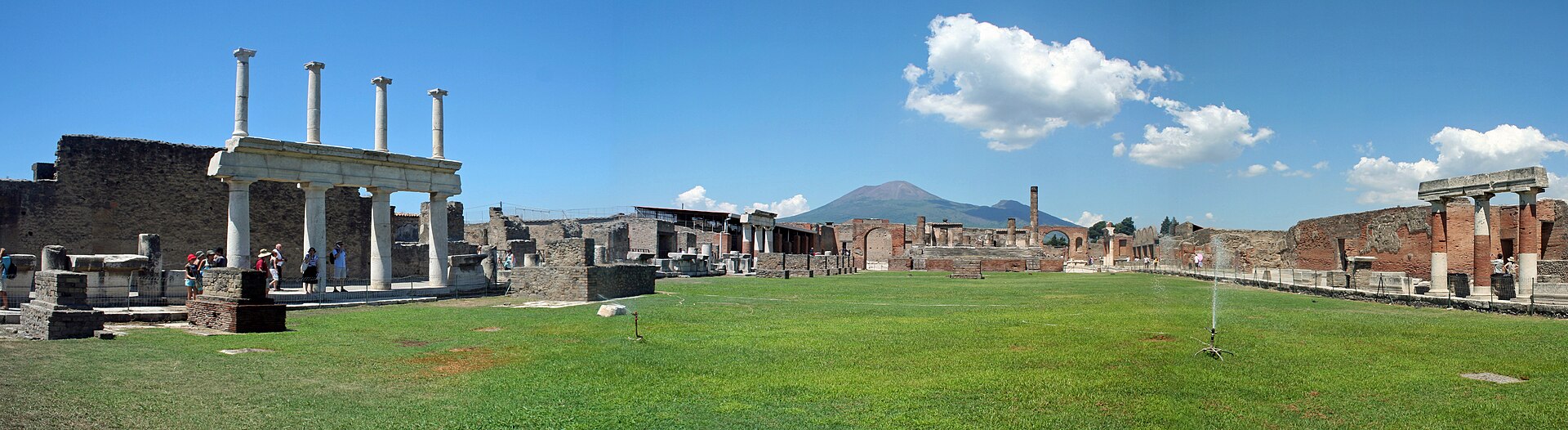
Largely preserved under the ash, Pompeii offers a snapshot of Roman life, frozen at the moment it was buried, as well as insight into ancient urban planning. It was a wealthy town of 10,000 to 20,000 residents at the time it was destroyed. It hosted many fine public buildings and luxurious private houses with lavish decorations, furnishings and artworks, which were the main attractions for early excavators; subsequent excavations have found hundreds of private homes and businesses reflecting various architectural styles and social classes, as well as numerous public buildings. Organic remains, including wooden objects and human bodies, were interred in the ash; their decay allowed archaeologists to create moulds of figures in their final moments of life. The numerous graffiti carved on outside walls and inside rooms provide a wealth of examples of the largely lost Vulgar Latin spoken colloquially at the time, contrasting with the formal language of classical writers.
Pompeii remained largely undisturbed until its rediscovery in the late 16th century. Major excavations did not begin until the mid-18th century, which marked the emergence of modern archaeology. Initial efforts to unearth the city were haphazard or marred by looting, resulting in many items or sites being damaged or destroyed. By 1960, most of Pompeii had been uncovered but left in decay; further major excavations were banned or limited to targeted, prioritised areas. Since 2018, these efforts have led to new discoveries in some previously unexplored areas of the city.
Pompeii is a UNESCO World Heritage Site, owing to its status as "the only archaeological site in the world that provides a complete picture of an ancient Roman city". It is among the most popular tourist attractions in Italy, with approximately 2.5 million visitors annually.
Text from Wikipedia, licensed CC BY-SA 4.0.