No. 174
Pliny the Elder

- Where
- Rome
- Culture
- Rome
- Lived
- 23-79 CE
- Why they matter
- Wrote an encyclopedia of the natural world.
- Fate
- Died sailing to rescue people from Vesuvius.

Lyra Kael can take you here on the globe, tell you the story out loud and answer your questions. Start the time jump.
Background
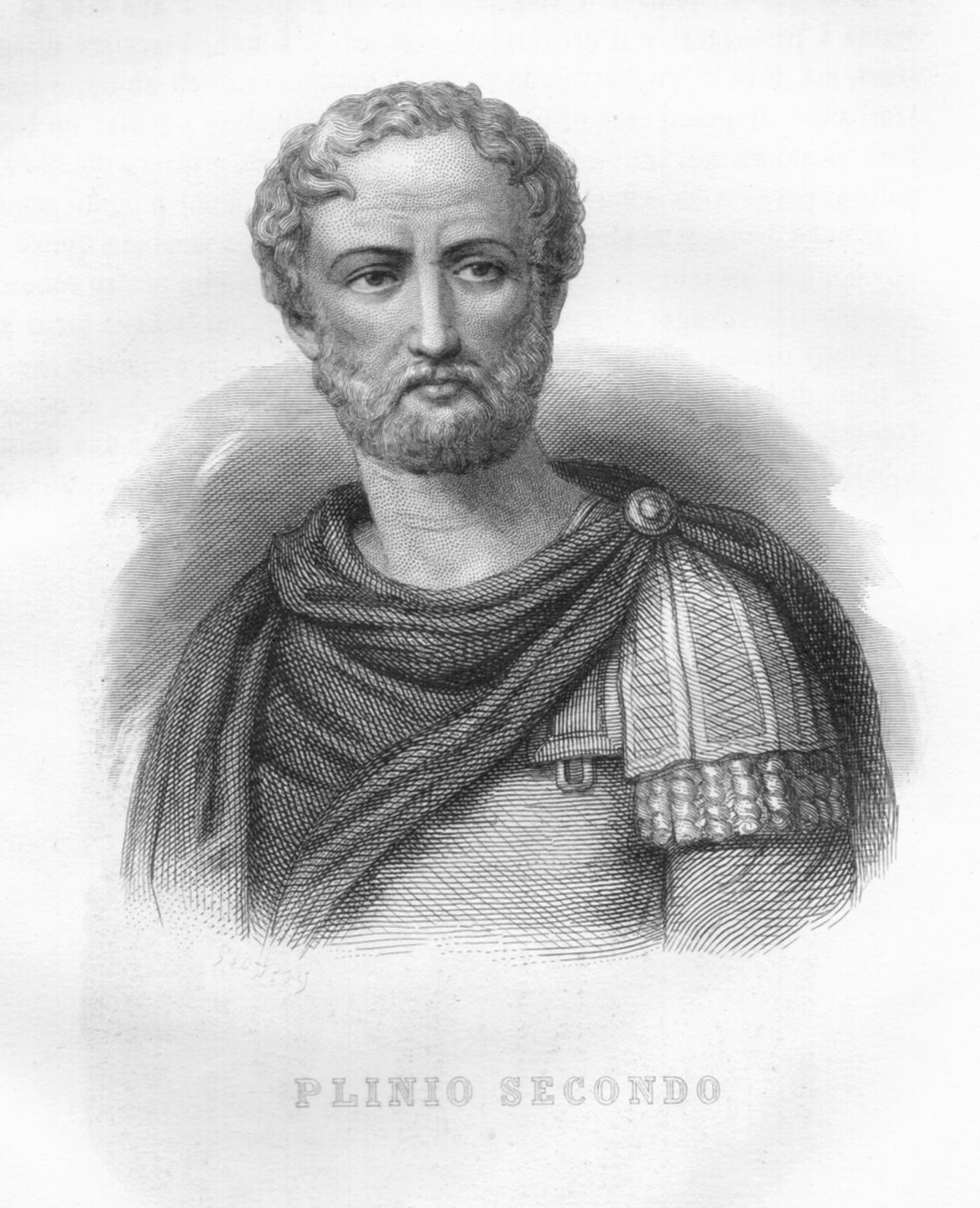
Gaius Plinius Secundus (23 or 24 – 25 August 79), known in English as Pliny the Elder ( PLIN-ee), was a Roman author, naturalist, scientist, naval and army commander of the early Roman Empire, procurator, and friend of Emperor Vespasian. Pliny wrote the encyclopedic Naturalis Historia (Natural History), a thirty-seven-volume work covering a vast array of topics on human knowledge and the natural world, which became an editorial model for encyclopedias. He spent most of his spare time studying, writing, and investigating natural and geographic phenomena in the field.
Pliny produced seven works spanning 102 volumes, of which only Natural History survives. Among the lost works was the twenty-volume Bella Germaniae (Wars of Germania), used as a source by other prominent Roman historians including Plutarch, Tacitus, and Suetonius. Tacitus may have used Bella Germaniae as the primary source for his work, De origine et situ Germanorum (On the Origin and Situation of the Germani). Also substantial was the thirty-one-volume history A fine Aufidii Bassi, which extended Aufidius Bassus' earlier historical work to Pliny's day.
Pliny the Elder died in AD 79 in Stabiae while attempting to rescue people from the eruption of Mount Vesuvius. In his will, Pliny the Elder posthumously adopted his nephew Gaius Plinius Caecilius Secundus, who is known to history as Pliny the Younger.
Text from Wikipedia, licensed CC BY-SA 4.0.