No. 33
Palmyra

- Where
- Syria
- Built by
- Palmyrenes
- Era
- 100 BCE-273 CE peak
- Known for
- The caravan city of Queen Zenobia.
- How it ended
- Crushed by Rome in 273 CE; monuments were blown up in 2015.

Lyra Kael can take you here on the globe, tell you the story out loud and answer your questions. Start the time jump.
Background
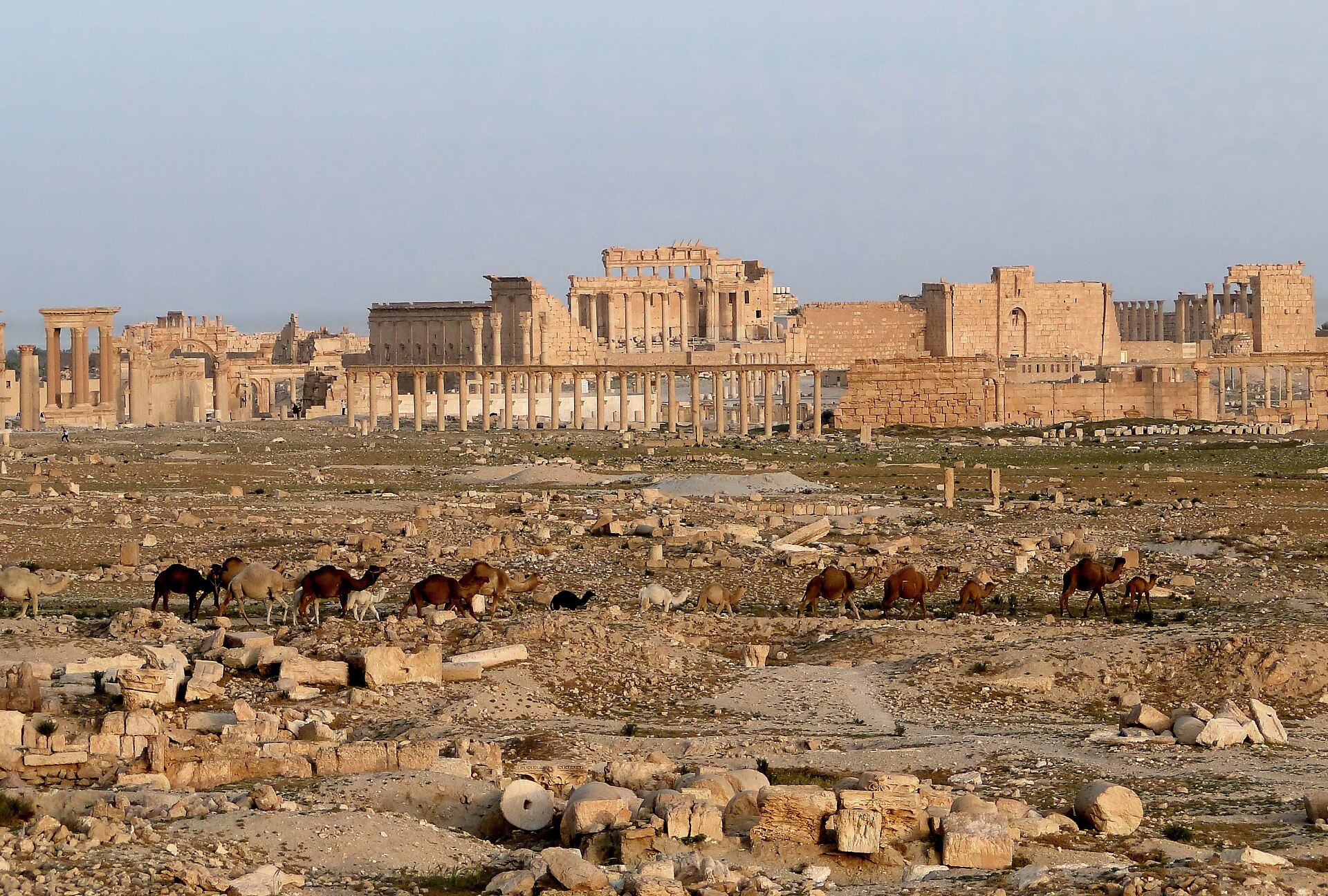
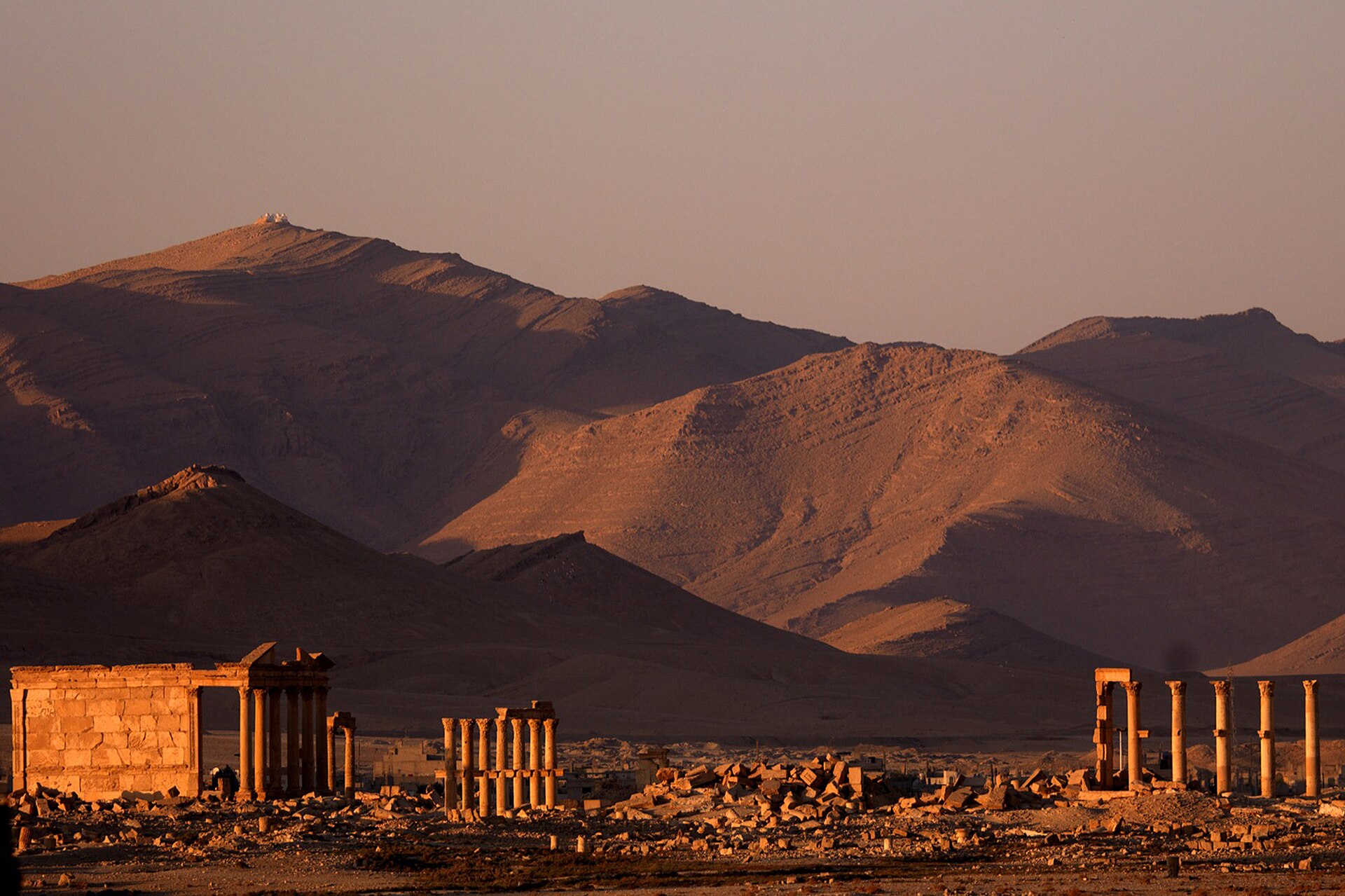
Palmyra is an ancient city in central Syria. It is located in the eastern part of the Levant, and archaeological finds date back to the Neolithic period, and documents first mention the city in the early second millennium BC. Palmyra changed hands on a number of occasions between different empires before becoming a subject of the Roman Empire in the first century AD.
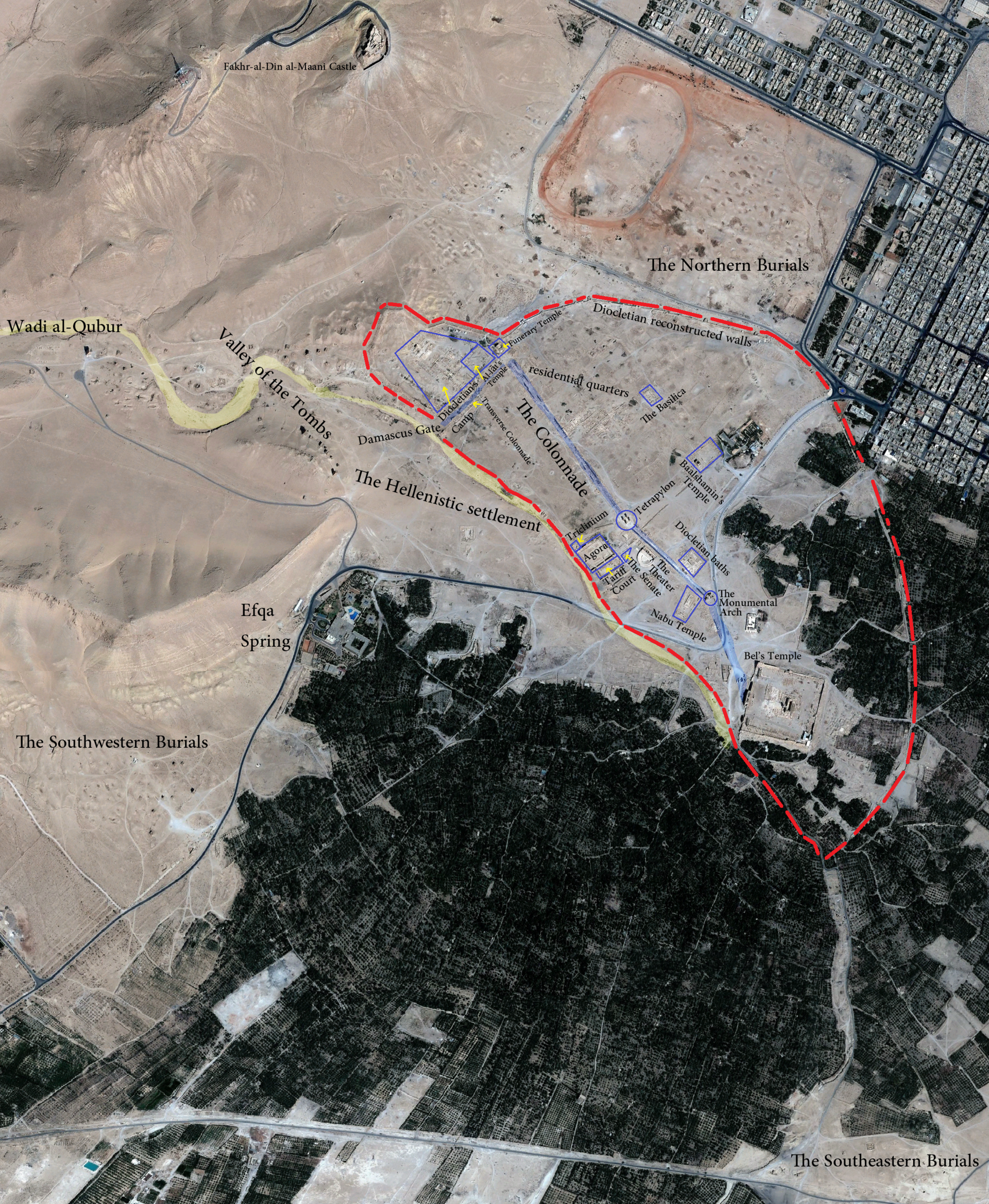
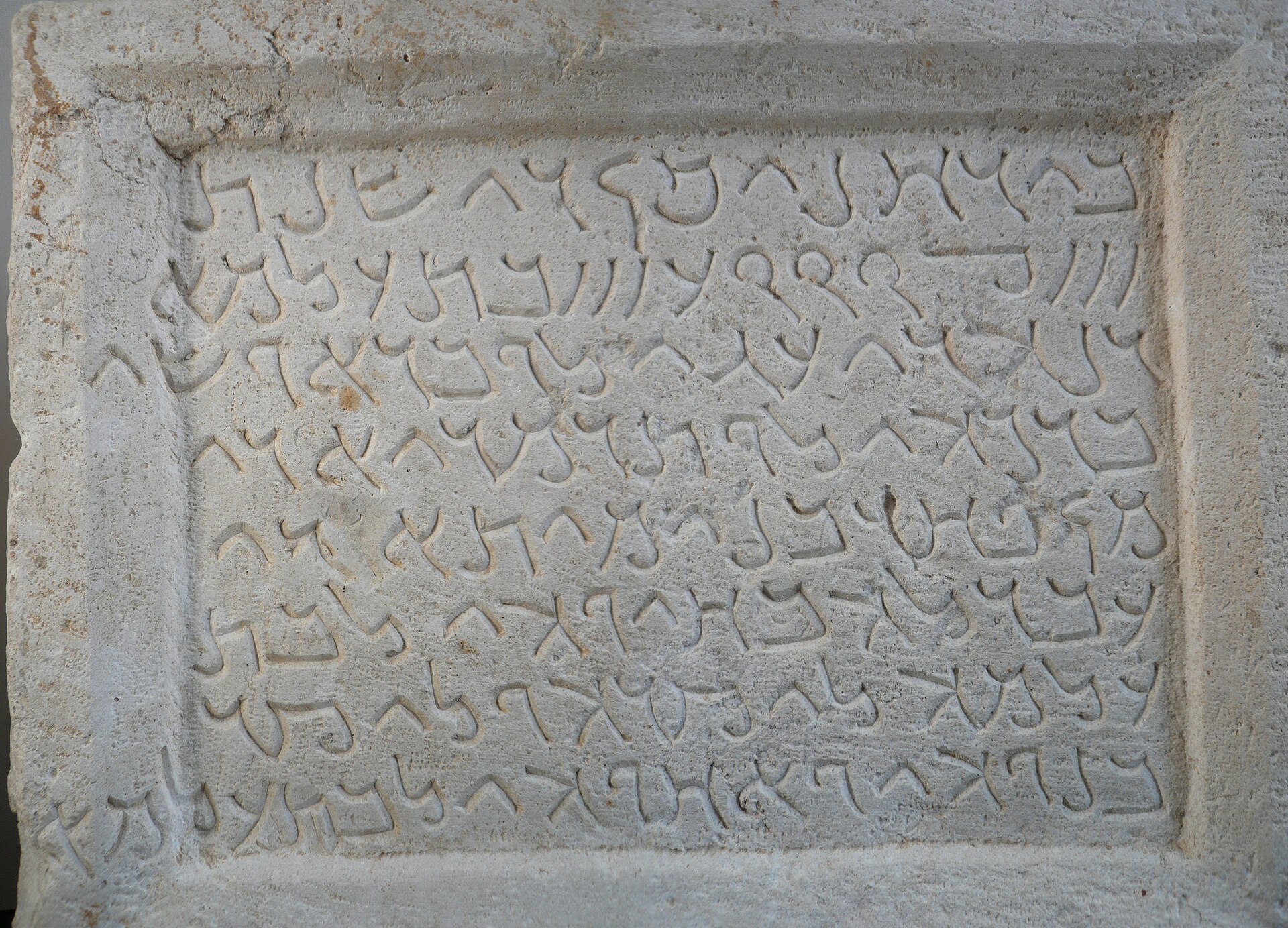
The city grew wealthy from trade caravans; the Palmyrenes became renowned as merchants who established colonies along the Silk Road and operated throughout the Roman Empire. Palmyra's wealth enabled the construction of monumental projects, such as the Great Colonnade, the Temple of Bel, and the distinctive tower tombs. Ethnically, the Palmyrenes combined elements of Amorites, Arameans, and Arabs. Socially structured around kinship and clans, Palmyra's inhabitants spoke Palmyrene Aramaic, a variety of Western Middle Aramaic, while using Koine Greek for commercial and diplomatic purposes. The Hellenistic period of West Asia influenced the culture of Palmyra, which produced distinctive art and architecture that combined different Mediterranean traditions. The city's inhabitants worshiped local Semitic, Mesopotamian, and Arab deities.
By the third century, Palmyra had become a prosperous regional center. It reached the apex of its power in the 260s, when the Palmyrene King Odaenathus defeated the Sasanian emperor Shapur I. The king was succeeded by queen regent Zenobia, who rebelled against Rome and established the Palmyrene Empire. In 273, Roman emperor Aurelian levelled the city, which was later restored by Diocletian at a reduced size. The Palmyrenes converted to Christianity during the fourth century and to Islam in the centuries following the conquest by the seventh-century Rashidun Caliphate, after which the Palmyrene and Greek languages were replaced by Arabic.
Before 273 AD, Palmyra enjoyed autonomy and was attached to the Roman province of Syria, having its political organization influenced by the Greek city-state model during the first two centuries AD. The city became a Roman colonia during the third century, leading to the incorporation of Roman governing institutions, before becoming a monarchy in 260. Following its razing in 273, Palmyra became a minor center under the Byzantines and later empires. Its destruction by the Timurids in 1400 reduced it to a small village. Under French Mand
Text from Wikipedia, licensed CC BY-SA 4.0.