No. 145
Nefertiti

- Where
- Egypt
- Culture
- Egypt
- Lived
- 1370-1330 BCE
- Why they matter
- Queen and possible co-ruler; her painted bust is world famous.
- Fate
- She vanishes from the record and her tomb is unknown.

Lyra Kael can take you here on the globe, tell you the story out loud and answer your questions. Start the time jump.
Background
Nefertiti (; c. 1370 – c. 1330 BC) was a queen of the 18th Dynasty of Ancient Egypt, the great royal wife of Pharaoh Akhenaten. Nefertiti and her husband were known for their radical overhaul of state religious policy, in which they promoted an exclusivist and possibly even monotheistic religion, Atenism, centred on the sun disc and its direct connection to the royal household. With her husband, she reigned at what was arguably the wealthiest period of ancient Egyptian history.
After her husband's death, some scholars believe that Nefertiti ruled briefly as the female pharaoh known by the throne name Neferneferuaten just before the ascension of Tutankhamun. This identification is a matter of ongoing debate. If Nefertiti did rule as pharaoh, her reign was marked by the fall of Amarna and the relocation of the capital back to the traditional city of Memphis after her death.
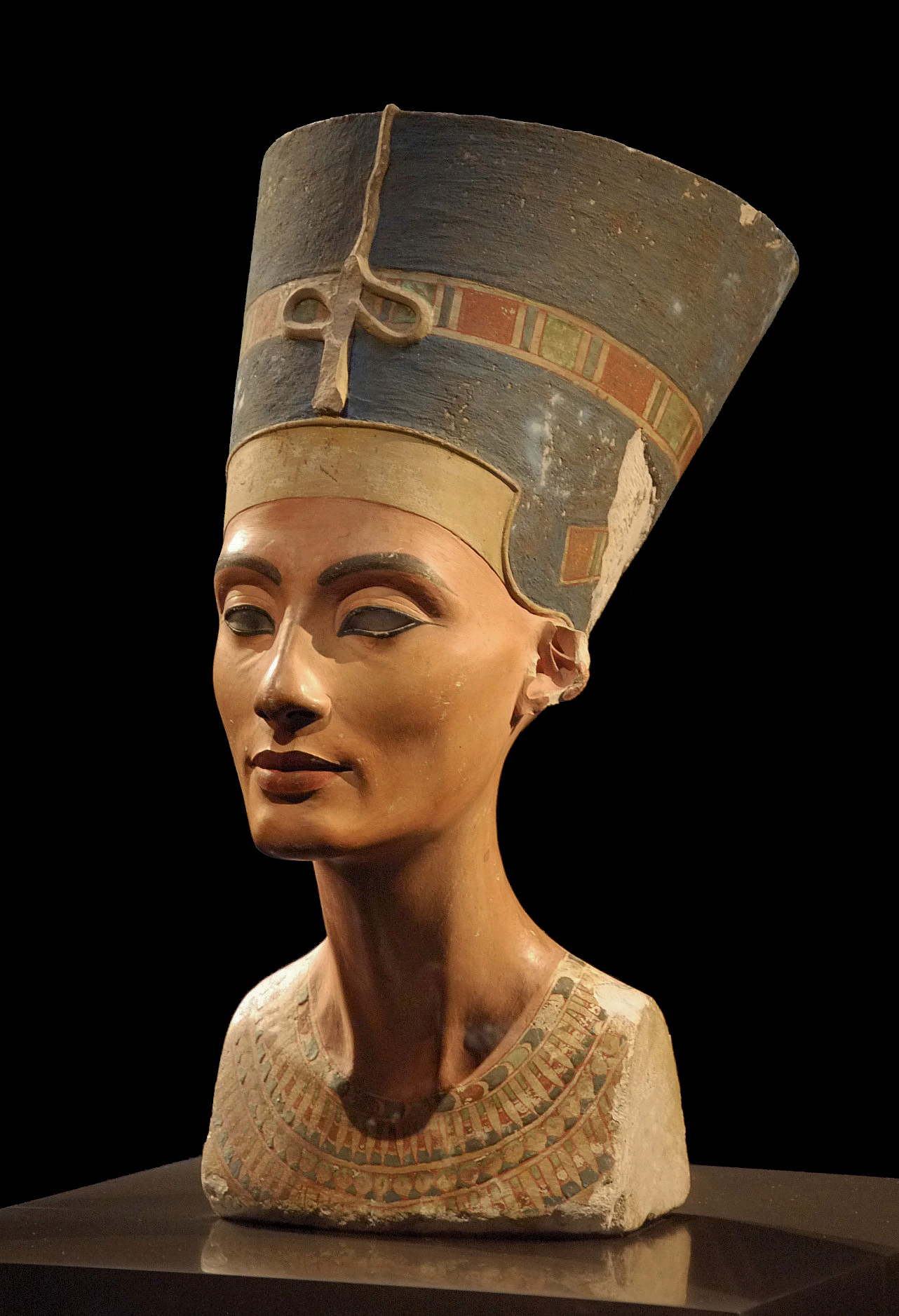
In the 20th century, Nefertiti was made famous by the discovery and display of her ancient bust, now in Berlin's Neues Museum. The bust is one of the most copied works of the art of ancient Egypt. It is attributed to the Egyptian sculptor Thutmose, and was excavated from his buried studio complex in the early 20th century.
Text from Wikipedia, licensed CC BY-SA 4.0.