No. 6
Amarna

- Where
- Egypt
- Built by
- Akhenaten
- Era
- 1346 BCE
- Known for
- Capital of Egypt's one-god sun religion.
- How it ended
- Abandoned within about 20 years of Akhenaten's death; his name was erased.

Lyra Kael can take you here on the globe, tell you the story out loud and answer your questions. Start the time jump.
Background
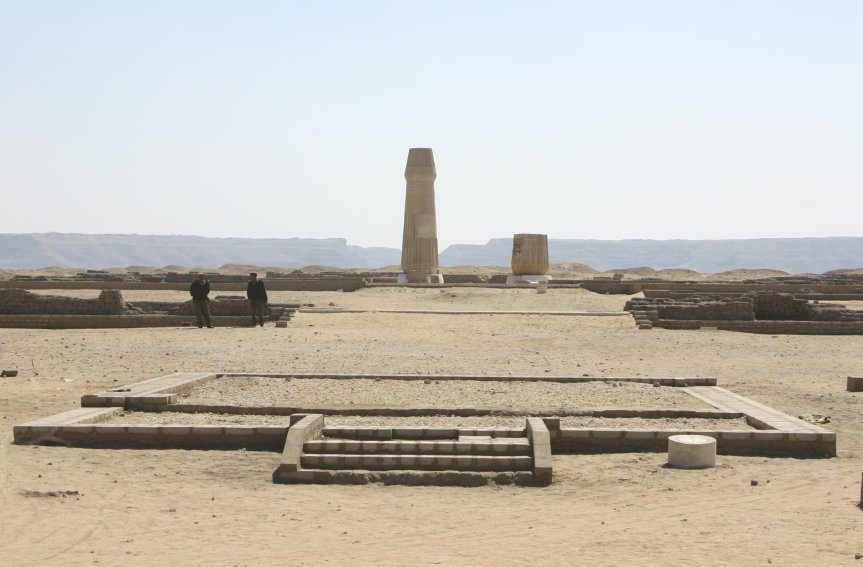
Amarna (; Arabic: العمارنة, romanized: al-ʿAmārna) is an extensive ancient Egyptian archaeological site containing the ruins of Akhetaten (Ancient Egyptian: 𓈌𓏏𓉐𓇋𓏏𓈖𓇳, romanized: ꜣḫt-jtn), the capital city during the late Eighteenth Dynasty. The city was established in 1346 BC, built at the direction of the Pharaoh Akhenaten, and abandoned shortly after his death in 1332 BC.
The site is on the east bank of the Nile River, in what today is the Egyptian province of Minya. It is about 58 km (36 mi) south of the city of al-Minya, 312 km (194 mi) south of the Egyptian capital, Cairo, and 402 km (250 mi) north of Luxor (site of the previous capital, Thebes). The city of Deir Mawas lies directly to its west. On the east side of Amarna there are several modern villages, the chief of which are l-Till in the north and el-Hagg Qandil in the south.
Activity in the region flourished from the Amarna Period until the later Roman era.
Text from Wikipedia, licensed CC BY-SA 4.0.