The story
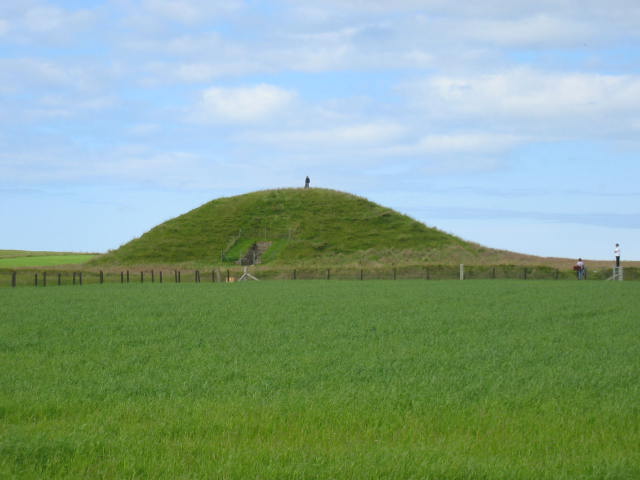
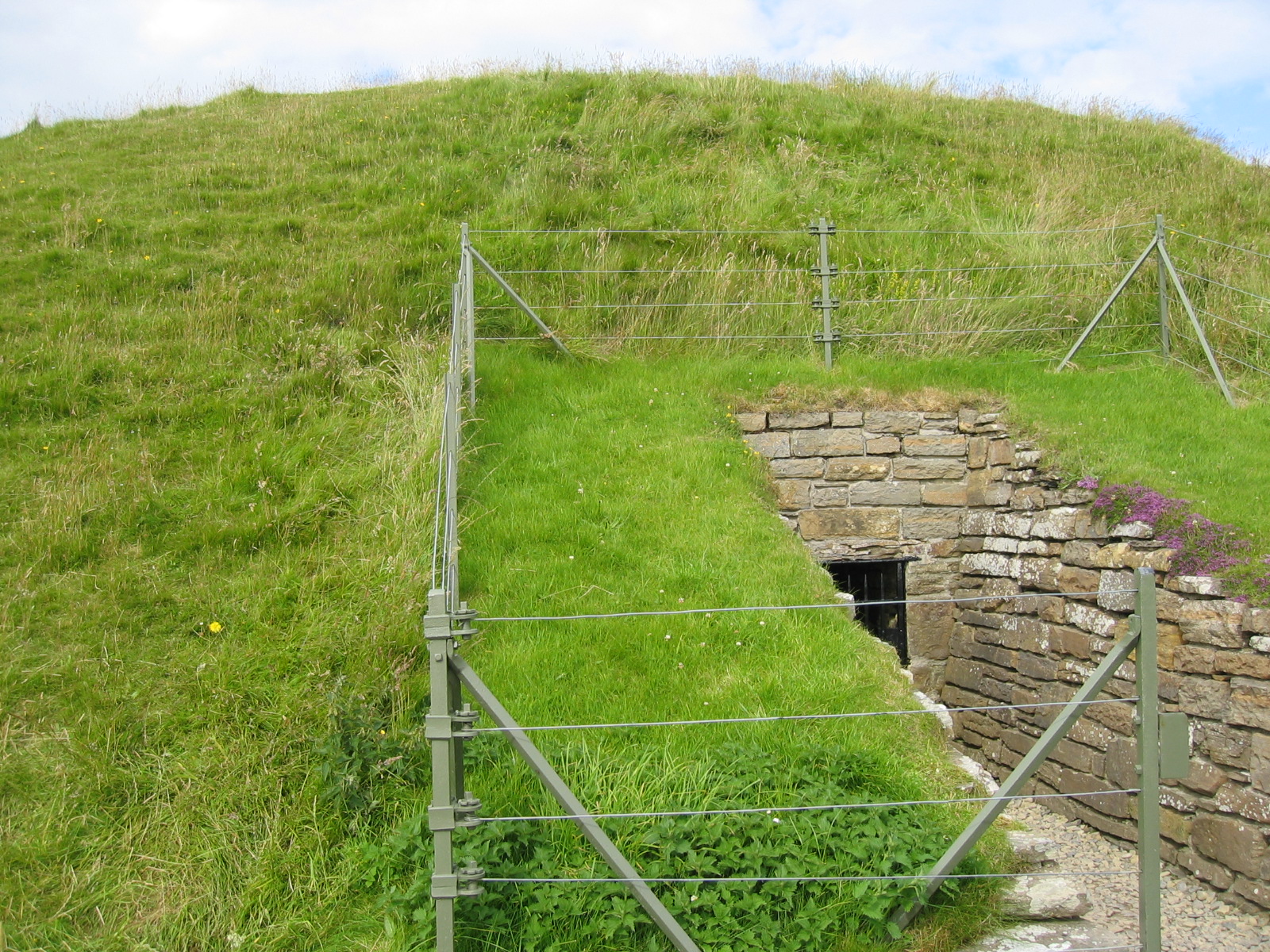
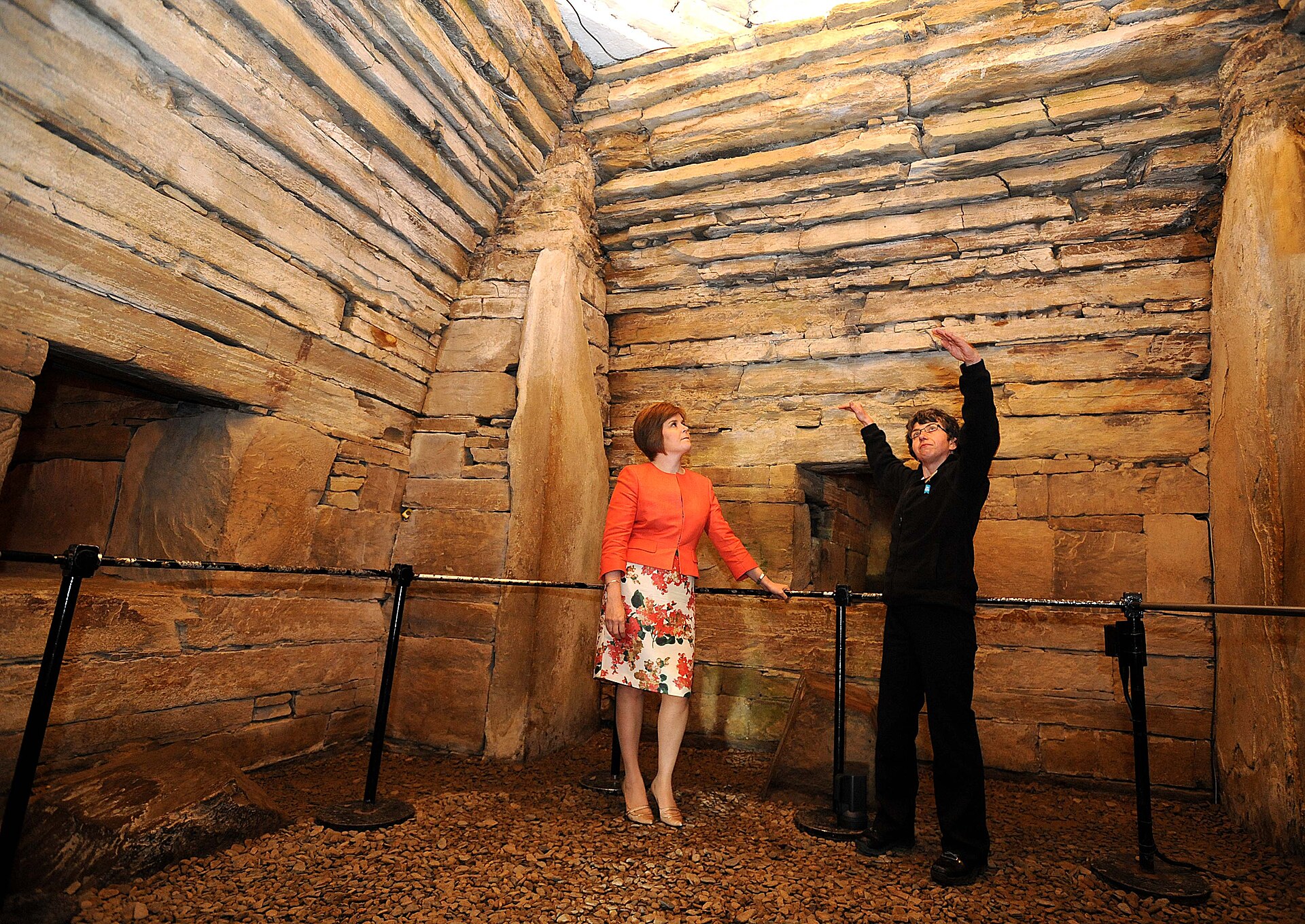
About 5,000 years ago, Neolithic farmers on Orkney built Maeshowe, one of the finest stone tombs in Europe. They stacked flat stone slabs into a square chamber with a tall corbelled roof, then covered it with a mound of earth.
The passage faces southwest. Around the shortest day of the year, the setting sun shines down the passage and lights up the back of the chamber. The builders must have watched the sky carefully to plan this.
About 4,000 years later, Vikings broke into the tomb around 1150 CE. They carved more than 30 runic messages on the walls, some bragging about treasure and some just jokes, plus pictures of a dragon and a walrus.
How it ended
The people who built Maeshowe slowly changed their ways of life over the Bronze Age, and the tomb was no longer used. Vikings broke in centuries later, and any treasure is long gone.
What life was like
Neolithic Orkney farmers grew barley, raised cattle and sheep, and fished. They lived in stone villages like nearby Skara Brae. Building Maeshowe took a huge group effort, cutting and hauling stones and piling earth. Ceremonies at the nearby Ring of Brodgar and Stones of Stenness show how important the sun and seasons were.
Wow facts
- Vikings carved more than 30 runic messages inside, one of the largest collections anywhere.
- One Viking carving shows a dragon or lion with a curly tail.
- Each winter, the sunset lights up the back wall for a few weeks around the solstice.
Photos
 Unknown author, Public domain
 Scottish Government Summer Cabinet in Orkney. People across the globe will now be able... Scottish Government, CC BY 2.0
Relics and treasures
- The chamberthe square stone room with its tall roof, still at the site
- Viking runescarved messages from around 1150 CE, on the chamber walls
- Maeshowe dragona carved animal figure, on the chamber wall
- Blocking stonethe stone that once sealed the entrance, at the site
How we know
James Farrer opened the mound in 1861 and recorded the runes. Experts translated the Viking messages. Radiocarbon dating of nearby material shows when the tomb was built.
What you would see today
Visitors take guided tours, crouch through the passage, and read the Viking runes by flashlight. In winter, a live camera shows the solstice sunlight online. Nearby are the Ring of Brodgar and Skara Brae.
For teachers and classrooms
Suggested level: grades 3-5. Print this page as a lesson sheet with the story, vocabulary, discussion questions and a quiz with an answer key.
Key words
- runes
- letters of the old Norse and Germanic alphabets
- chambered tomb
- a stone burial room inside a mound
- corbelled roof
- a roof built by stacking stones that slowly lean inward
Talk about it
- Why might ancient people care so much about the shortest day of the year?
- What would you carve on a wall for people 1,000 years from now to read?
Try this activity
- Draw a map of Maeshowe as it looked at its busiest, and label three things people did there.
- Find Maeshowe on the Ruinscape timeline, then pick another place from the same century and compare them.
- Use one link in Sources below to find a real object from this place. Describe what it is made of and what it tells us.
Quick quiz
What lights up Maeshowe in winter?
- The setting sun
- A fire
- Lightning
- Moonlight only
Show the answer
A. Around the winter solstice, sunset shines down the passage.
Who carved runes in Maeshowe?
- Vikings
- Romans
- Egyptians
- Aztecs
Show the answer
A. Vikings broke in around 1150 CE and carved messages.
Where is Maeshowe?
- Orkney, Scotland
- Egypt
- Peru
- Japan
Show the answer
A. It is on the Orkney Islands off northern Scotland.
Sources and further reading
Ruinscape lessons are written for students and checked against encyclopedia and museum records. Go to the sources: these links search real museum collections, the UNESCO list and research by archaeologists.
- Wikipedia articleEncyclopedia overview with its own references
- UNESCO World HeritageOfficial listing, if the site is protected
- Google Arts & CultureMuseum exhibits, virtual tours and close-up photos
- British Museum collectionReal objects, photos and catalog notes
- The Met collectionObjects and essays from the Metropolitan Museum of Art
- Smithsonian collectionsU.S. national museum records
- 3D models on SketchfabScans of sites and artifacts (check each license)
- Scholarly articlesResearch papers by archaeologists and historians
Read the full background
Maeshowe (or Maes Howe; Old Norse: Orkahaugr) is a Neolithic chambered cairn and passage grave situated on Mainland Orkney, Scotland. It was probably built around 2800 BC. In the archaeology of Scotland, it gives its name to the Maeshowe type of chambered cairn, which is limited to Orkney.
Maeshowe is a significant example of Neolithic craftsmanship and is, in the words of the archaeologist Stuart Piggott, "a superlative monument that by its originality of execution is lifted out of its class into a unique position". Maeshowe is designated a scheduled monument and part of the "Heart of Neolithic Orkney", a group of sites including Skara Brae designated a UNESCO World Heritage Site in 1999.
Background text from Wikipedia, available under CC BY-SA 4.0.
Last updated: October 2026. How we make Ruinscape.