The story
Abydos is one of the oldest holy places in Egypt. More than 5,000 years ago, Egypt's very first kings were buried here, before anyone built a pyramid. Later, Egyptians came to believe that the god Osiris was buried at Abydos, so it became the most sacred place in the land to be remembered after death.
Every year, people came for a big festival that acted out the story of Osiris. Many families set up small stone markers called stelae here so their loved ones could join in forever, even if they were buried far away.
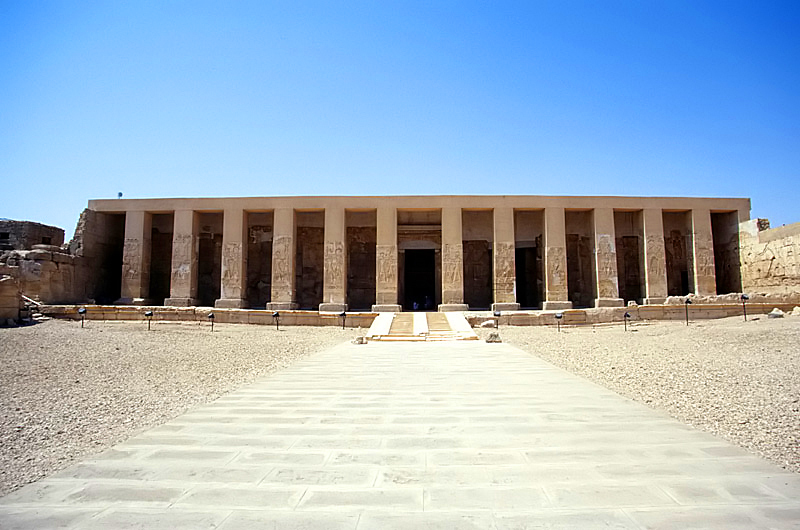
Around 1290 BCE, Pharaoh Seti I built a beautiful temple here, and his son Ramesses II finished it. Inside is the famous King List, a carved row of 76 royal names. It helped modern historians put Egypt's rulers in order. Abydos stayed holy for thousands of years, until the old religion faded under Roman and Christian rule.
How it ended
Abydos was never wiped out in one disaster. As Egypt came under Roman rule and later became Christian, temples to the old gods closed. Sand drifted in, people moved away, and the great temples sat quietly until archaeologists cleared them.
What life was like
Priests at Abydos kept the temples clean, burned incense, and cared for statues of the gods every day. During festivals, crowds of pilgrims sang, carried a boat-shaped shrine of Osiris, and left gifts of food and pottery. So many clay pots were left at one royal tomb that the area is still called Umm el-Qa'ab, which means Mother of Pots. Craftsmen carved and painted the temple walls in bright colors.
Wow facts
- Scientists found 14 wooden boats buried in the desert at Abydos, about 5,000 years old, some of the oldest planked boats ever found.
- The Seti I temple has some of the finest painted carvings in all of Egypt, and many still show their colors.
- Abydos has a strange underground building called the Osireion, which sometimes fills with water.
Photos
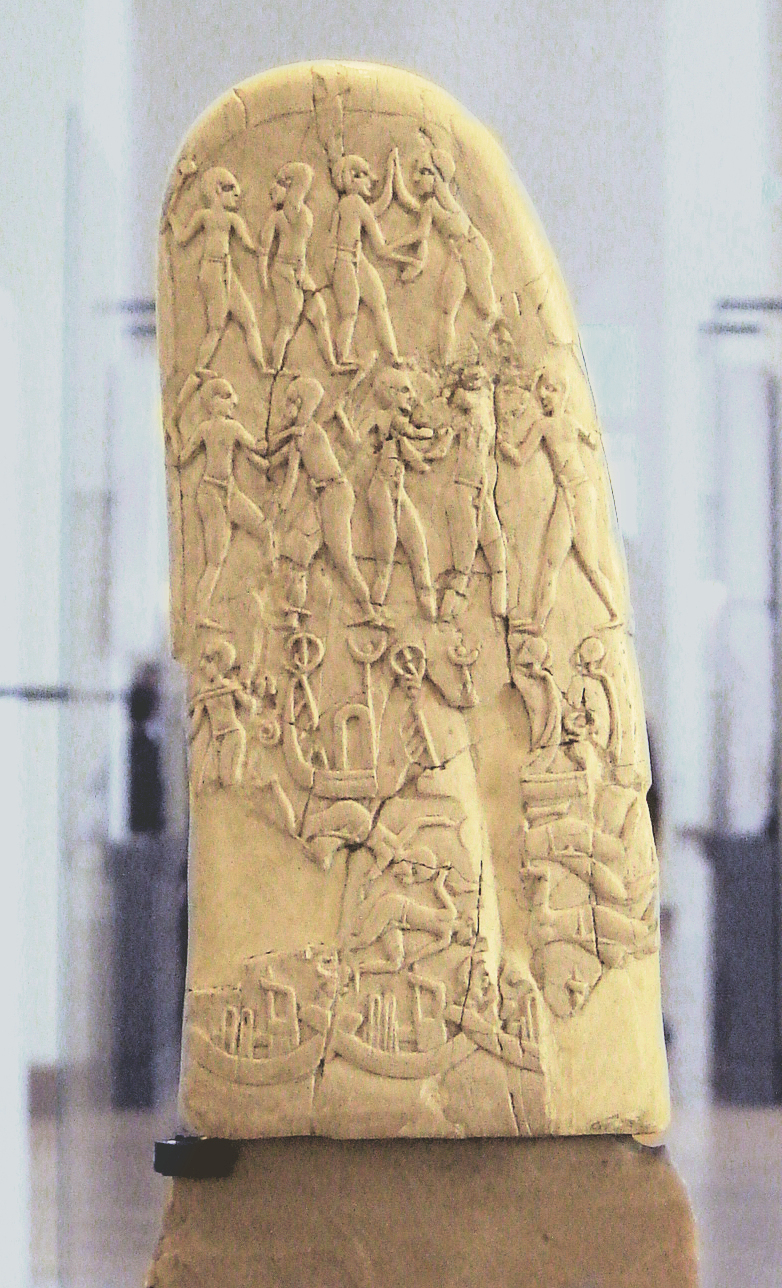 .Gebel el-Arak Knife ivory handle (back) ALFGRN, CC BY-SA 2.0
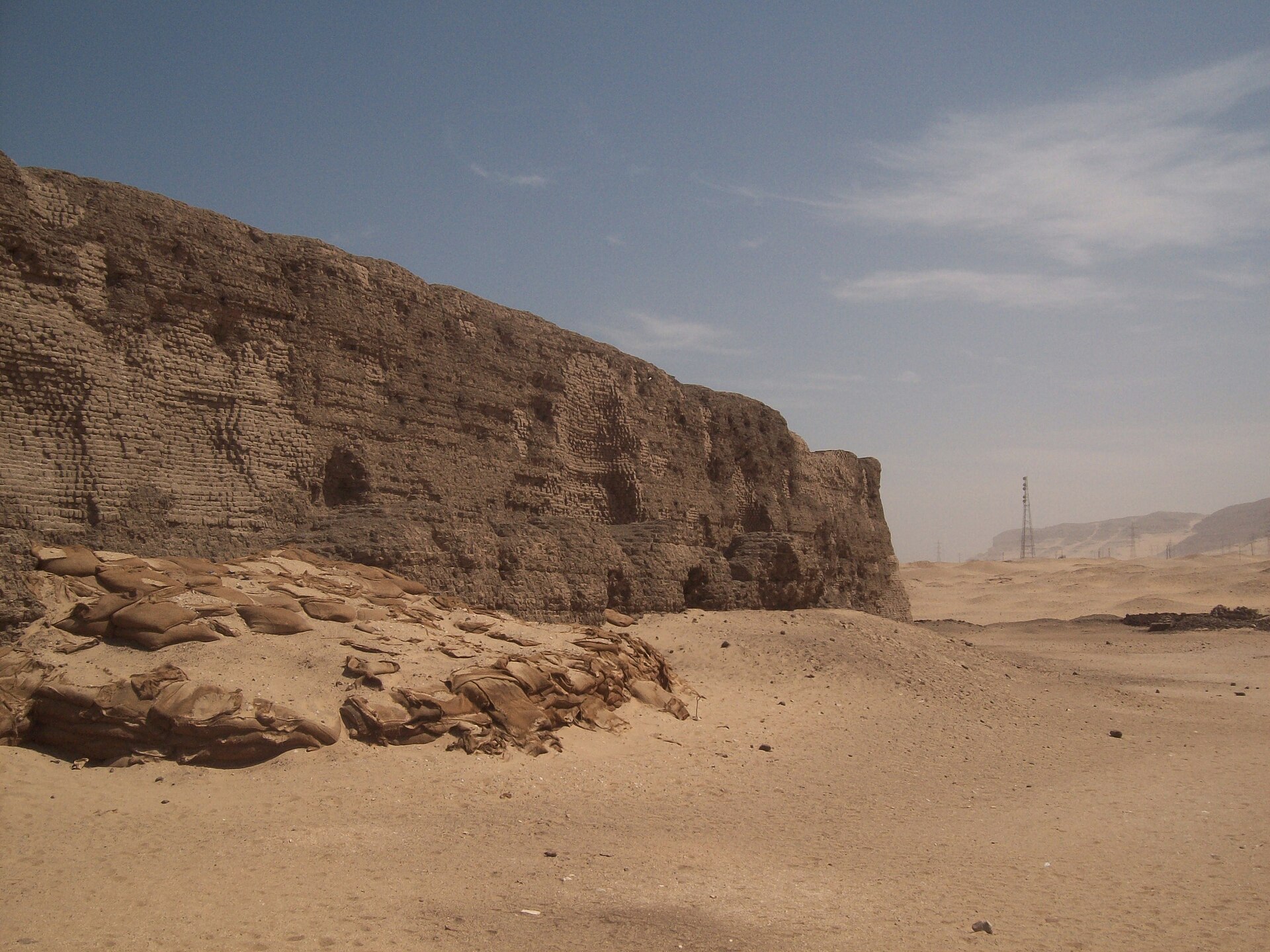 This is a photo of a monument in Egypt identified by the ID isawnyu, CC BY 2.0
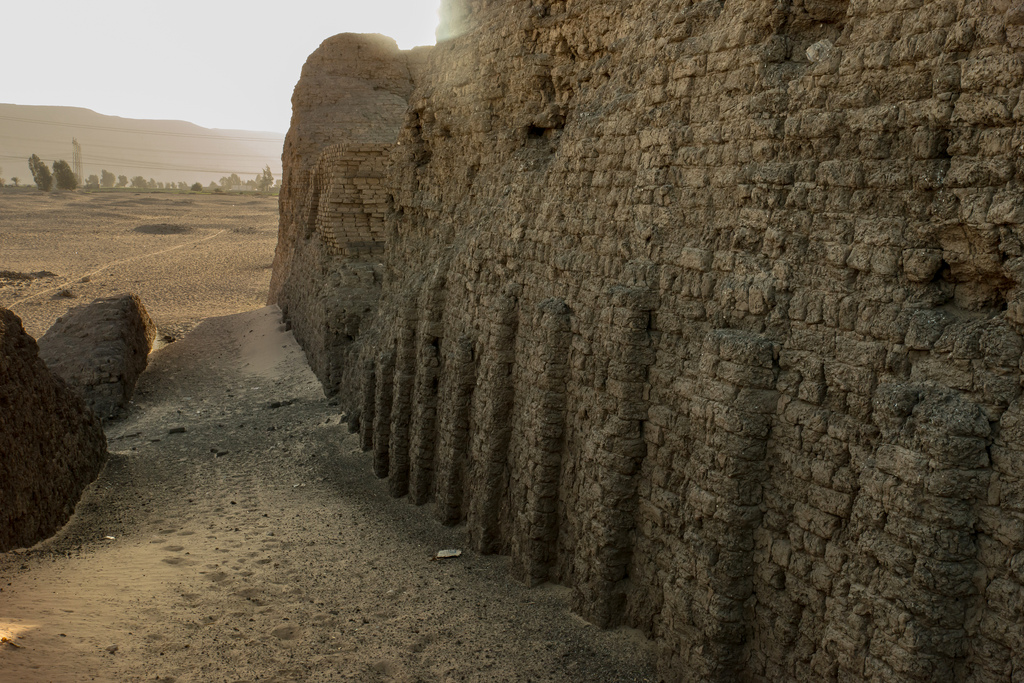 View of the Khasekhemouy enclosure (2nd dynasty) in Abydos, Upper Egypt. Soutekh67, CC BY-SA 4.0
Relics and treasures
- The Abydos King Lista carved list of 76 kings, still on the wall of the Temple of Seti I
- Abydos boats5,000-year-old wooden boats buried near early royal tombs, studied at the site
- Ivory label tagstiny carved labels with some of the earliest Egyptian writing, found in royal tombs
- Stelae of pilgrimsstone markers left to honor Osiris, now in museums around the world
How we know
Archaeologists have dug at Abydos since the 1800s. Flinders Petrie mapped the early royal tombs, and teams from American and Egyptian universities found the buried boats in the 1990s. Hieroglyphs on temple walls and stelae tell us about the festivals. Dating pottery and wood shows how old each layer is.
What you would see today
Visitors explore the Temple of Seti I, read the King List on its wall, and look down into the mysterious Osireion. Out in the desert, archaeologists are still digging up early royal tombs and the remains of ancient boats.
For teachers and classrooms
Suggested level: grades 3-5. Print this page as a lesson sheet with the story, vocabulary, discussion questions and a quiz with an answer key.
Key words
- stela
- a stone slab carved with words or pictures, often to remember someone
- pilgrim
- a person who travels to a holy place
- afterlife
- a life that some people believe comes after death
Talk about it
- If you made a list of the most important leaders of your country, who would be on it?
- Why do you think so many people wanted to be remembered at Abydos?
Try this activity
- Draw a map of Abydos as it looked at its busiest, and label three things people did there.
- Find Abydos on the Ruinscape timeline, then pick another place from the same century and compare them.
- Use one link in Sources below to find a real object from this place. Describe what it is made of and what it tells us.
Quick quiz
Which god was Abydos most connected to?
- Ra
- Osiris
- Anubis
- Thoth
Show the answer
B. Egyptians believed Osiris, god of the afterlife, was buried at Abydos.
What does the Abydos King List show?
- Names of 76 kings
- A map of the Nile
- A recipe for bread
- Star charts
Show the answer
A. It is a carved row of 76 royal names in the Temple of Seti I.
Which pharaoh built the famous temple at Abydos?
- Khufu
- Tutankhamun
- Seti I
- Cleopatra
Show the answer
C. Seti I built it, and his son Ramesses II finished it.
Sources and further reading
Ruinscape lessons are written for students and checked against encyclopedia and museum records. Go to the sources: these links search real museum collections, the UNESCO list and research by archaeologists.
- Wikipedia articleEncyclopedia overview with its own references
- UNESCO World HeritageOfficial listing, if the site is protected
- Google Arts & CultureMuseum exhibits, virtual tours and close-up photos
- British Museum collectionReal objects, photos and catalog notes
- The Met collectionObjects and essays from the Metropolitan Museum of Art
- Smithsonian collectionsU.S. national museum records
- 3D models on SketchfabScans of sites and artifacts (check each license)
- Scholarly articlesResearch papers by archaeologists and historians
Read the full background
Abydos (Arabic: أبيدوس, romanized: Abīdūs or Arabic: افود, romanized: Afūd; Sahidic Coptic: Ⲉⲃⲱⲧ Ebōt) was one of the oldest cities of ancient Egypt, and also of the eighth nome in Upper Egypt. It is located about 11 kilometres (6.8 miles) west of the Nile at latitude 26° 10' N, near the modern Egyptian towns of El Araba El Madfuna and El Balyana. In the ancient Egyptian language, the city was called Abedju (ꜣbḏw or AbDw)(Arabic Abdu عبد-و).
The English name Abydos comes from the Greek Ἄβυδος, a name borrowed by Greek geographers from the unrelated city of Abydos on the Hellespont.
Considered one of the most important archaeological sites in Egypt, the sacred city of Abydos was the site of many ancient temples, including Umm el-Qa'ab, a royal necropolis where early pharaohs were entombed. These tombs began to be seen as extremely significant burials and in later times it became desirable to be buried in the area, leading to the growth of the town's importance as a cult site.
Today, Abydos is notable for the memorial temple of Seti I, which contains an inscription from the Nineteenth Dynasty known to the modern world as the Abydos King List. This is a chronological list showing cartouches of most dynastic pharaohs of Egypt from Menes until Seti I's father, Ramesses I. It is also notable for the Abydos graffiti, ancient Phoenician and Aramaic graffiti found on the walls of the Temple of Seti I.
The Great Temple and most of the ancient town are buried under the modern buildings to the north of the Seti temple. Many of the original structures and the artifacts within them are considered irretrievable and lost; many may have been destroyed by the new construction.
Background text from Wikipedia, available under CC BY-SA 4.0.
Last updated: October 2026. How we make Ruinscape.