No. 186
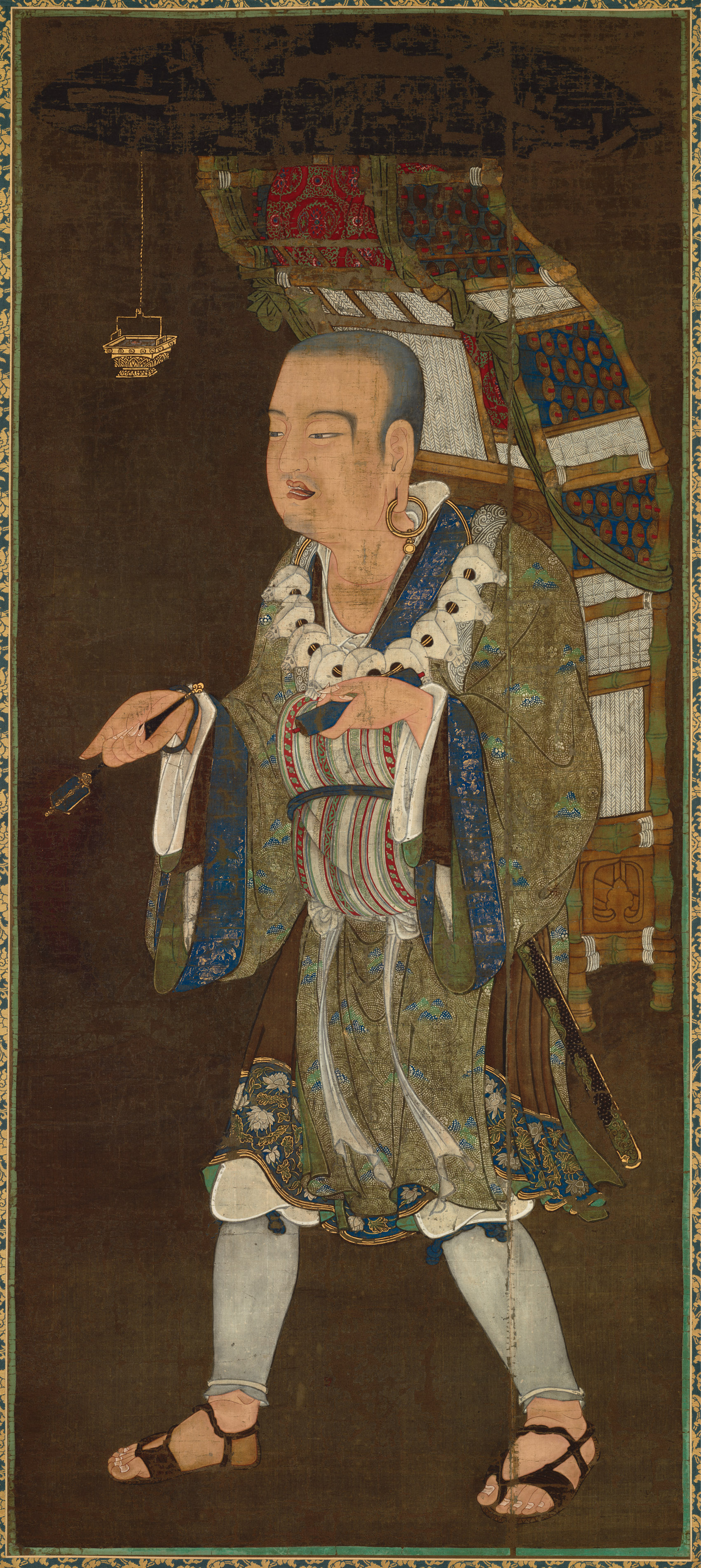
Xuanzang

- Where
- Tang China
- Culture
- Tang China
- Lived
- 602-664 CE
- Why they matter
- A monk who walked to India and back for Buddhist texts.
- Fate
- His travel diary later helped archaeologists find sites.

Lyra Kael can take you here on the globe, tell you the story out loud and answer your questions. Start the time jump.
Background
Xuanzang (Chinese: 玄奘; Wade–Giles: Hsüen Tsang; [ɕɥɛ̌n.tsâŋ]; 6 April 602 – 5 February 664), born Chen Hui or Chen Yi (陳褘 / 陳禕), also known by his Sanskrit Dharma name Mokṣadeva, was a 7th-century Chinese Buddhist monk, scholar, traveller, and translator. He is known for the epoch-making contributions to Chinese Buddhism, the travelogue of his journey to the Indian subcontinent in 629–645, his efforts to bring at least 657 Indian texts to China, and his translations of some of these texts. He was only able to translate 75 distinct sections of a total of 1,335 chapters, but his translations included some of the most important Mahayana scriptures.
Xuanzang was born on 6 April 602 in Chenliu, near present-day Luoyang, in Henan province of China. As a boy, he took to reading religious books, and studying the ideas therein with his father. Like his elder brother, he became a student of Buddhist studies at Jingtu monastery. Xuanzang was ordained as a śrāmaṇera (novice monk) at the age of thirteen. Due to the political and social unrest caused by the fall of the Sui dynasty, he went with his brother 300 miles south to Chengdu in the current-day province of Sichuan, where he was ordained as a bhikṣu (full monk) at the age of twenty, studying Buddhist texts and practices at the monastery.
He later travelled throughout China in search of sacred books of Buddhism. At length, he came to Chang'an, then under the peaceful rule of Emperor Taizong of Tang, where Xuanzang developed the desire to visit India. He knew about Faxian's visit to India and, like him, was concerned about the incomplete and misinterpreted nature of the Buddhist texts that had reached China. He was also concerned about the competing Buddhist theories in variant Chinese translations. He sought original untranslated Sanskrit texts from India to help resolve some of these issues.
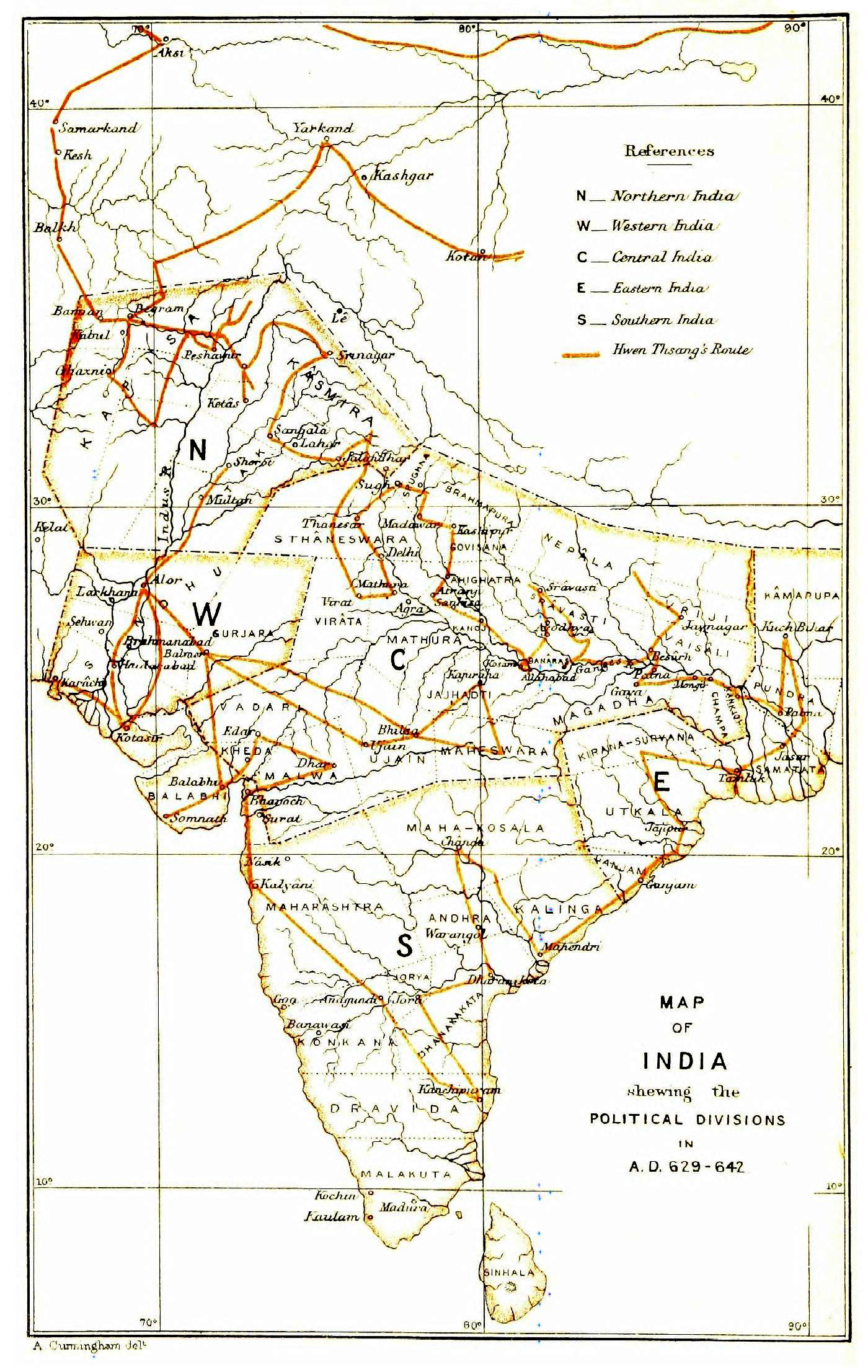
At age 27, he began his seventeen-year overland journey to India. He defied his nation's ban on travel abroad, making his way through central Asian cities such as Khotan to India. He visited, among other places, the famed Nalanda University in modern day Bihar, India, where he studied with the monk Śīlabhadra. He departed from India with numerous Sanskrit texts on a caravan of twenty packhorses. His return was welcomed by Emperor Taizong in China, who encouraged him to write a travelogue.
This Chinese travelogue, titled the Reco
Text from Wikipedia, licensed CC BY-SA 4.0.