No. 146
Tutankhamun

- Where
- Egypt
- Culture
- Egypt
- Lived
- reigned 1332-1323 BCE
- Why they matter
- His nearly intact tomb made him the best-known pharaoh.
- Fate
- Died at about 19.

Lyra Kael can take you here on the globe, tell you the story out loud and answer your questions. Start the time jump.
Background
Tutankhamun or Tutankhamen (Ancient Egyptian: twt-ꜥnḫ-jmn; c. 1342 BC – c. 1323 BC), was the third to last pharaoh of the Eighteenth Dynasty of ancient Egypt, who ruled c. 1332 – 1323 BC, dying at about the age of 19. Born Tutankhaten, his administration restored the traditional polytheistic form of ancient Egyptian religion, undoing a previous shift to the religion known as Atenism. Tutankhamun's tomb door proclaims his devotion to the ancient Egyptian gods.
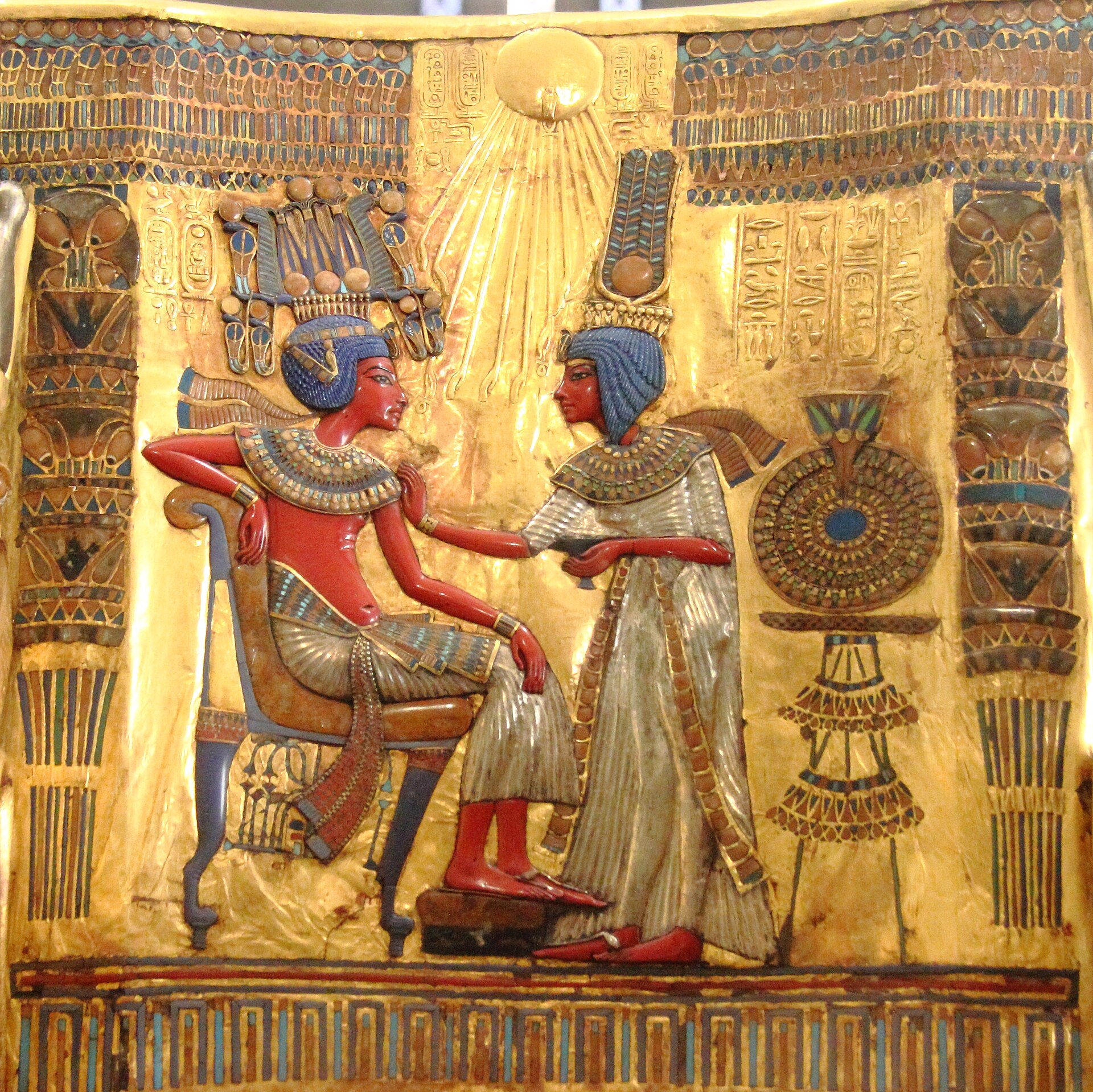
His endowments and restorations of cults were recorded on the Restoration Stela. The cult of the god Amun at Thebes was restored to prominence, and the royal couple changed their names to "Tutankhamun" and "Ankhesenamun", replacing the -aten suffix. He also moved the royal court from Akhenaten's capital, Amarna, back to Memphis almost immediately on his accession to the kingship. He reestablished diplomatic relations with the Mitanni and carried out military campaigns in Nubia and the Near East. Tutankhamun was one of only a few kings known to be worshipped as a deity during their lifetime. He likely began construction of a royal tomb in the Valley of the Kings and an accompanying mortuary temple, but both were unfinished at the time of his death.
In 2012, it was suggested he died from a combination of malaria and a leg fracture. Since his royal tomb was incomplete, he was instead buried in a small non-royal tomb adapted for the purpose. He was succeeded by Ay, who had held titles such as Fan-bearer on the Right Side of the King. After a very brief reign, Ay was succeeded by Horemheb, who had been the commander-in-chief of Tutankhamun's armed forces. Under Horemheb, the restoration of the traditional ancient Egyptian religion was completed; Ay and Tutankhamun's constructions were usurped, and earlier Amarna Period rulers were erased.
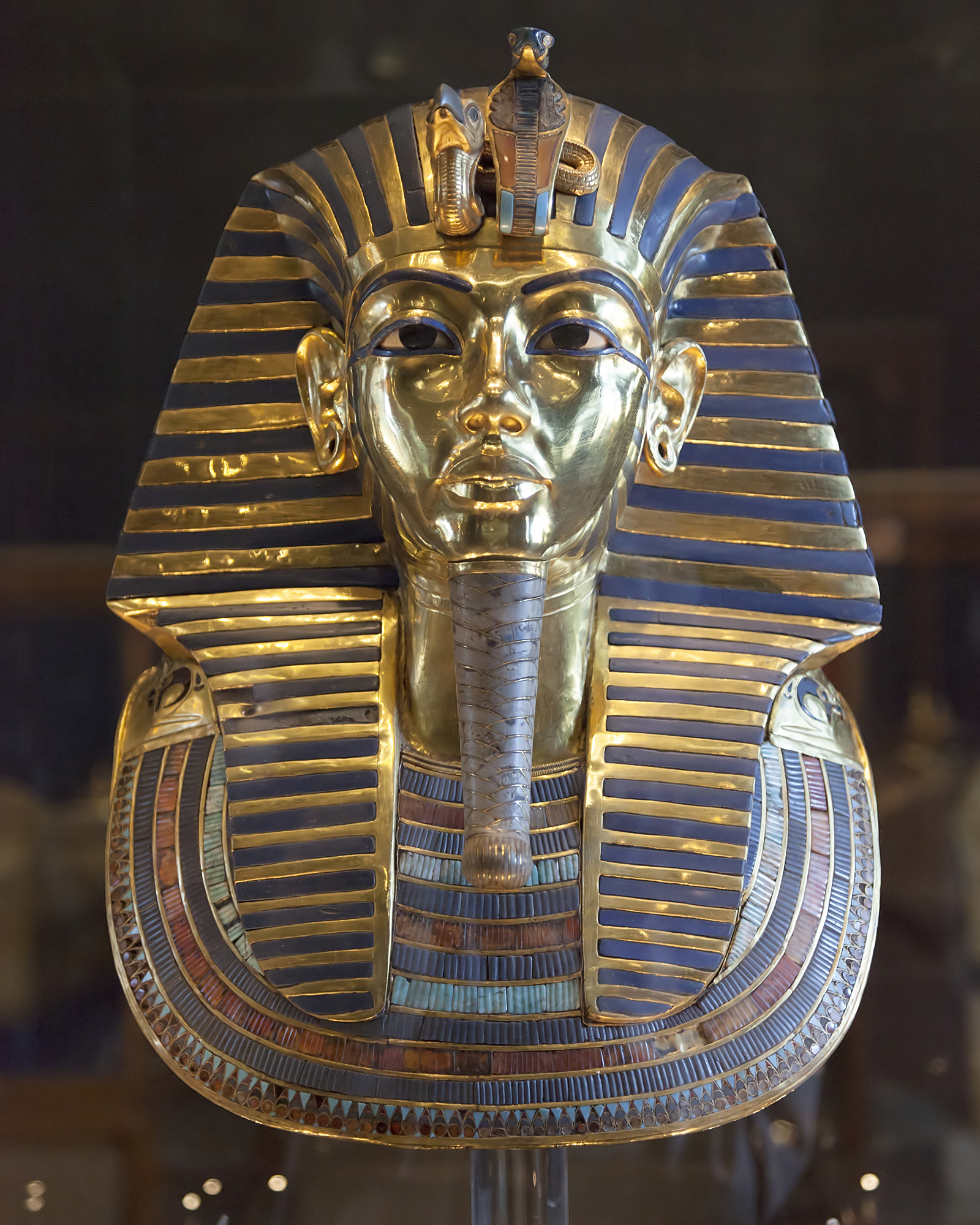
Tutankhamun's tomb was discovered in 1922 by excavators led by Howard Carter and his patron, George Herbert, 5th Earl of Carnarvon. Although it had clearly been raided and robbed in ancient times, it retained much of its original contents, including the king's undisturbed mummy. The discovery received worldwide press coverage; with over 5,000 artifacts, it gave rise to renewed public interest in ancient Egypt, for which Tutankhamun's mask, preserved at the Egyptian Museum, remains a popular symbol. Before it was relocated to the Grand Egyptian Museum in 2025, some of his tr
Text from Wikipedia, licensed CC BY-SA 4.0.