No. 101
Tiwanaku

- Where
- Bolivia
- Built by
- Tiwanaku state
- Era
- 500-1000 CE
- Known for
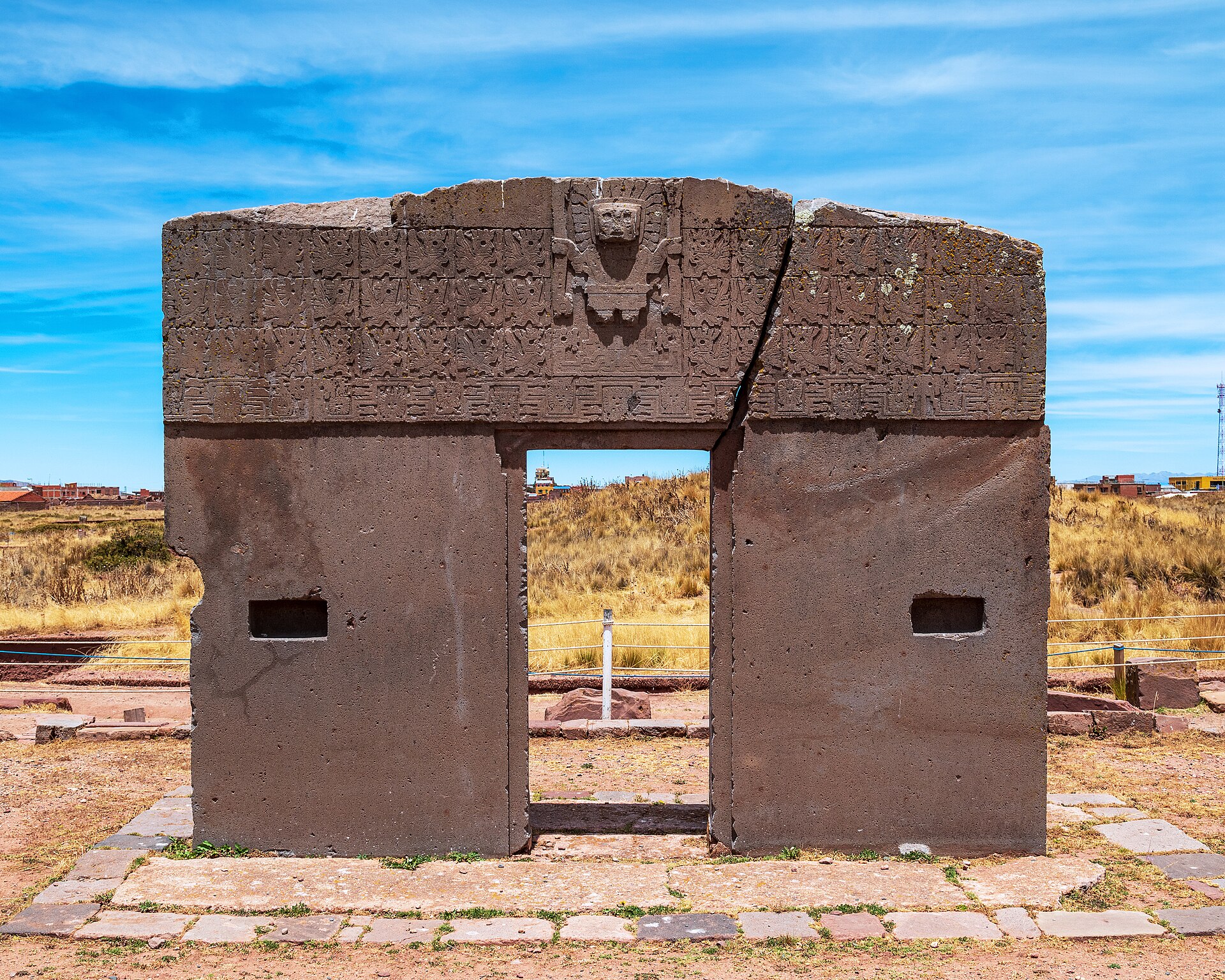
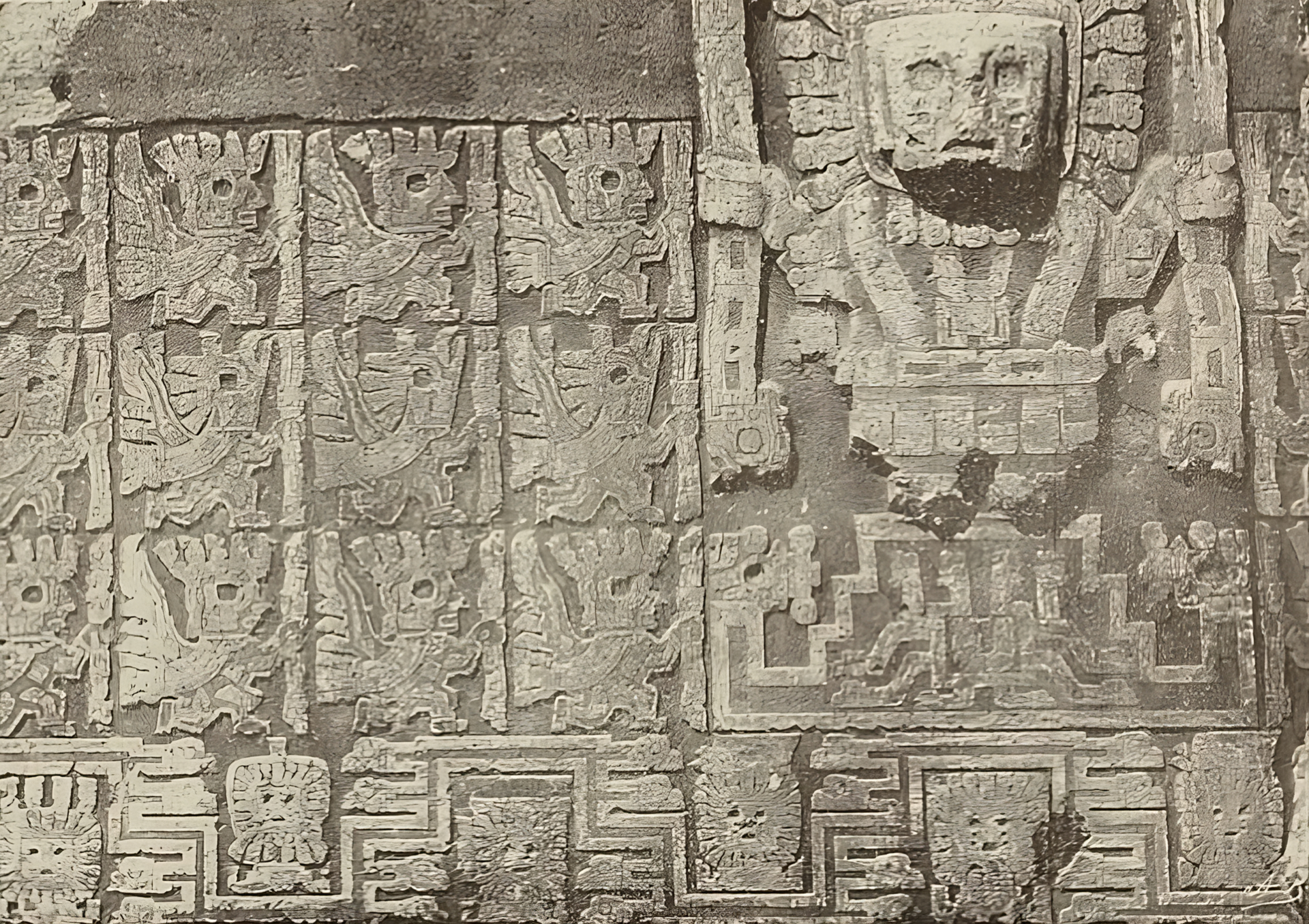
- The Gate of the Sun and precisely cut stone.
- How it ended
- A long drought around 1000 CE ruined its raised-field farms.

Lyra Kael can take you here on the globe, tell you the story out loud and answer your questions. Start the time jump.
Background
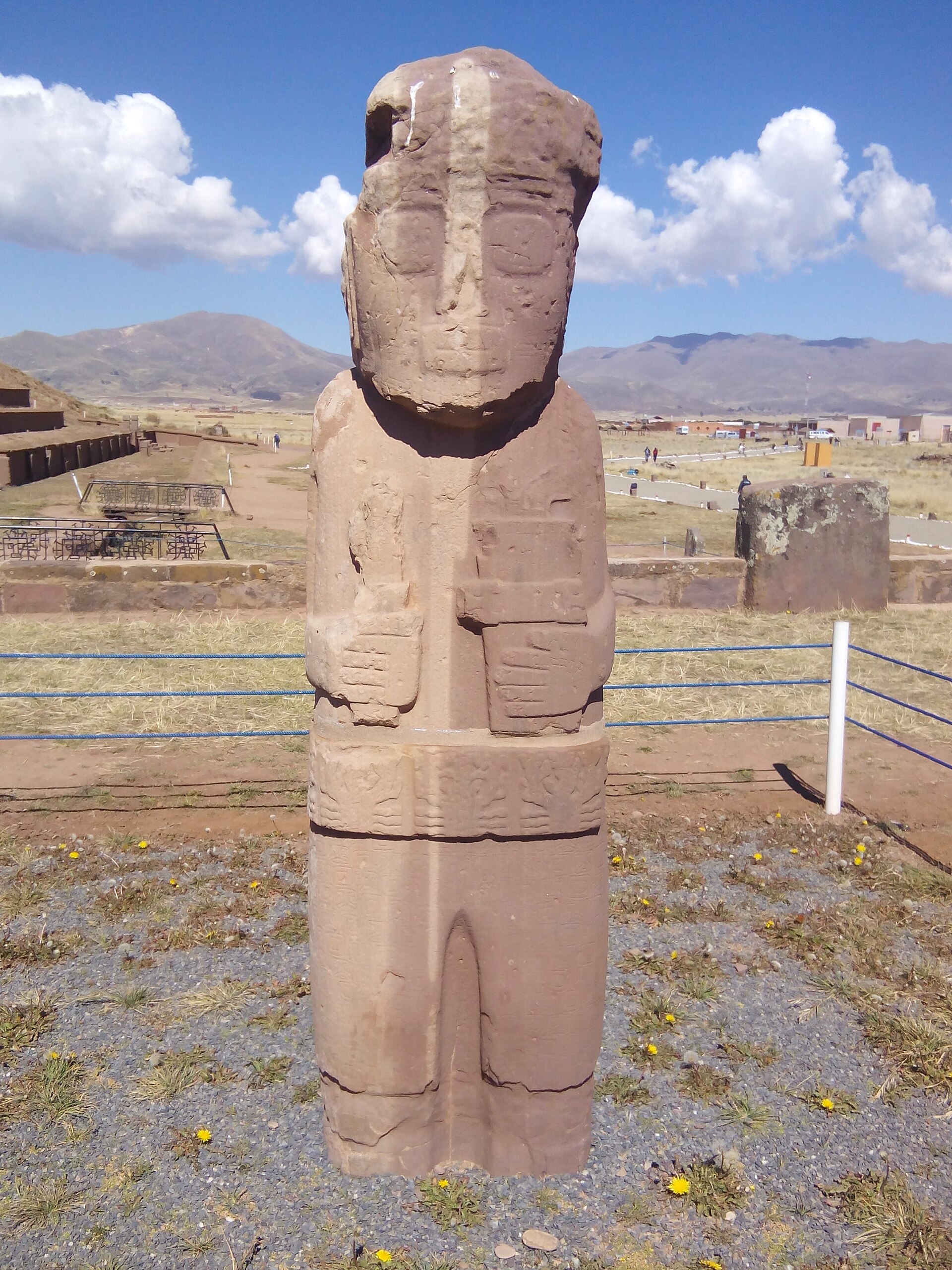
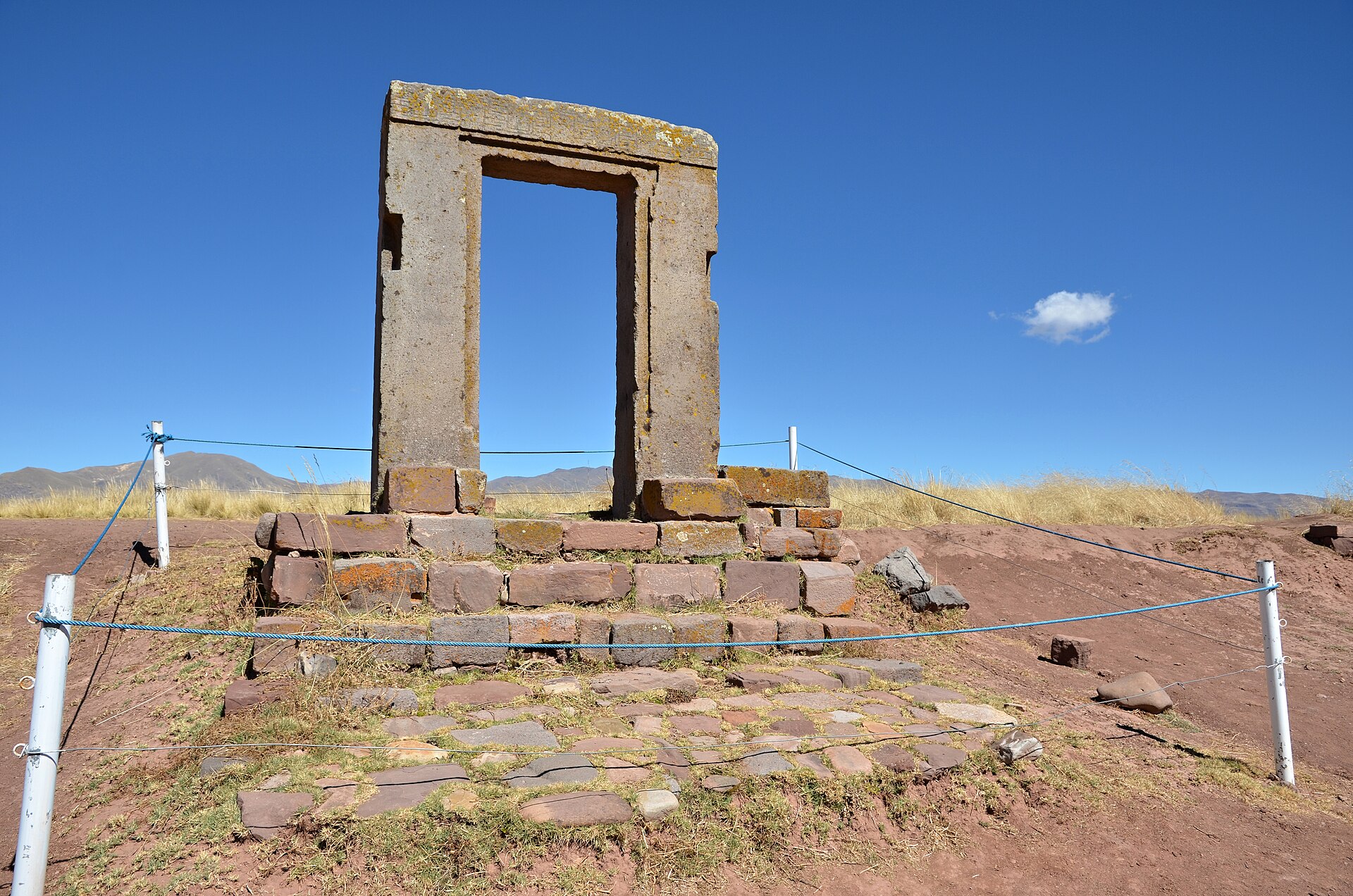
Tiwanaku (Spanish: Tiahuanaco or Tiahuanacu) is a Pre-Columbian archaeological site in western Bolivia, near Lake Titicaca, about 70 kilometers from La Paz, and it is one of the largest sites in South America. It is just north of another ancient building site, Qhunqhu Wankani. Surface remains currently cover around 4 square kilometers and include decorated ceramics, monumental structures, and megalithic blocks. It has been conservatively estimated that the site was inhabited by 10,000 to 20,000 people in AD 800.
The site was first recorded in written history in 1549 by Spanish conquistador Pedro Cieza de León while he was searching for the southern Inca capital of Qullasuyu.
Bernabé Cobo, a Jesuit chronicler of Peru, reported that Tiwanaku's name once was taypiqala, which is Aymara meaning "stone in the center", alluding to the belief that it lay at the center of the world. The name by which Tiwanaku was known to its inhabitants may have been lost, as they had no written language. Heggarty and Beresford-Jones suggest that the Puquina language is most likely to have been the language of Tiwanaku.
Text from Wikipedia, licensed CC BY-SA 4.0.