No. 84
Sanxingdui

- Where
- China
- Built by
- Shu culture
- Era
- 1200-1000 BCE
- Known for
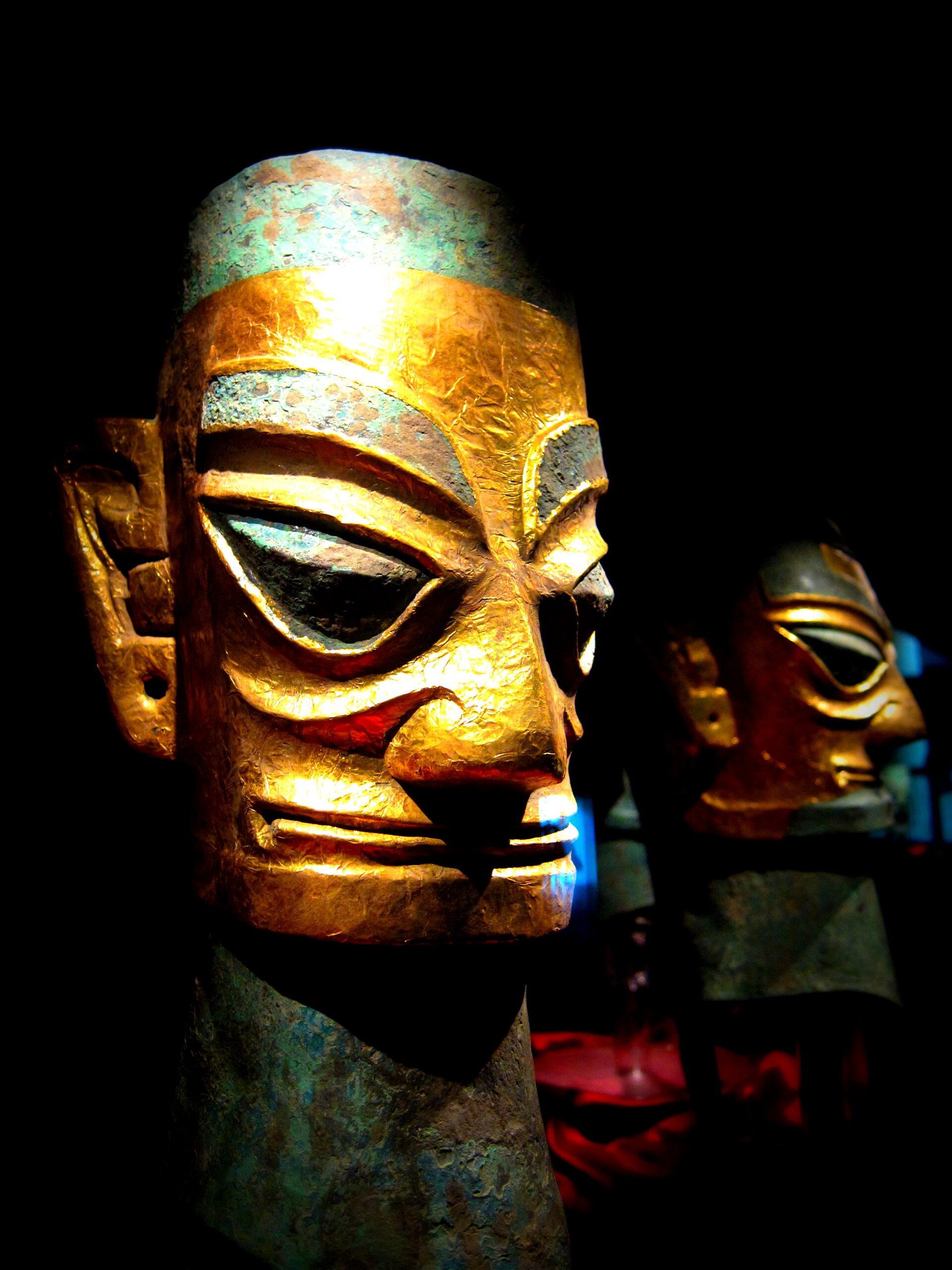
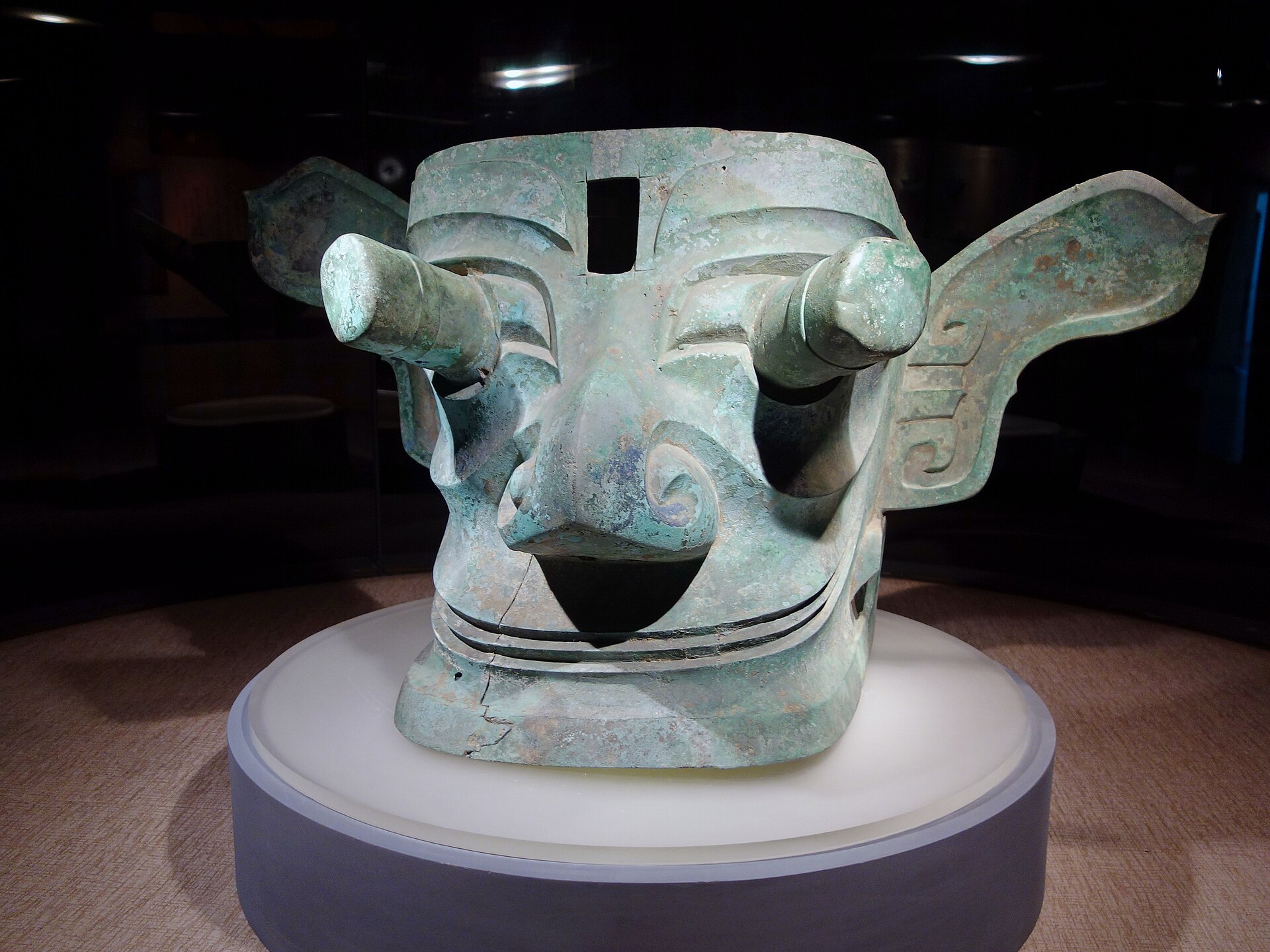
- Bronze masks with eyes popping out on stalks.
- How it ended
- The culture vanished suddenly; an earthquake or river shift is suspected.

Lyra Kael can take you here on the globe, tell you the story out loud and answer your questions. Start the time jump.
Background
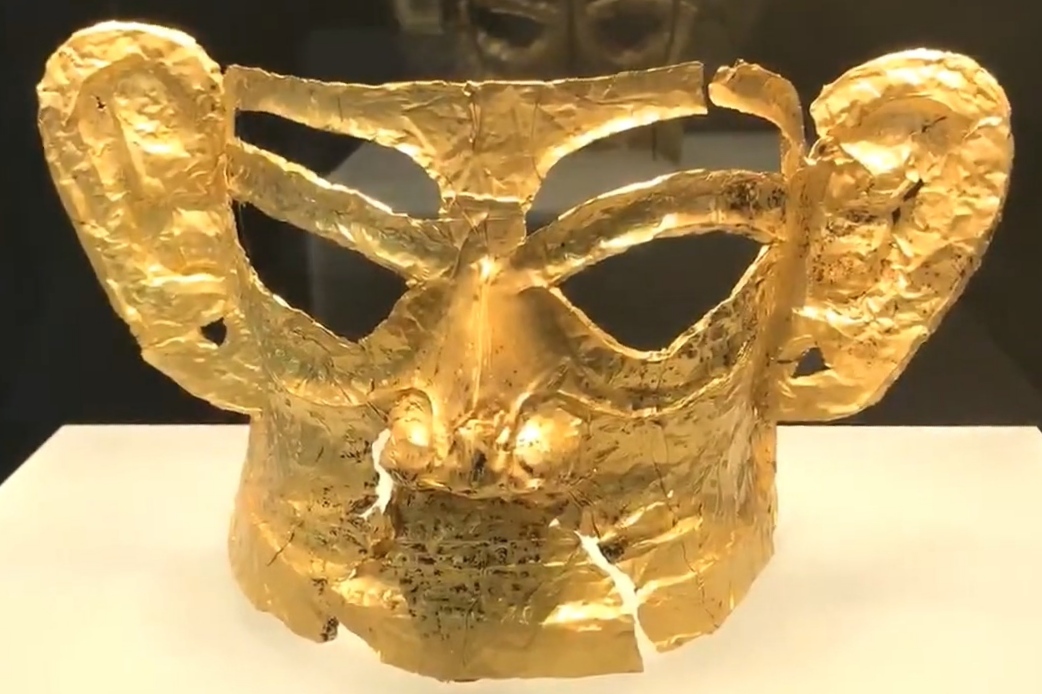
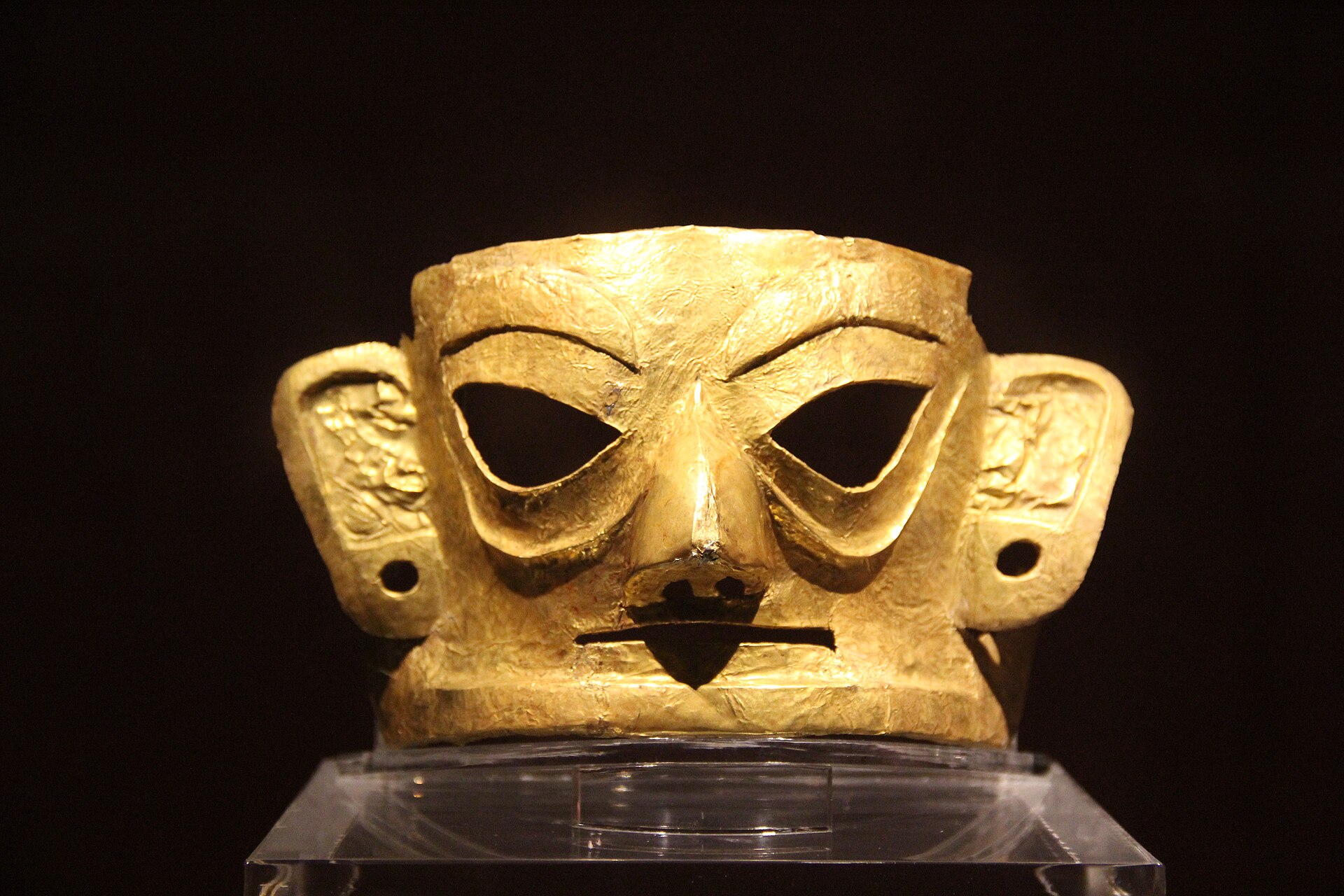
Sanxingdui (Chinese: 三星堆; pinyin: Sānxīngduī; lit. 'Three Star Mound') is an archaeological site and a major Bronze Age culture in modern Guanghan, Sichuan, China. Largely discovered in 1986, following a preliminary finding in 1927, archaeologists excavated artifacts that radiocarbon dating placed in the 12th–11th centuries BC.
The archaeological site is the type site for the Sanxingdui culture that produced these artifacts, archeologists have identified the locale with the ancient kingdom of Shu, which suggests the presence of a unique civilization in this region before the state of Qin conquered the area in 316 BC. The artifacts are displayed in the Sanxingdui Museum located near the city of Guanghan.
Sanxingdui is on the UNESCO list of tentative World Heritage Sites, along with the Jinsha site and the tombs of boat-shaped coffins.
Text from Wikipedia, licensed CC BY-SA 4.0.