The story
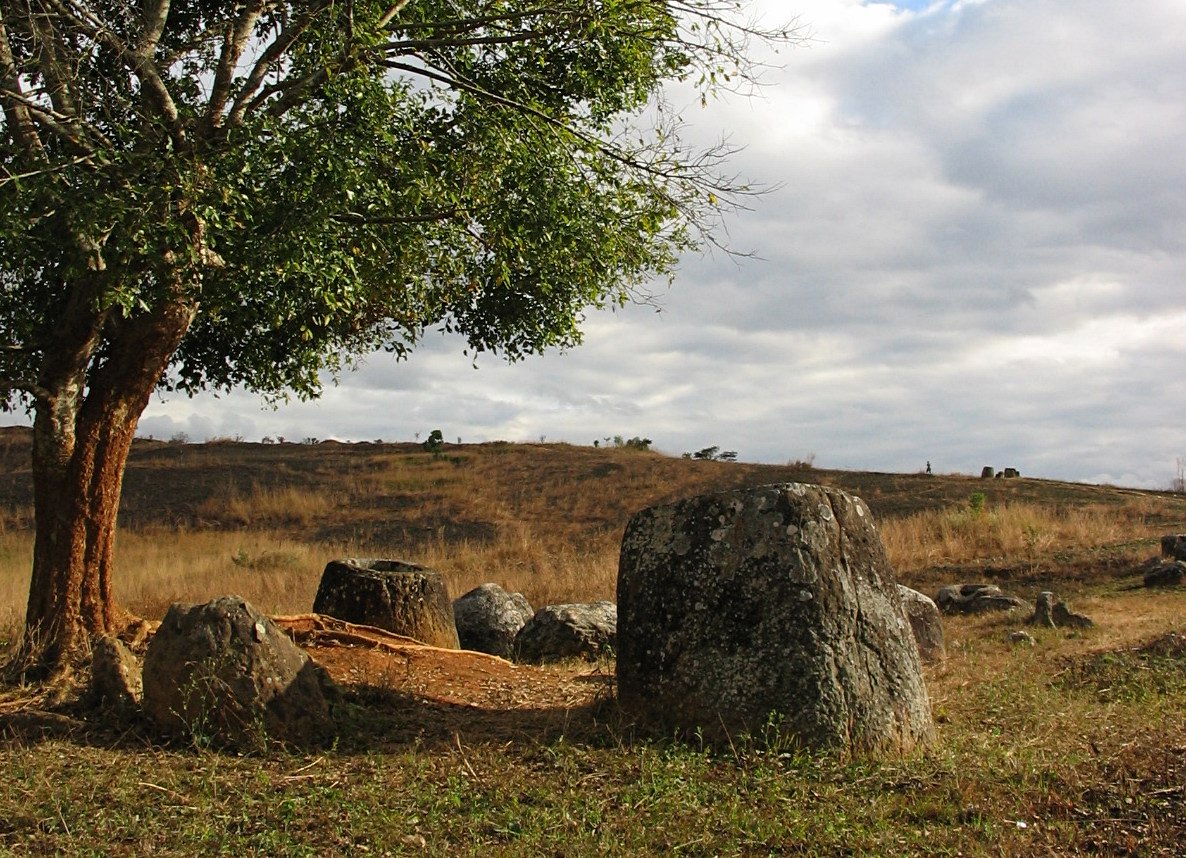
The Plain of Jars is on the Xieng Khouang plateau in Laos. Across more than 100 sites, there are thousands of stone jars, mostly carved from sandstone. Some are up to about 3 meters tall and weigh several tonnes.
Archaeologists think the jars were connected to burials during the Iron Age. Human bones, beads and tools have been found in and around them. Some scientists think bodies may have been placed in the jars for a time before final burial. Recent studies suggest some jars were placed more than 2,500 years ago.
A local legend says the jars were made by giants to brew rice wine to celebrate a victory. No one knows exactly who made them, which makes them a great mystery.
How it ended
The jar-making culture faded long ago, and the reasons are still unclear. The jars stayed on the hills. In the 1960s and 1970s, bombing damaged some sites, and clearing them is ongoing.
What life was like
The people who made the jars were part of trade networks across Southeast Asia. Workers cut stone from quarries, sometimes kilometers away, and moved the heavy jars, probably with ropes and wooden rollers. Glass beads and bronze found here show they traded with other regions.
Wow facts
- The largest jars are around 3 meters tall.
- Some stone discs nearby may have been lids.
- A legend says giants made the jars to brew rice wine.
Photos
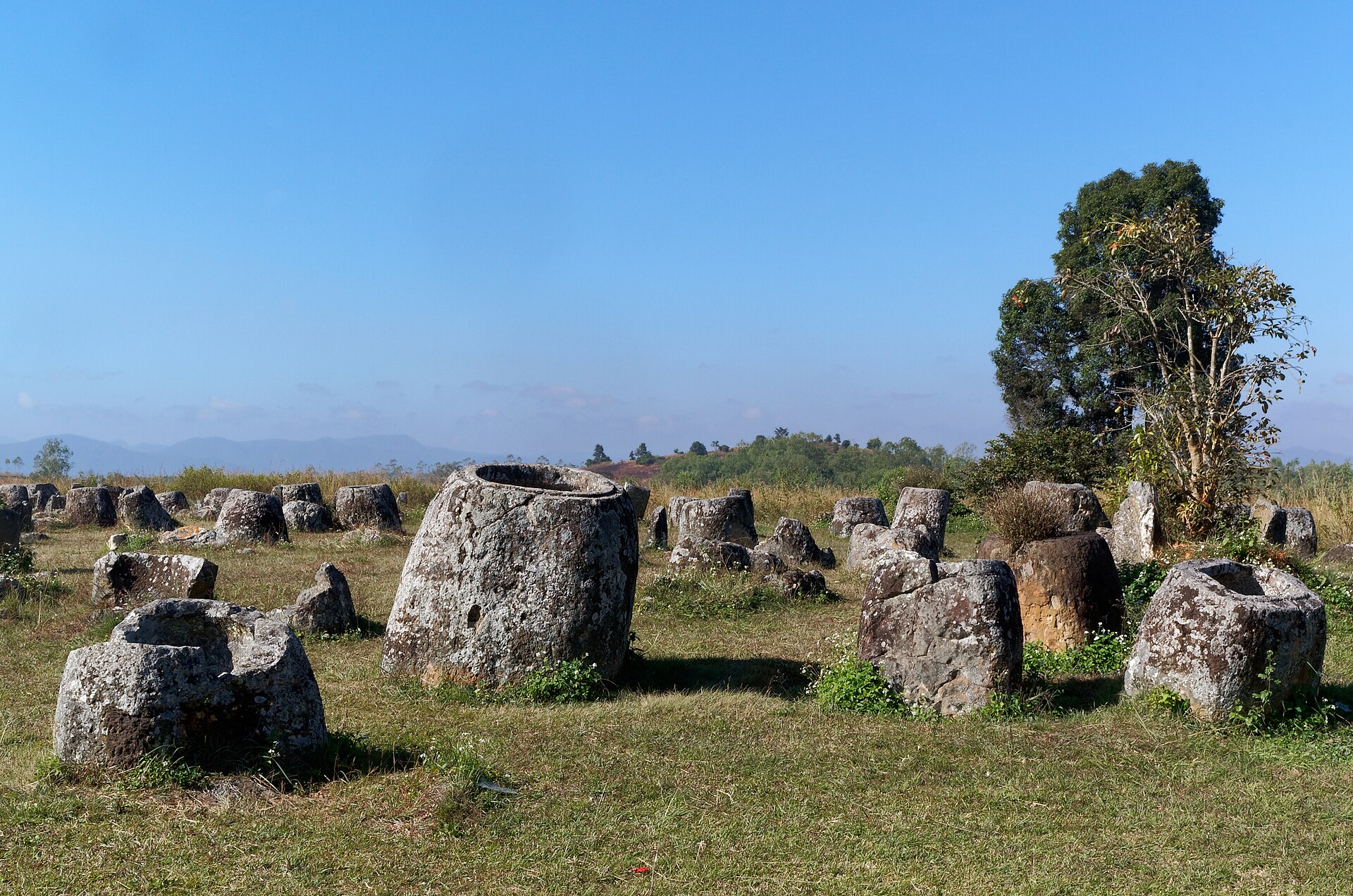 Plain of Jars - archaeological site number 1 Jakub Hałun, CC BY-SA 4.0
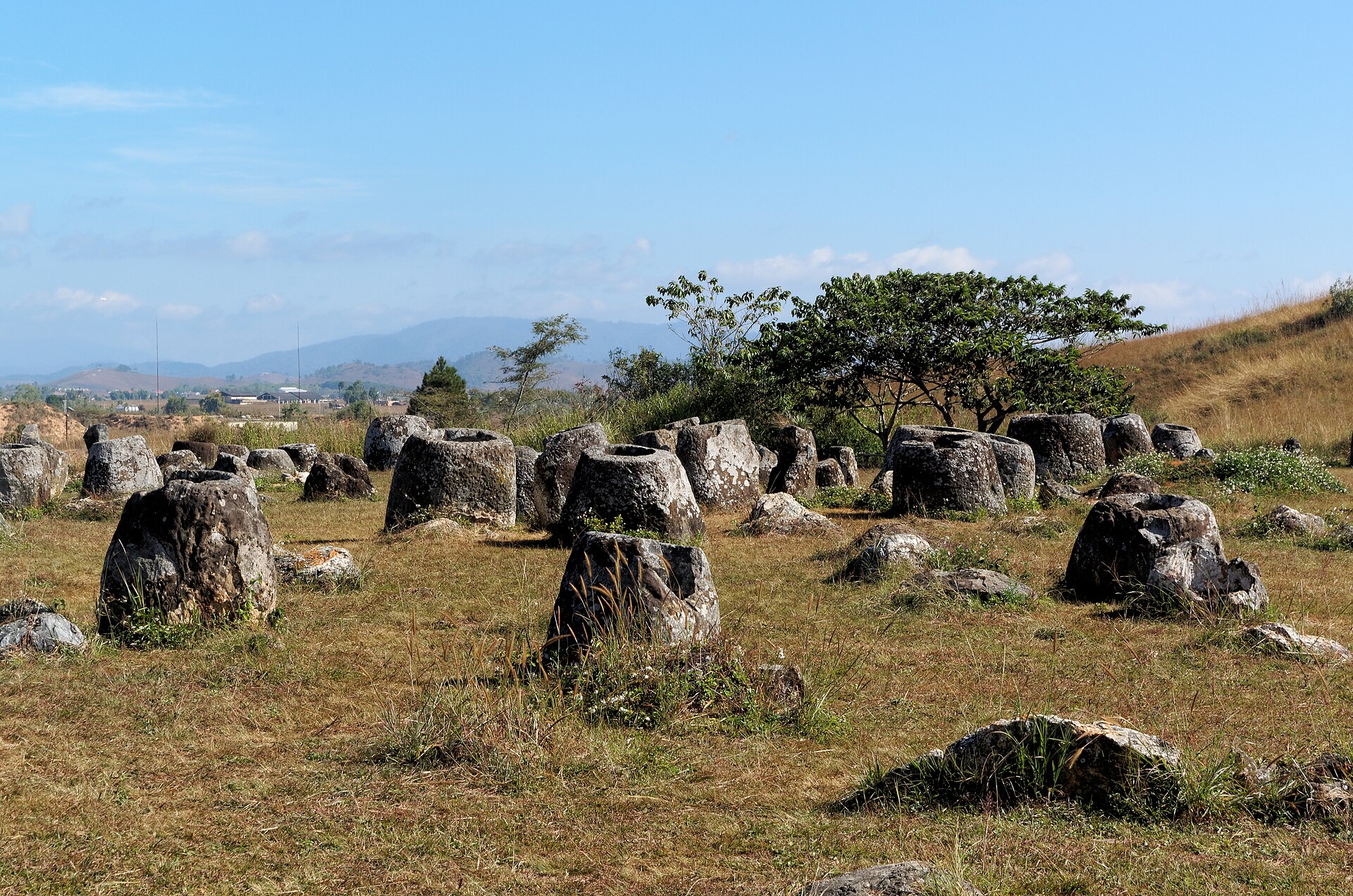 Plain of Jars - archaeological site number 1 Jakub Hałun, CC BY-SA 4.0
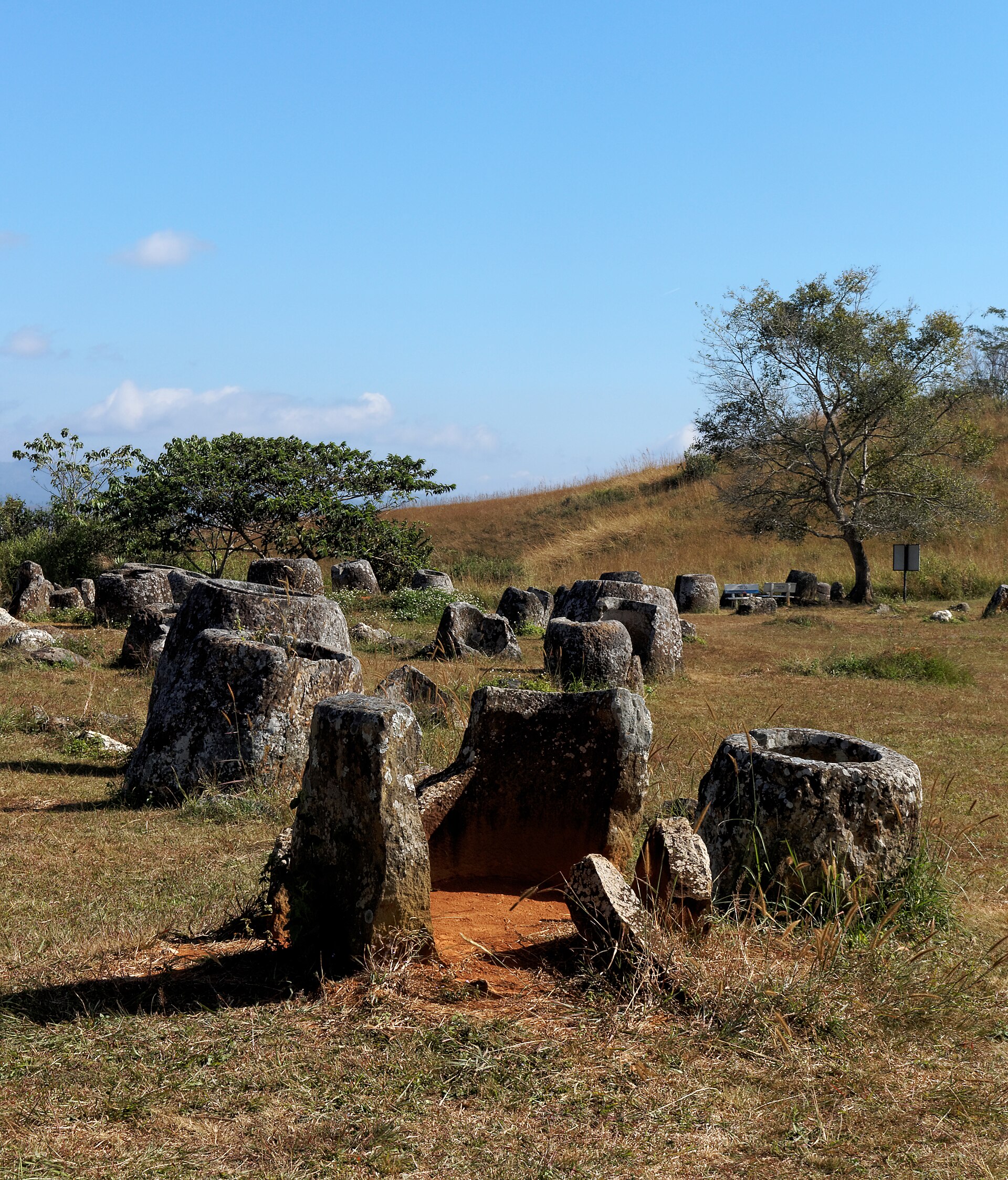 Plain of Jars - archaeological site number 1 Jakub Hałun, CC BY-SA 4.0
Relics and treasures
- Site 1 jarsthe largest group of jars, including the biggest one, at Site 1 near Phonsavan
- Stone discscarved discs that may be lids or grave markers, at the sites
- Burial findsbones, beads and pottery, studied by Lao and Australian archaeologists
- Quarry sitesplaces where the jars were carved, near the sites
How we know
French archaeologist Madeleine Colani studied the jars in the 1930s. Recent teams from Laos and Australia used dating methods on the sediments under the jars. Bones and objects show the jars were part of burial practices.
What you would see today
Visitors walk marked paths between the jars. The area was heavily bombed during the Vietnam War era, and teams have worked to clear unexploded bombs so it is safer to visit. The Plain of Jars became a UNESCO World Heritage Site in 2019.
For teachers and classrooms
Suggested level: grades 6-8. Print this page as a lesson sheet with the story, vocabulary, discussion questions and a quiz with an answer key.
Key words
- Iron Age
- the time when people began making tools and weapons from iron
- burial practice
- the customs a group follows for taking care of the dead
- unexploded ordnance
- bombs or shells that did not go off and are still dangerous
Talk about it
- Why do you think people went to so much trouble to make giant jars?
- How can a place be important for both ancient history and modern history?
Try this activity
- Draw a map of Plain of Jars as it looked at its busiest, and label three things people did there.
- Find Plain of Jars on the Ruinscape timeline, then pick another place from the same century and compare them.
- Use one link in Sources below to find a real object from this place. Describe what it is made of and what it tells us.
Quick quiz
In which country is the Plain of Jars?
- Laos
- Japan
- Peru
- Kenya
Show the answer
A. The Plain of Jars is in Laos.
What do scientists think the jars were used for?
- Burials
- Cooking dinner
- Storing gold
- Holding fish
Show the answer
A. Bones and objects suggest they were linked to burials.
What legend explains the jars?
- Giants brewed rice wine in them
- Aliens dropped them
- They grew like trees
- Dragons laid them
Show the answer
A. A local story says giants made them for rice wine.
Sources and further reading
Ruinscape lessons are written for students and checked against encyclopedia and museum records. Go to the sources: these links search real museum collections, the UNESCO list and research by archaeologists.
- Wikipedia articleEncyclopedia overview with its own references
- UNESCO World HeritageOfficial listing, if the site is protected
- Google Arts & CultureMuseum exhibits, virtual tours and close-up photos
- British Museum collectionReal objects, photos and catalog notes
- The Met collectionObjects and essays from the Metropolitan Museum of Art
- Smithsonian collectionsU.S. national museum records
- 3D models on SketchfabScans of sites and artifacts (check each license)
- Scholarly articlesResearch papers by archaeologists and historians
Read the full background
The Plain of Jars (Lao: ທົ່ງໄຫຫີນ Thong Hai Hin, [tʰōŋ hǎj hǐn]) is a megalithic archaeological landscape in Laos. It consists of thousands of stone jars scattered around the upland valleys and the lower foothills of the central plain of the Xiangkhoang Plateau. The jars are arranged in clusters ranging in number from one to several hundred.
The Xiangkhoang Plateau is at the northern end of the Annamese Cordillera, the principal mountain range of Indochina. French researcher Madeleine Colani concluded in 1930 that the jars were associated with burial practices. Excavation by Lao and Japanese archaeologists in the intervening years has supported this interpretation with the discovery of human remains, burial goods and ceramics around the jars. Researchers (using optically stimulated luminescence) determined that the jars were put in place as early as 1240 to 660 BC. The jars at Site 1 (using detrital zircon geochronology) were determined to have been transported to their current location from a presumed quarry eight kilometers away. The Plain of Jars is one of the most important prehistoric sites in Southeast Asia.
Background text from Wikipedia, available under CC BY-SA 4.0.
Last updated: October 2026. How we make Ruinscape.