The story
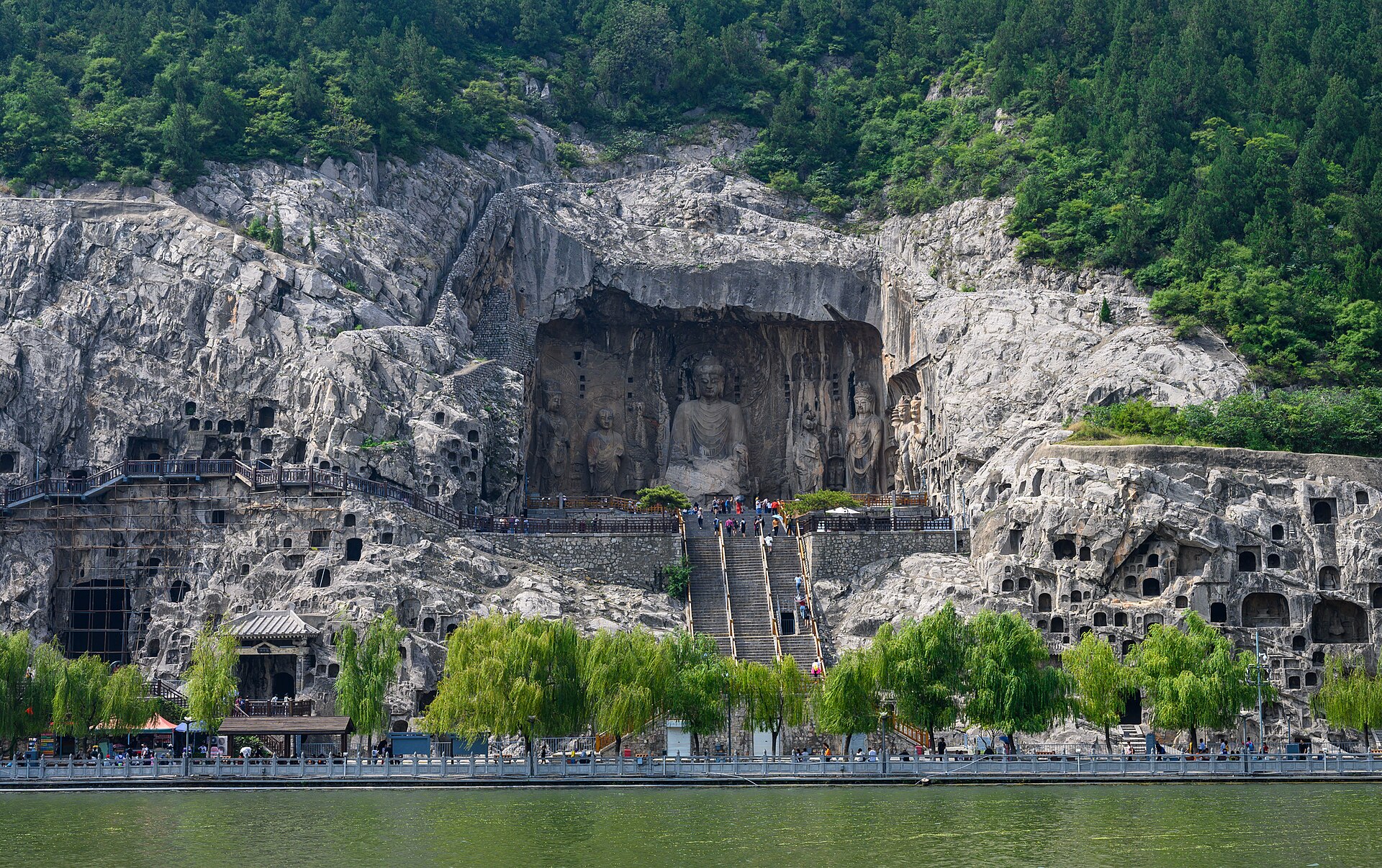
Starting around 493 CE, when the Northern Wei dynasty moved its capital to nearby Luoyang, people began carving Buddhist caves into the limestone cliffs at Longmen, which means Dragon Gate.
Emperors, empresses, officials and ordinary families paid for carvings, hoping to gain good fortune. Over about 400 years, workers carved more than 2,300 caves and niches and over 100,000 statues.
The most famous is the giant Vairocana Buddha, finished around 675 CE during the Tang dynasty. It is said that Empress Wu Zetian gave money for it, and some say its peaceful face was modeled on her.
How it ended
Carving slowed after the Tang dynasty and stopped by around 1127. Weather and time wore down the stone, and in the early 1900s, many heads and carvings were stolen and sold. Today the site is carefully protected.
What life was like
Sculptors and stonecutters worked on scaffolds against the cliffs, chipping the hard limestone with iron tools. Donors had their names and wishes carved next to their statues. Monks and pilgrims visited to pray. Luoyang nearby was a busy capital city on the Silk Road.
Wow facts
- Some statues are only about 2 centimeters tall.
- The Vairocana Buddha is about 17 meters tall.
- One cave has inscriptions describing medical recipes, called the Prescription Cave.
Photos
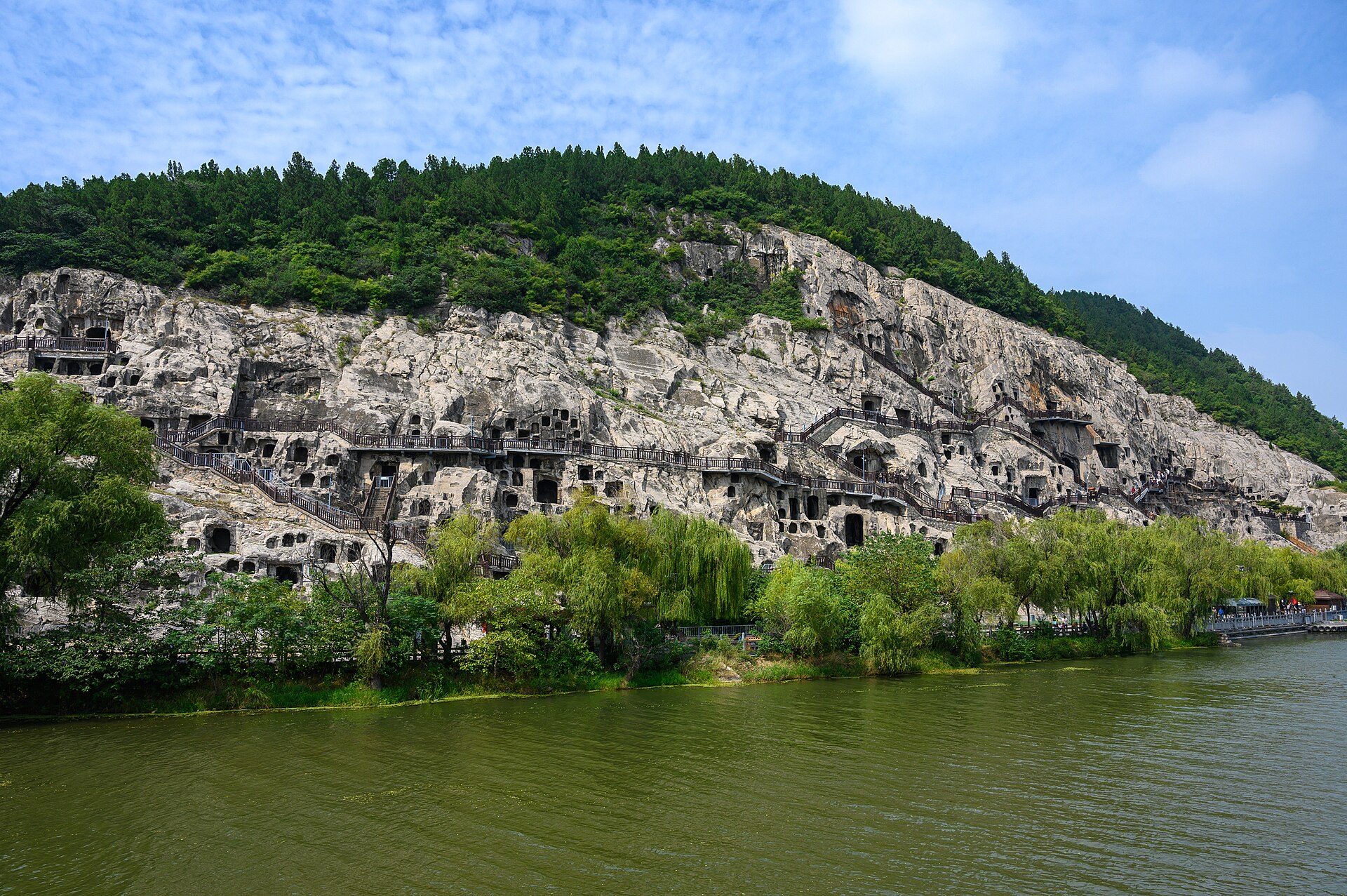 Longmen Grottoes in Luoyang, China xiquinhosilva, CC BY 2.0
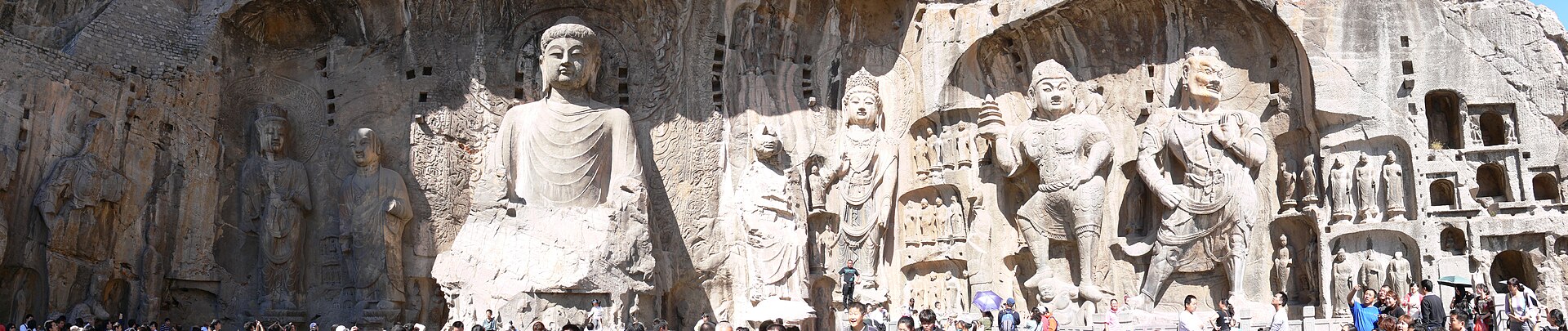 Panorama of Boddhisatvas in the main Longmen Grotto WikiLaurent, CC BY-SA 3.0
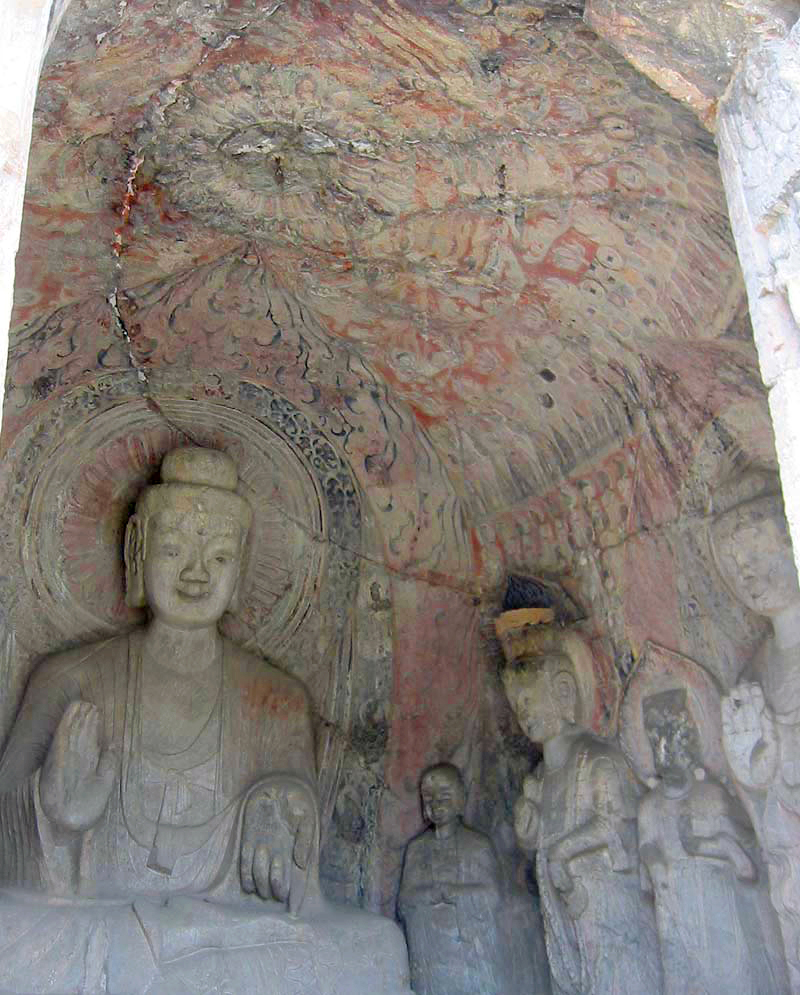 Unknown author, CC BY-SA 3.0
Relics and treasures
- Vairocana Buddhathe giant Tang dynasty statue at Fengxian Temple, at the site
- Binyang CavesNorthern Wei caves with carved Buddhas, at the site
- Prescription Caveinscriptions with medical recipes, at the site
- Guyang Caveone of the oldest caves with many inscriptions, at the site
How we know
About 2,800 inscriptions record donors, dates and wishes. Chinese scholars have studied them for centuries. Modern teams use 3D scans to record the carvings and match stolen heads to their bodies.
What you would see today
Visitors walk paths along both cliffs, peek into caves and climb stairs to see the great Vairocana Buddha. Many statues are missing heads, which were stolen in the 1900s, and some have been returned. It is a UNESCO World Heritage Site.
For teachers and classrooms
Suggested level: grades 3-5. Print this page as a lesson sheet with the story, vocabulary, discussion questions and a quiz with an answer key.
Key words
- grotto
- a small cave, often decorated
- niche
- a shallow space carved into a wall to hold a statue
- donor
- a person who gives money or gifts
Talk about it
- Why do you think so many different people paid for carvings?
- Should stolen art be returned to where it came from? Why?
Try this activity
- Draw a map of Longmen Grottoes as it looked at its busiest, and label three things people did there.
- Find Longmen Grottoes on the Ruinscape timeline, then pick another place from the same century and compare them.
- Use one link in Sources below to find a real object from this place. Describe what it is made of and what it tells us.
Quick quiz
About how many statues are at Longmen?
- 100
- 1,000
- Over 100,000
- 10
Show the answer
C. There are more than 100,000 statues.
What does Longmen mean?
- Dragon Gate
- Tiger Hill
- Golden River
- Sky Palace
Show the answer
A. Longmen means Dragon Gate.
Which giant statue is the most famous?
- Vairocana Buddha
- Statue of Liberty
- Sphinx
- Moai
Show the answer
A. The Vairocana Buddha is about 17 meters tall.
Sources and further reading
Ruinscape lessons are written for students and checked against encyclopedia and museum records. Go to the sources: these links search real museum collections, the UNESCO list and research by archaeologists.
- Wikipedia articleEncyclopedia overview with its own references
- UNESCO World HeritageOfficial listing, if the site is protected
- Google Arts & CultureMuseum exhibits, virtual tours and close-up photos
- British Museum collectionReal objects, photos and catalog notes
- The Met collectionObjects and essays from the Metropolitan Museum of Art
- Smithsonian collectionsU.S. national museum records
- 3D models on SketchfabScans of sites and artifacts (check each license)
- Scholarly articlesResearch papers by archaeologists and historians
Read the full background
The Longmen Grottoes (simplified Chinese: 龙门石窟; traditional Chinese: 龍門石窟; pinyin: Lóngmén Shíkū; lit. 'Dragon's Gate Grottoes') or Longmen Caves are some of the finest examples of Chinese Buddhist art. Housing tens of thousands of statues of Shakyamuni Buddha and his disciples, they are located 12 kilometres (7.5 mi) south of present-day Luoyang in Henan province, China. The images, many once painted, were carved as outside rock reliefs and inside artificial caves excavated from the limestone cliffs of the Xiangshan (香山) and Longmenshan, running east and west. The Yi River flows northward between them and the area used to be called Yique (伊阙; 'The Gate of the Yi River'). The alternative name of "Dragon's Gate Grottoes" derives from the resemblance of the two hills that check the flow of the Yi River to the typical "Chinese gate towers" that once marked the entrance to Luoyang from the south.
There are as many as 100,000 statues within the 2,345 caves, ranging from 1 inch (25 mm) to 57 feet (17 m) in height. The area also contains nearly 2,500 stelae and inscriptions, hence the name "Forest of Ancient Stelae", as well as over sixty Buddhist pagodas. Situated in a scenic natural environment, the caves were dug from a 1 kilometre (0.62 mi) stretch of cliff running along both banks of the river. 30% date from the Northern Wei and 60% from the Tang dynasty, caves from other periods accounting for less than 10% of the total. Starting with the Northern Wei dynasty in 493 AD, patrons and donors included emperors, Wu Zetian, members of the royal family, other rich families, generals, and religious groups.
In 2000 the site was added to the UNESCO World Heritage List as "an outstanding manifestation of human artistic creativity," for its perfection of an art form, and for its encapsulation of the cultural sophistication of Tang China.
Background text from Wikipedia, available under CC BY-SA 4.0.
Last updated: October 2026. How we make Ruinscape.