No. 181
Kanishka

- Where
- Kushan Empire
- Culture
- Kushan Empire
- Lived
- 100s CE
- Why they matter
- Ruled from Central Asia to India and backed Buddhist art.
- Fate
- His dynasty faded within a century.

Lyra Kael can take you here on the globe, tell you the story out loud and answer your questions. Start the time jump.
Background
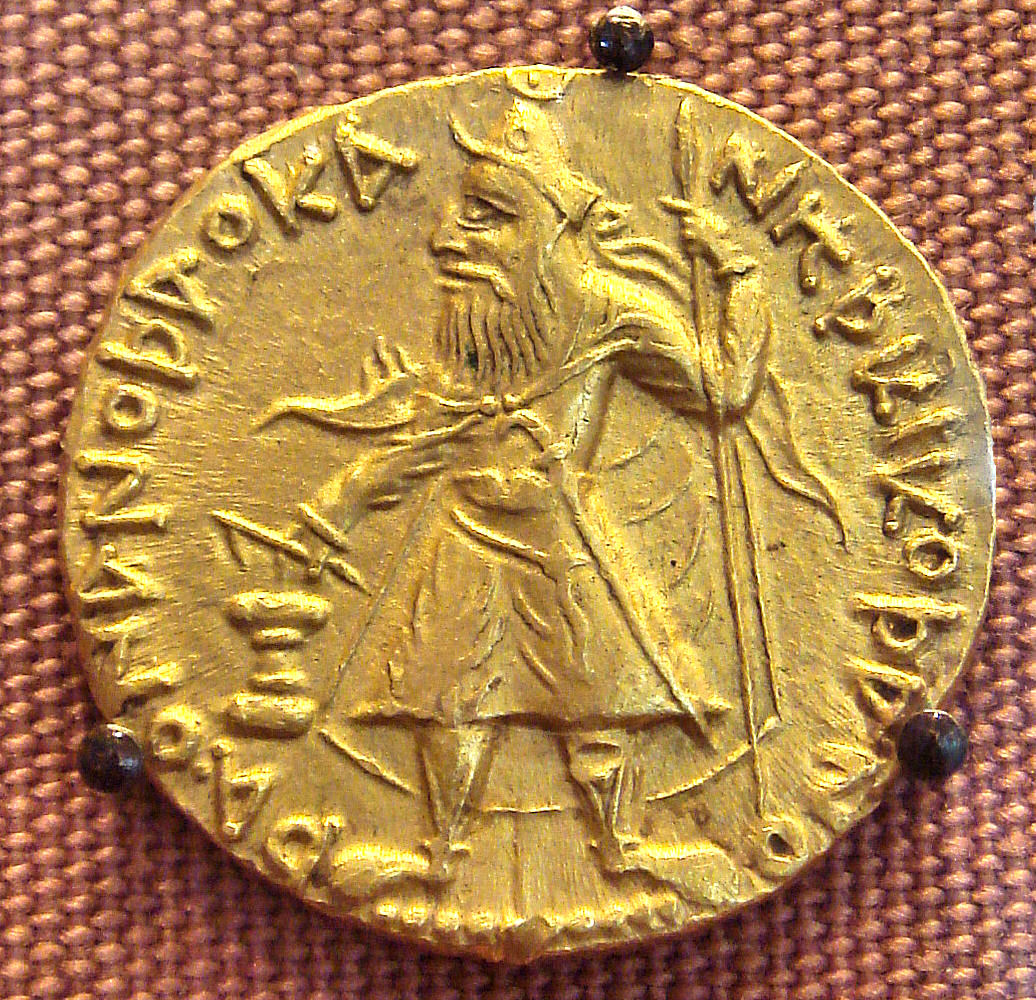
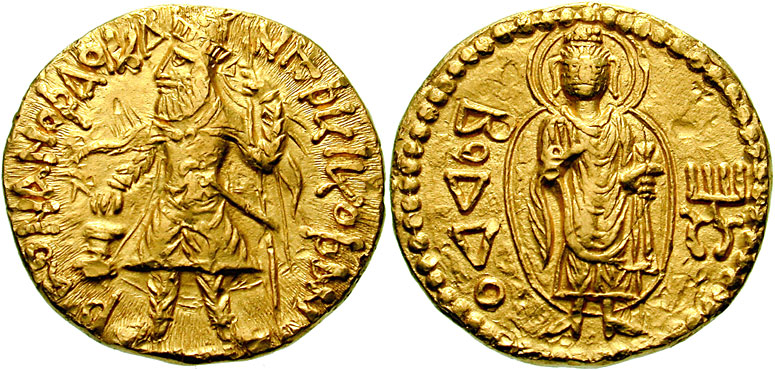
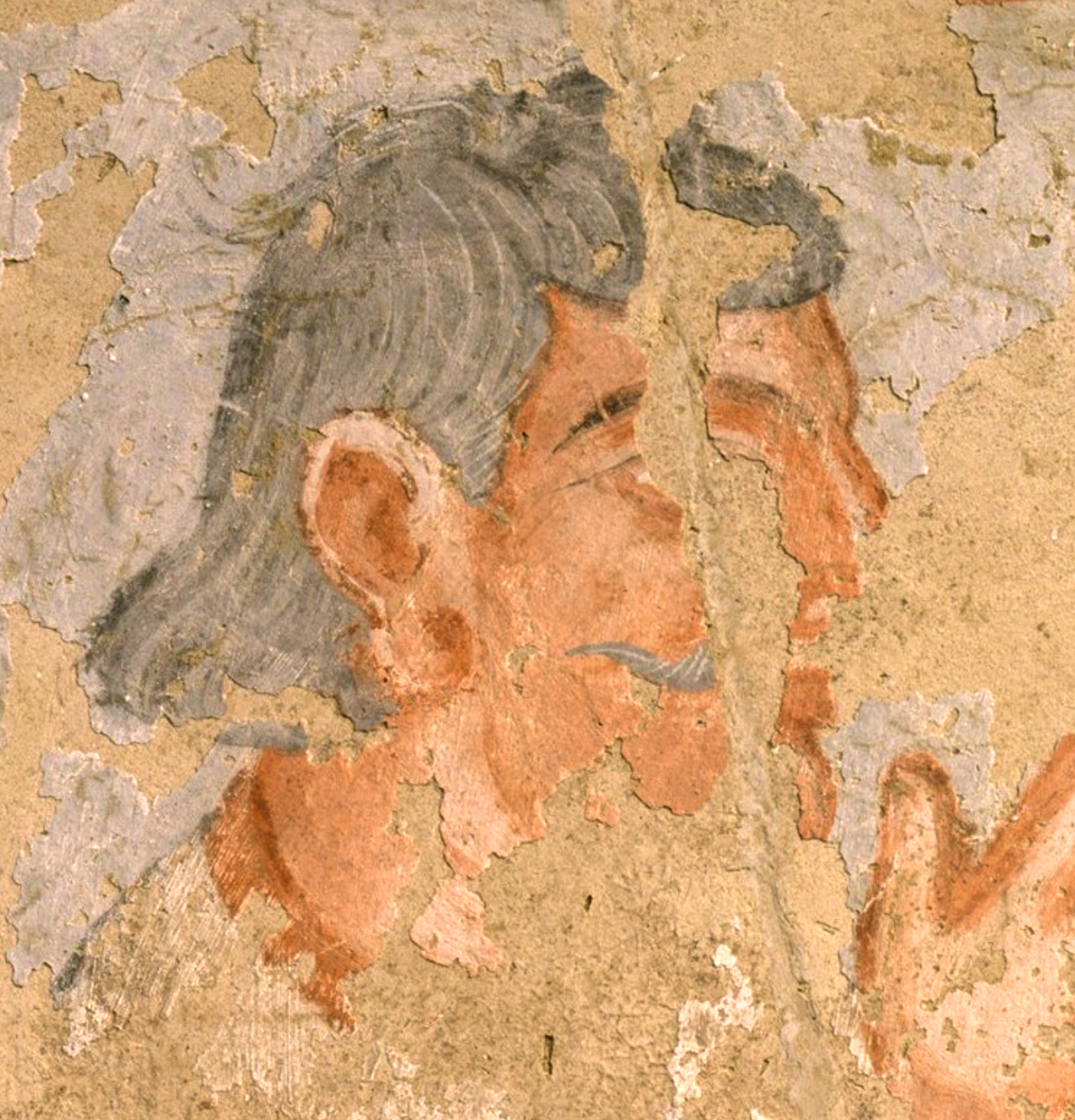
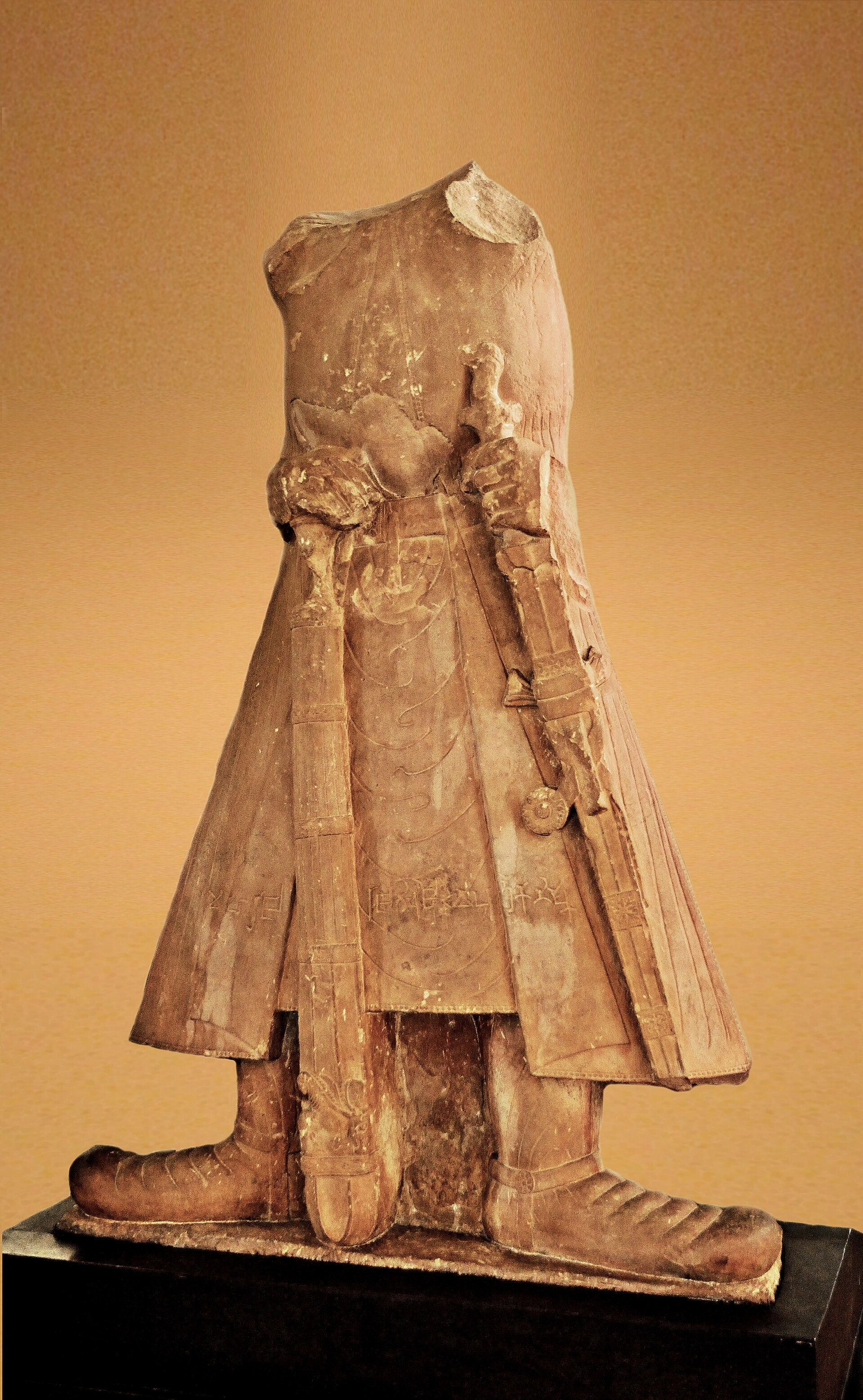
Kanishka I, also known as Kanishka the Great, was an emperor of the Kushan dynasty, under whose reign (c. 127–150 CE) the empire reached its zenith. He is famous for his military, political, and spiritual achievements. A descendant of Kujula Kadphises, founder of the Kushan Empire, Kanishka came to rule an empire extending from Central Asia and Gandhara to Pataliputra in the Gangetic plains. The main capital of his empire was located at Puruṣapura (Peshawar) in Gandhara, with another major capital at Mathura. Coins of Kanishka were found at Tripuri (present-day Jabalpur).
Although he never converted to the religion, his conquests and patronage of Buddhism played an important role in the development of the Silk Road, and in the transmission of Mahayana Buddhism from Gandhara across the Karakoram range to China. Around 127 CE, he replaced Greek with Bactrian as the official language of administration in the empire.
Earlier scholars believed that Kanishka ascended the Kushan throne in 78 CE, and that this date was used as the beginning of the Saka calendar era. However, historians no longer regard this date as that of Kanishka's accession. Falk estimates that Kanishka came to the throne in 127 CE.
Text from Wikipedia, licensed CC BY-SA 4.0.