No. 191
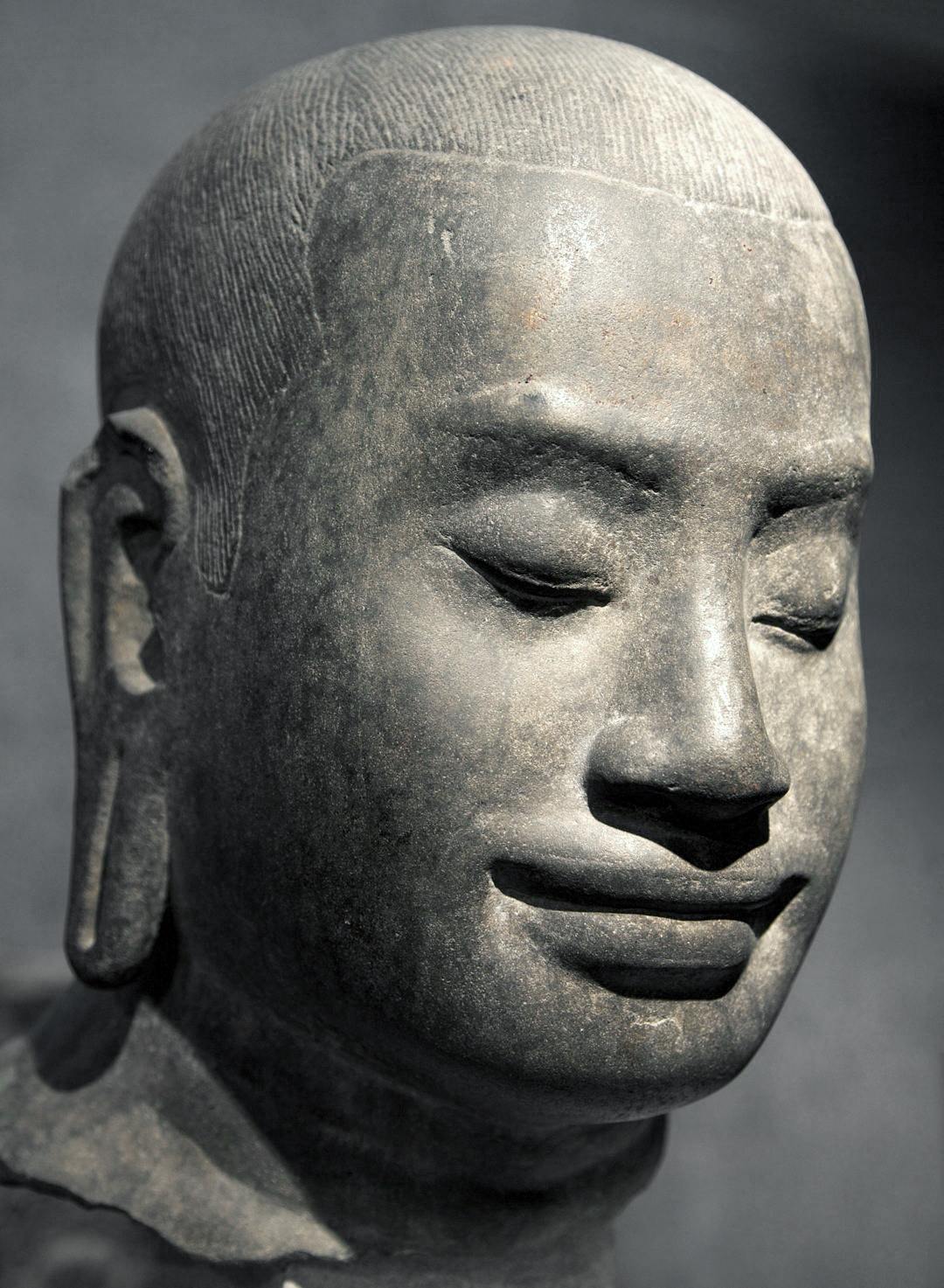
Jayavarman VII

- Where
- Khmer Empire
- Culture
- Khmer Empire
- Lived
- reigned 1181-1218
- Why they matter
- Built Angkor Thom and the stone faces of the Bayon.
- Fate
- The empire weakened after his reign.

Lyra Kael can take you here on the globe, tell you the story out loud and answer your questions. Start the time jump.
Background
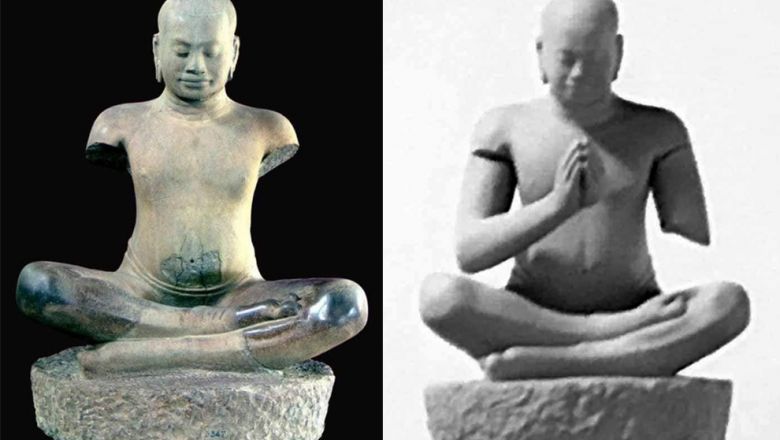
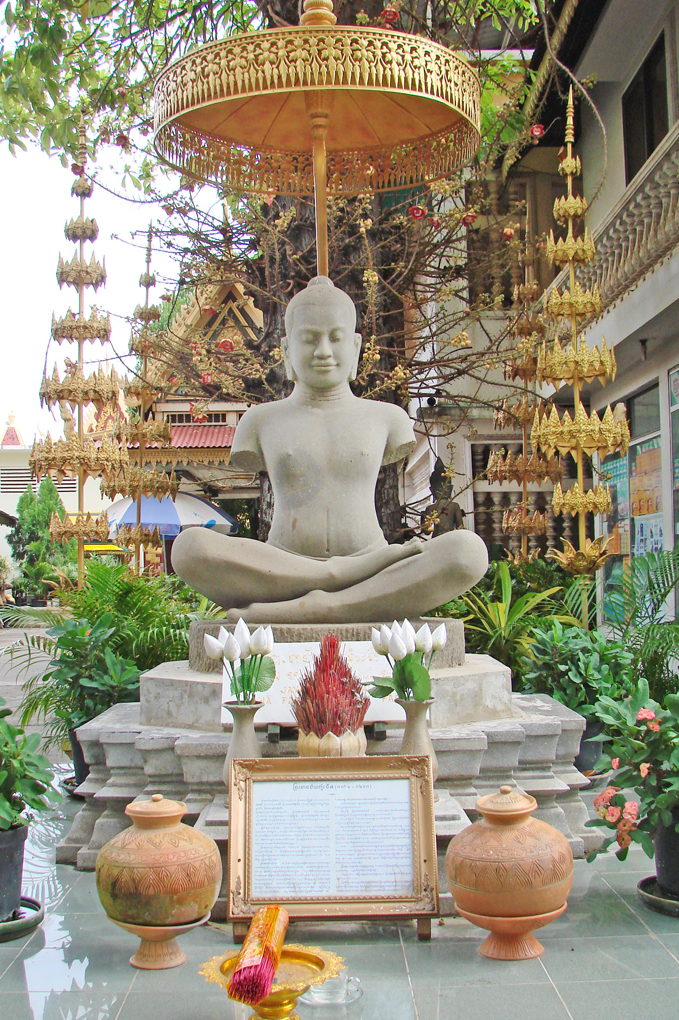
Jayavarman VII (Khmer: ព្រះបាទជ័យវរ្ម័នទី៧, lit. 'victory armor'), known posthumously as Mahaparamasaugata (1122–1218), was king of the Khmer Empire. He was the son of King Dharanindravarman II (r. 1150–1160) and Queen Sri Jayarajacudamani. He was the first Khmer king devoted to Buddhism; only one other had been a Buddhist. He built the Bayon as a monument to Buddhism. Historians generally consider Jayavarman VII the most powerful of the Khmer monarchs. His government built many projects, including hospitals, highways, rest houses, and temples. With Buddhism as his motivation, Jayavarman VII is credited with introducing a welfare state that served the Khmer people's physical and spiritual needs.
Text from Wikipedia, licensed CC BY-SA 4.0.