No. 176
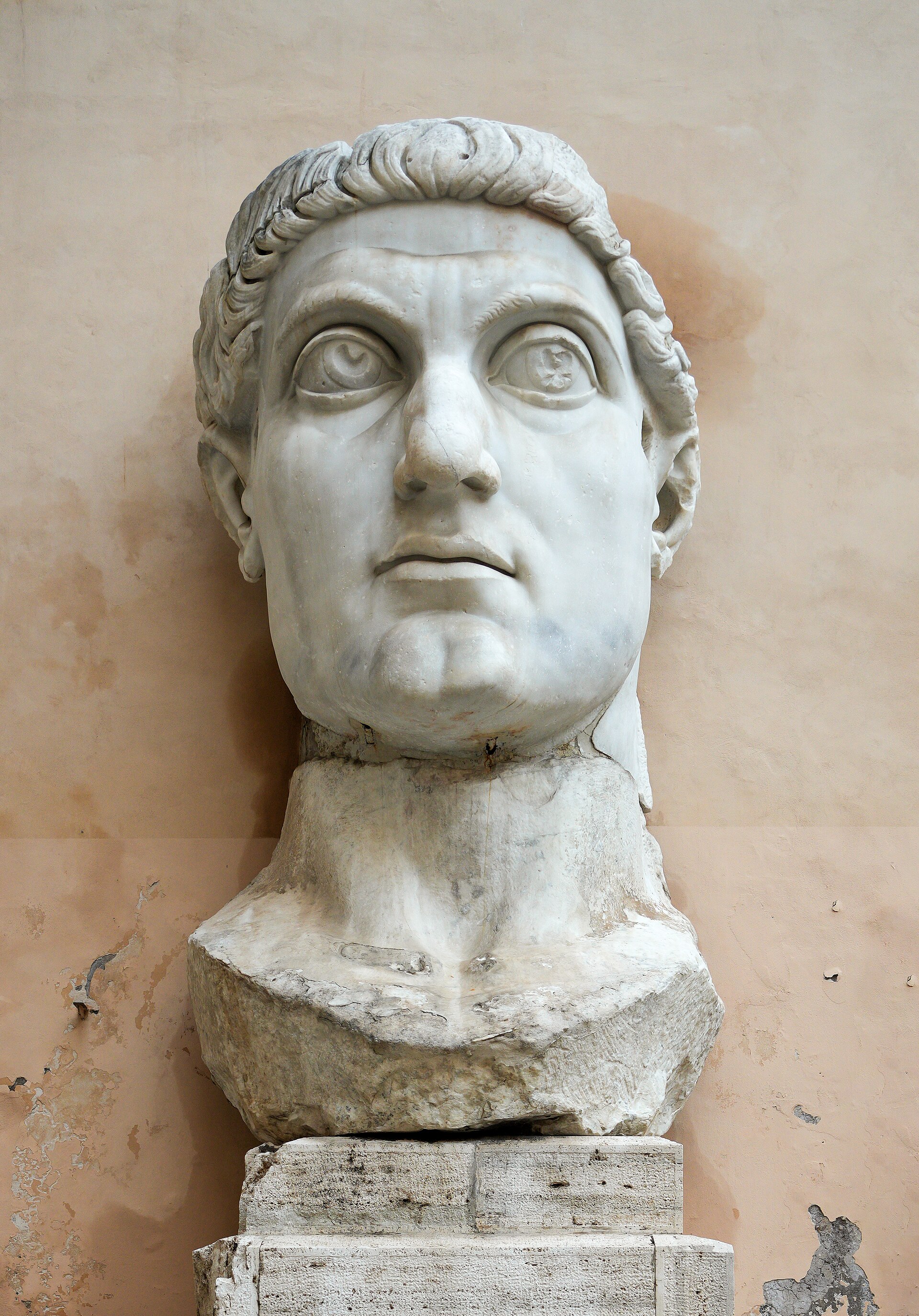
Constantine the Great

- Where
- Rome
- Culture
- Rome
- Lived
- 272-337 CE
- Why they matter
- The first Christian emperor, who founded Constantinople.
- Fate
- Baptized on his deathbed.

Lyra Kael can take you here on the globe, tell you the story out loud and answer your questions. Start the time jump.
Background
Constantine I (27 February 272 – 22 May 337), also known as Constantine the Great, was Roman emperor from AD 306 to 337 and the first Roman emperor to convert to Christianity. He played a pivotal role in elevating the status of Christianity in the Roman Empire, the Edict of Milan decriminalising Christian practice and ceasing Christian persecution. This was a turning point in the Christianisation of the Roman Empire. He founded the city of Constantinople (now Istanbul) and made it the capital of the Empire, which it remained for over a millennium.
Born in Naissus, a city located in the province of Moesia Superior (now Niš, Serbia), Constantine was the son of Flavius Constantius, a Roman army officer from Moesia Superior, who would become one of the four emperors of the Tetrarchy. His mother, Helena, was a Greek woman of low birth, probably from Bithynia. Later canonised as a saint, she is credited for the conversion of her son in some traditions, though others believe that Constantine converted her. He served with distinction under emperors Diocletian and Galerius. He began his career by campaigning in the eastern provinces against the Persians, before being recalled to the west in AD 305 to fight with his father in the province of Britannia. After his father's death in 306, Constantine was proclaimed as augustus (emperor) by his army at Eboracum (York, England). He eventually emerged victorious in the civil wars of the Tetrarchy against the emperors Maxentius and Licinius to become the sole ruler of the Roman Empire by 324.
Upon his accession, Constantine enacted many reforms to strengthen the empire. He restructured the government, separating civil and military authorities. To combat inflation, he introduced the solidus, a new gold coin that became the standard for Byzantine and European currencies for more than a thousand years. He disbanded the Praetorian Guard, which had supported Maxentius. The Roman army was reorganised to consist of mobile units (comitatenses), often around the emperor, to serve on campaigns against external enemies or Roman rebels, and frontier-garrison troops (limitanei) who could counter barbarian raids but were less and less effective against full-scale barbarian invasions. Constantine pursued campaigns against the tribes on the Roman frontiers—such as the Franks, the Alemanni, the Goths, and the Sarmatians—and resettled territor
Text from Wikipedia, licensed CC BY-SA 4.0.