No. 100
Chan Chan

- Where
- Peru
- Built by
- Chimu kingdom
- Era
- 900-1470
- Known for
- The largest adobe city ever built.
- How it ended
- Conquered by the Inca around 1470.

Lyra Kael can take you here on the globe, tell you the story out loud and answer your questions. Start the time jump.
Background
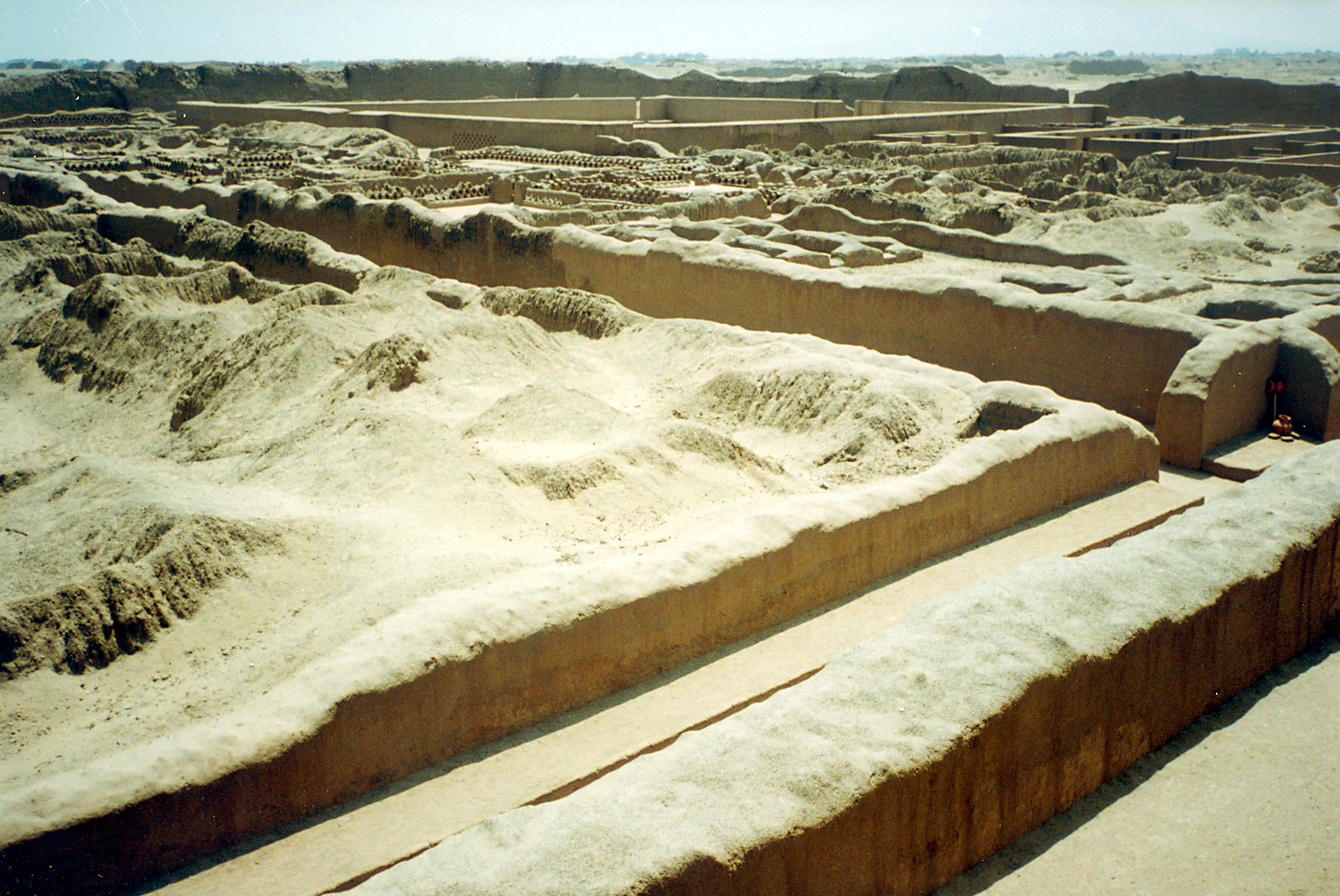
Chan Chan (Spanish pronunciation: [tʃaɲ.ˈtʃaŋ]), sometimes called Chimor, was the capital city of the Chimor kingdom, a pre-Columbian era culture in South America. The city is now an archeological site in the department of La Libertad five kilometers (3.1 mi) west of Trujillo, Peru.
Chan Chan is located in the mouth of the Moche Valley and was the capital of the historical empire of the Chimor from 900 to 1470, when they were defeated and incorporated into the Inca Empire. Chimor, a conquest state, developed from the Chimú culture that established itself along the Peruvian coast around 900 CE.
Chan Chan is in a particularly arid section of the coastal desert of northern Peru. Due to the lack of rain in this area, the major source of nonsalted water for Chan Chan is in the form of rivers carrying surface runoff from the Andes. This runoff allows for control of land and water through irrigation systems.
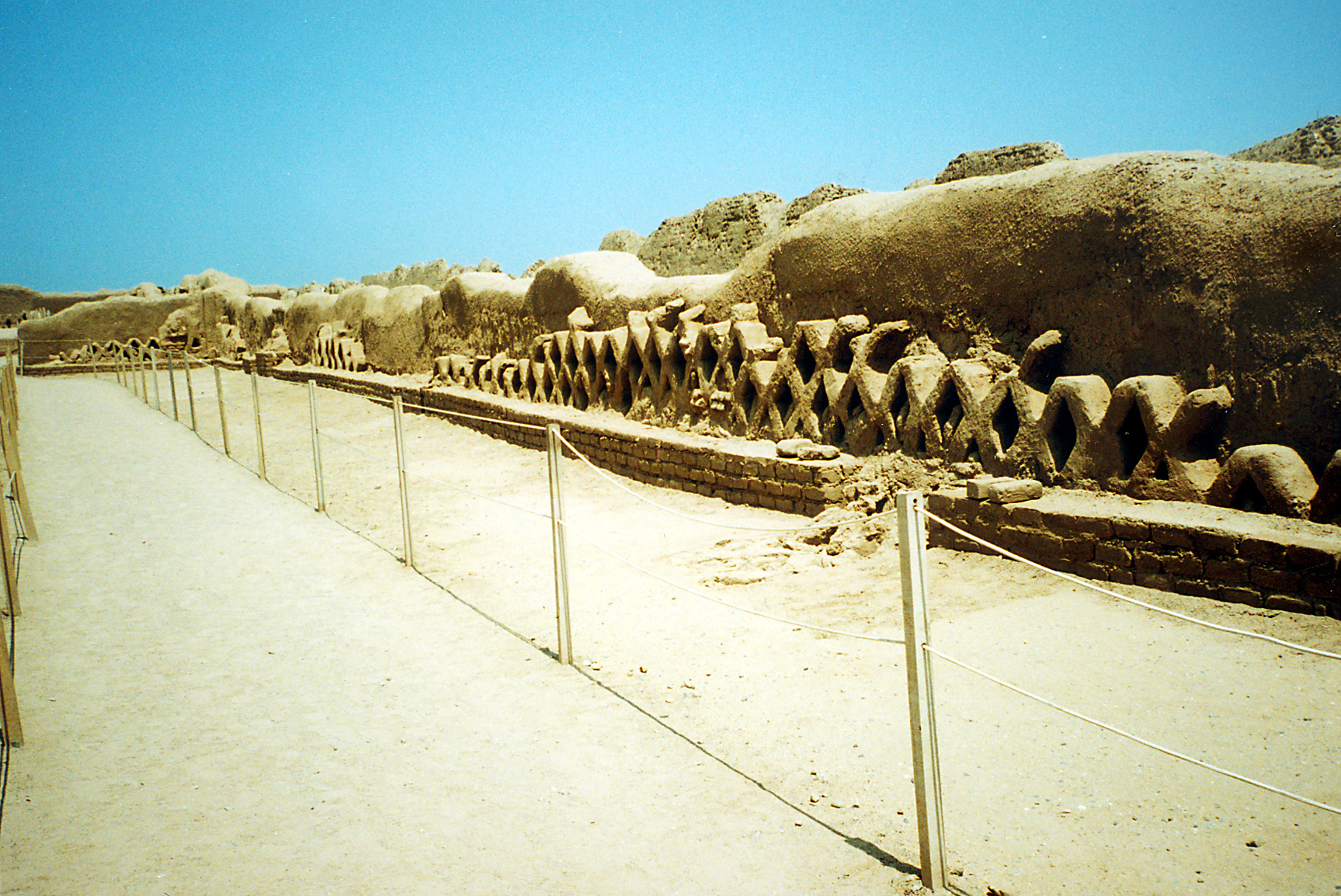
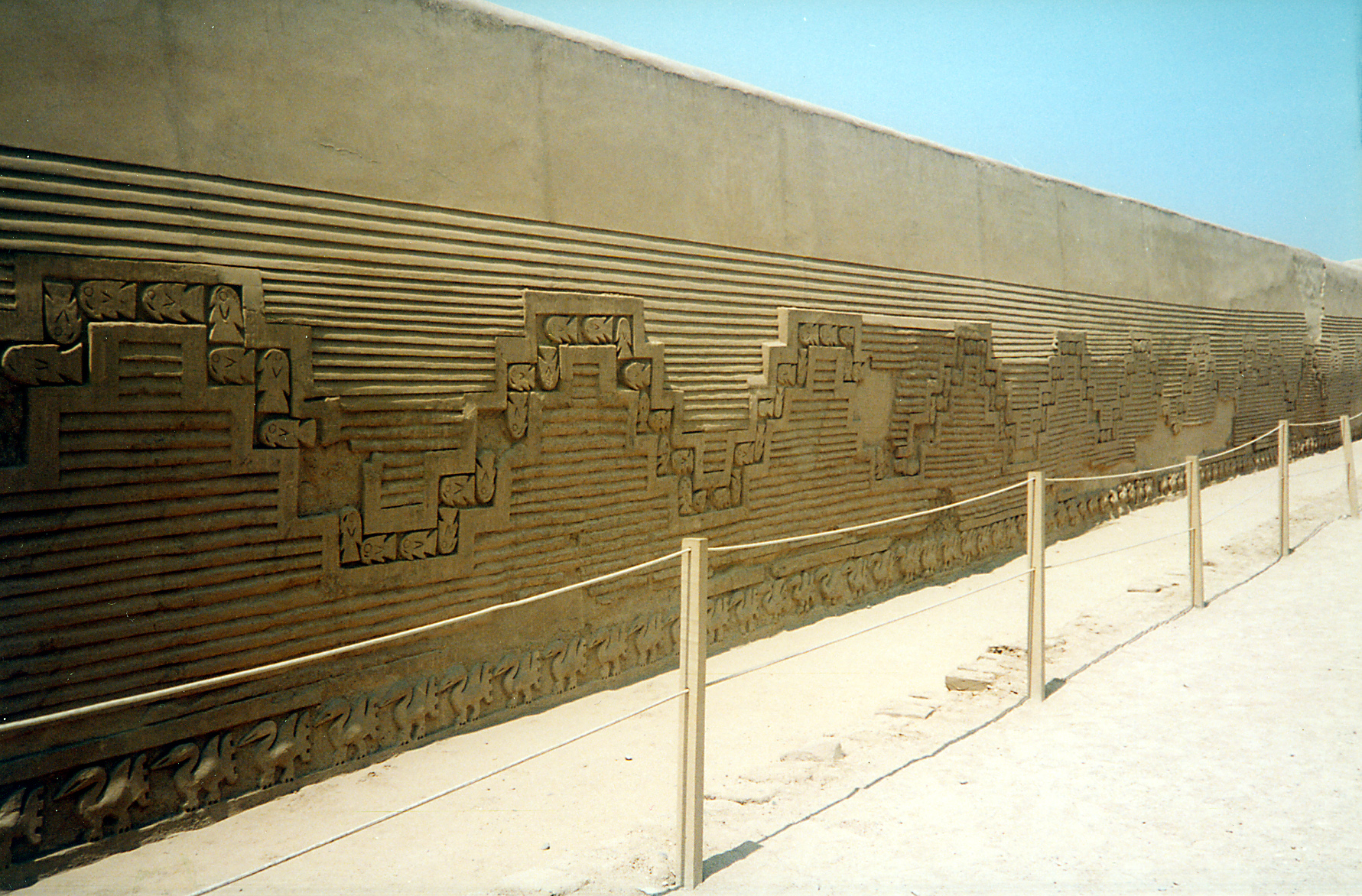
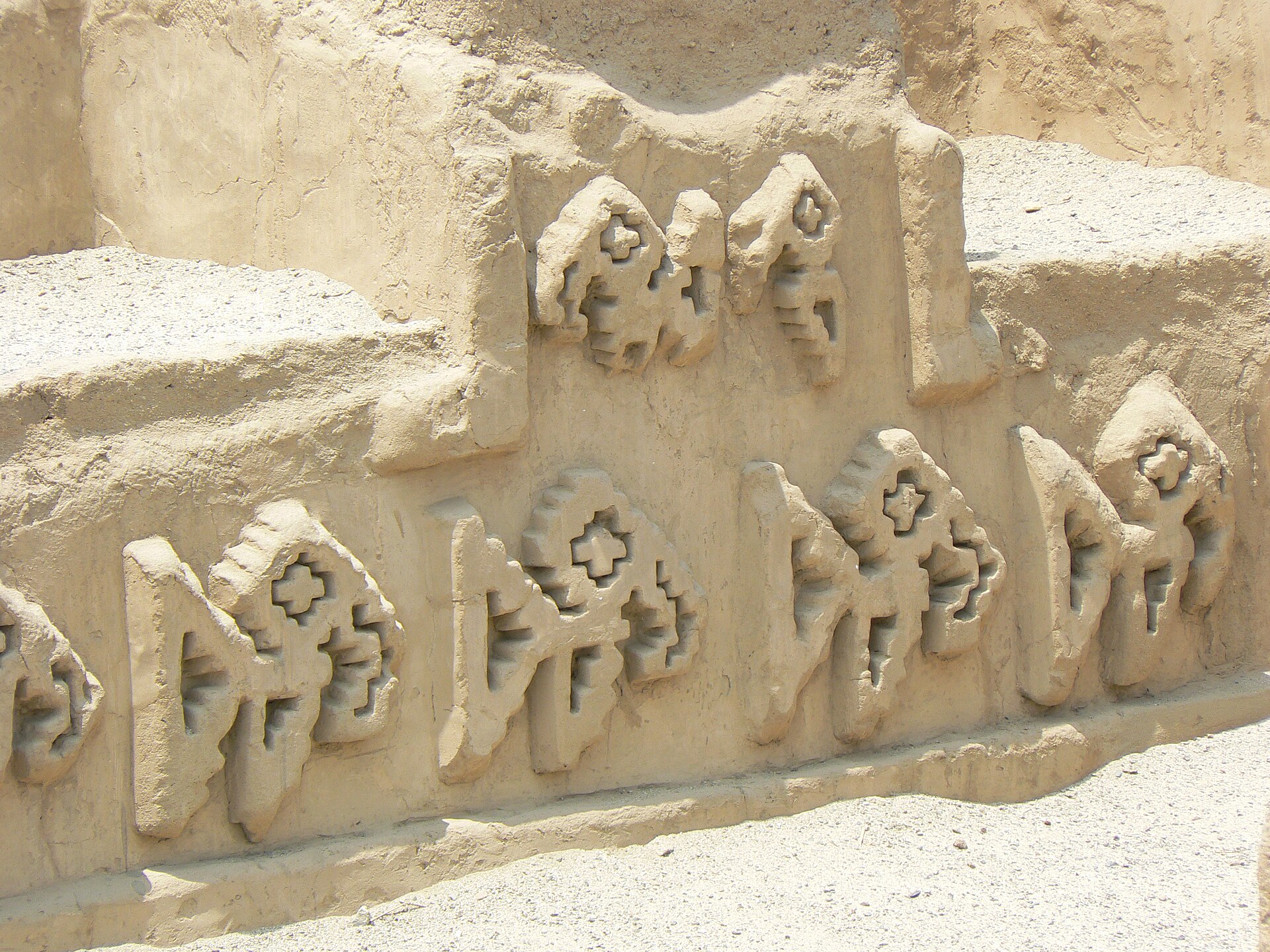
The city of Chan Chan spanned 20 square kilometers (7.7 mi2; 4,900 acres) and had a dense urban center of six square kilometers (2.3 mi2; 1,500 acres) which contained extravagant ciudadelas. Ciudadelas were large architectural masterpieces which housed plazas, storerooms, and burial platforms for the royals. The splendor of these ciudadelas suggests their association with the royal class. Housing for the lower classes of Chan Chan's hierarchical society are known as small, irregular agglutinated rooms (SIARs). Because the lower classes were often artisans whose role in the empire was to produce crafts, many of these SIARs were used as workshops.
Text from Wikipedia, licensed CC BY-SA 4.0.