No. 34
Baalbek

- Where
- Lebanon
- Built by
- Romans on a Phoenician site
- Era
- 1st-3rd century CE
- Known for
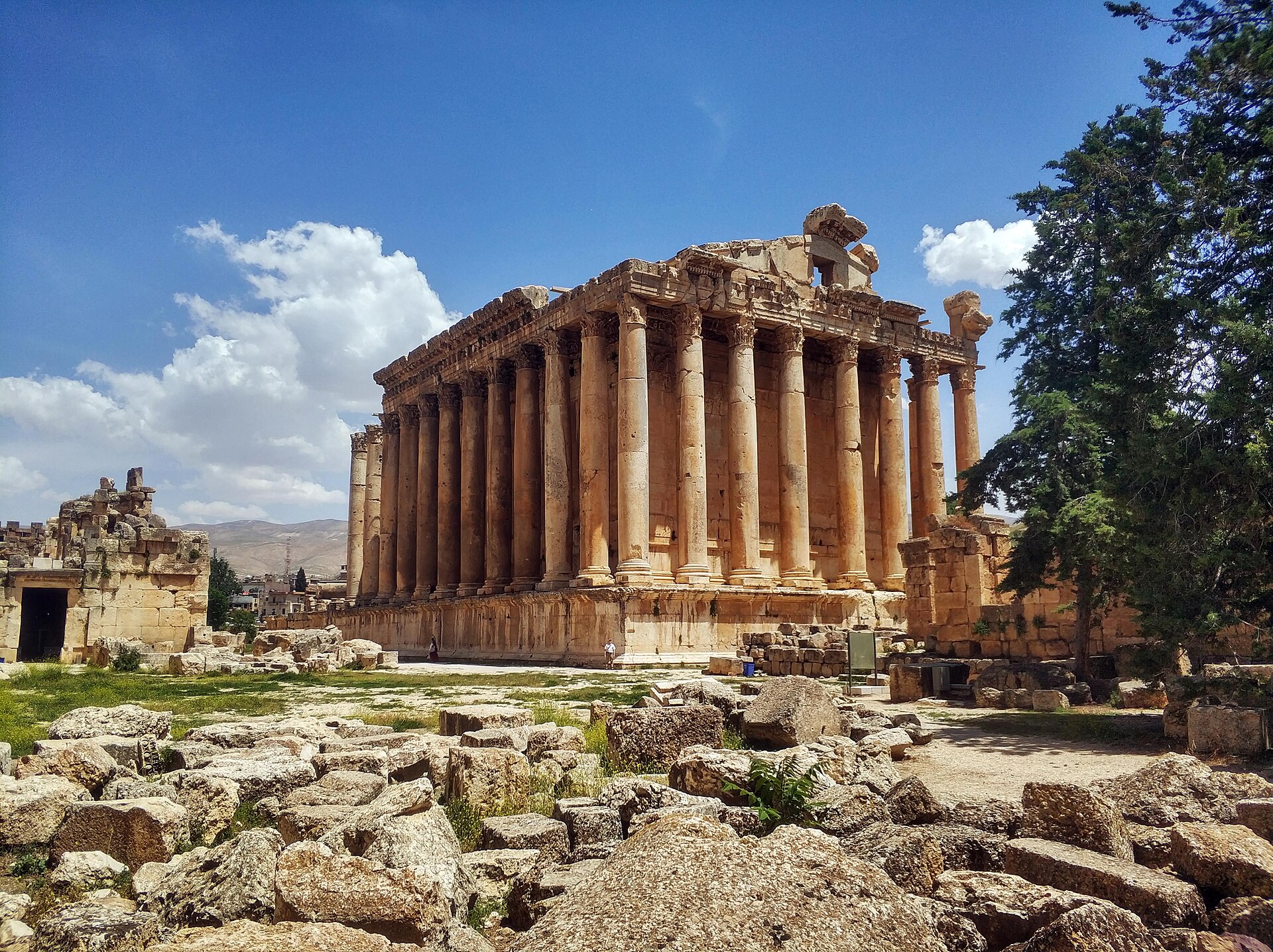
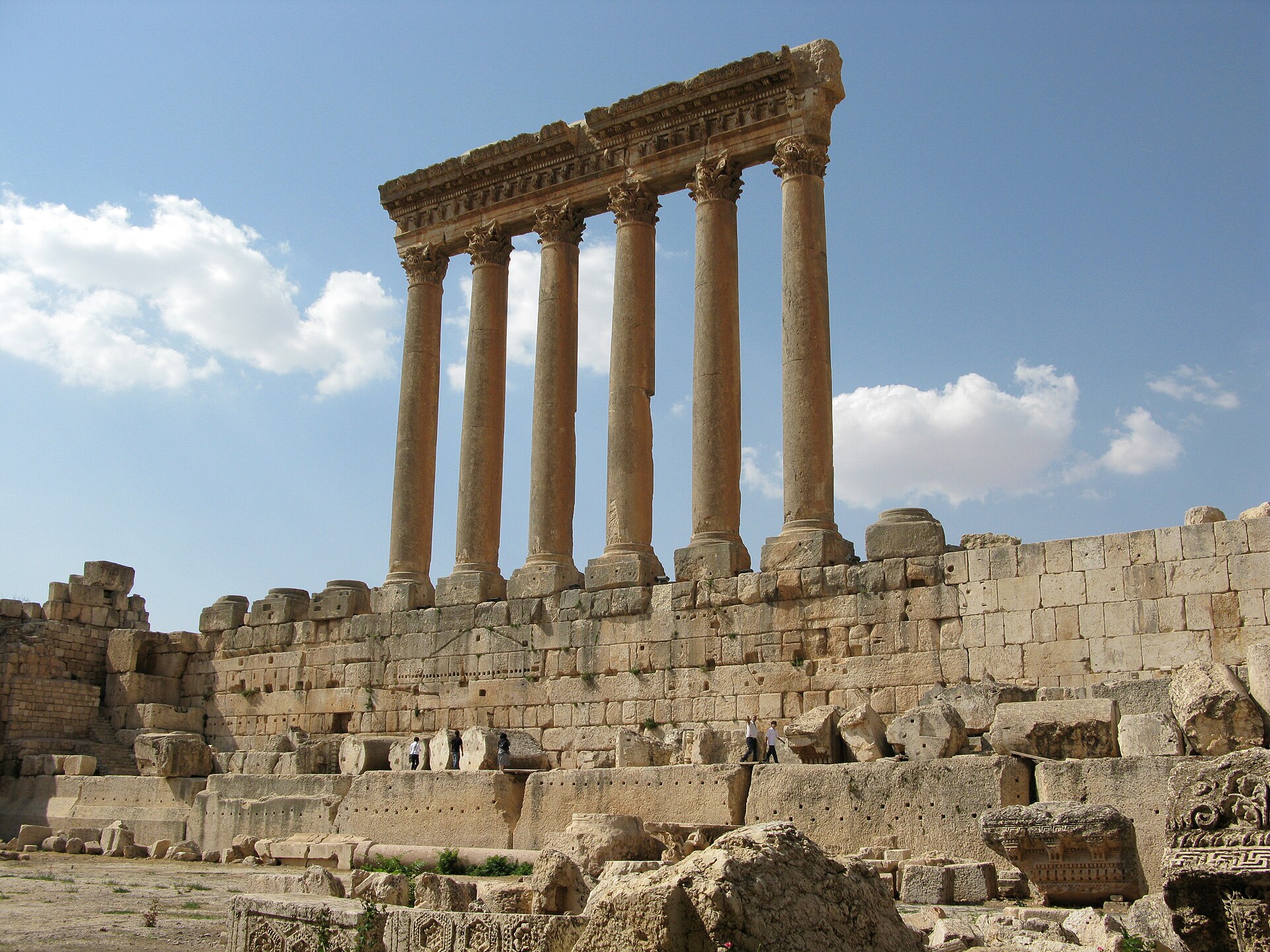
- The Temple of Jupiter, set on stone blocks weighing about 800 tons.
- How it ended
- Temples were closed under Christian emperors and earthquakes toppled columns.

Lyra Kael can take you here on the globe, tell you the story out loud and answer your questions. Start the time jump.
Background
Baalbek ( BAHL-bek, BAY-əl-bek; Arabic: بَعْلَبَكّ, romanized: Baʿlabakk, Lebanese: Bʿalbak; Syriac: ܒܥܠܒܟ; Phoenician: 𐤁𐤏𐤋𐤁𐤊, romanized: bʿlbk) is a city located east of the Litani River in Lebanon's Beqaa Valley, about 67 km (42 mi) northeast of Beirut. It is the capital of Baalbek-Hermel Governorate. In 1998, the city had a population of 82,608. Most of the population consists of Shia Muslims, followed by Sunni Muslims and Christians; in 2017, there was also a large presence of Syrian refugees.
Baalbek's history dates back at least 11,000 years. After Alexander the Great conquered the city in 334 BCE, he renamed it Heliopolis (Ancient Greek: Ἡλιούπολις, romanized: Hēlioúpolis, lit. 'Sun City'; Syriac: ܐܝܠܝܘܦܘܠܝܣ, romanized: ʾĪliyōp̄ōlīs). The city flourished under Roman rule. However, it underwent transformations during the Christianization period and the subsequent rise of Islam following the Arab conquest in the 7th century. In later periods, the city was sacked by the Mongols and faced a series of earthquakes, resulting in a decline in importance during the Ottoman and modern periods.
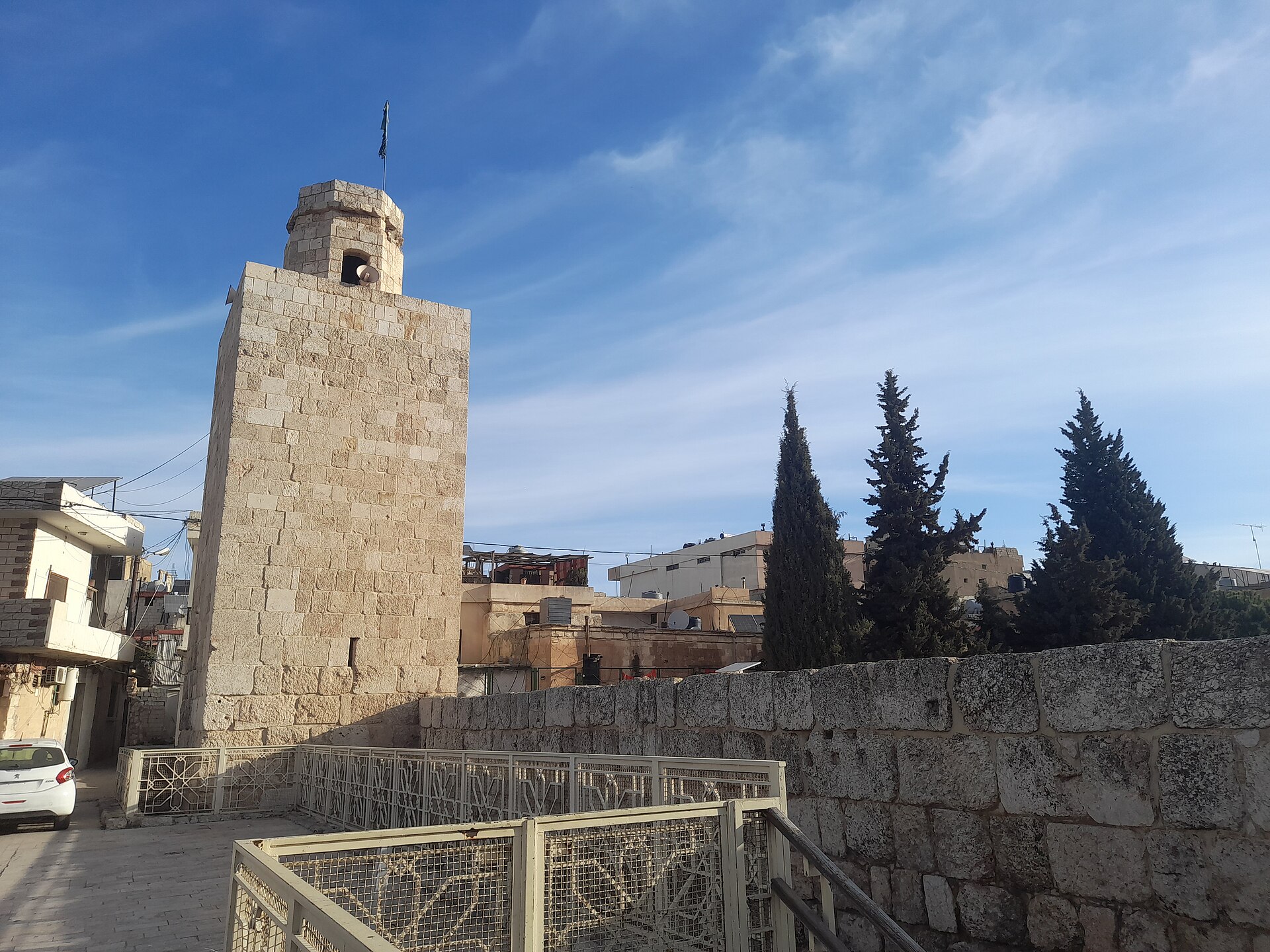
In the modern era, Baalbek is a tourist destination. It is known for the ruins of the Roman temple complex, which includes the Temple of Bacchus and the Temple of Jupiter, and was inscribed in 1984 as a UNESCO World Heritage site. Other tourist attractions are the Great Umayyad Mosque, the Baalbek International Festival, the mausoleum of Sit Khawla, and a Roman quarry site named Hajar al-Hibla. Baalbek's tourism sector has encountered challenges due to conflicts in Lebanon, particularly the 1975–1990 civil war, spillover from the Syrian civil war between 2011 and 2017, and the Israel–Hezbollah conflict since 2023.
Baalbek is considered to be part of Hezbollah's heartland and is known to be their political stronghold. During the Israeli occupation of Southern Lebanon (1982–2000), the group managed to overpower the Lebanese army in Baalbek and gain control of the city. The settlement was subsequently used as a base to recruit and train men for attacks against Israeli forces. Hezbollah continues to hold significant political influence and popular support in Baalbek. In the 2022 Lebanese general election the Amal-Hezbollah list won 9 out of 10 seats in the Baalbek-Hermel Governorate.
Israel has conducted numerous airstrikes and raids against military and civilian targets in t
Text from Wikipedia, licensed CC BY-SA 4.0.