No. 131
Antikythera shipwreck

- Where
- Greece
- Built by
- Greek traders of the Roman era
- Era
- 60s BCE
- Known for
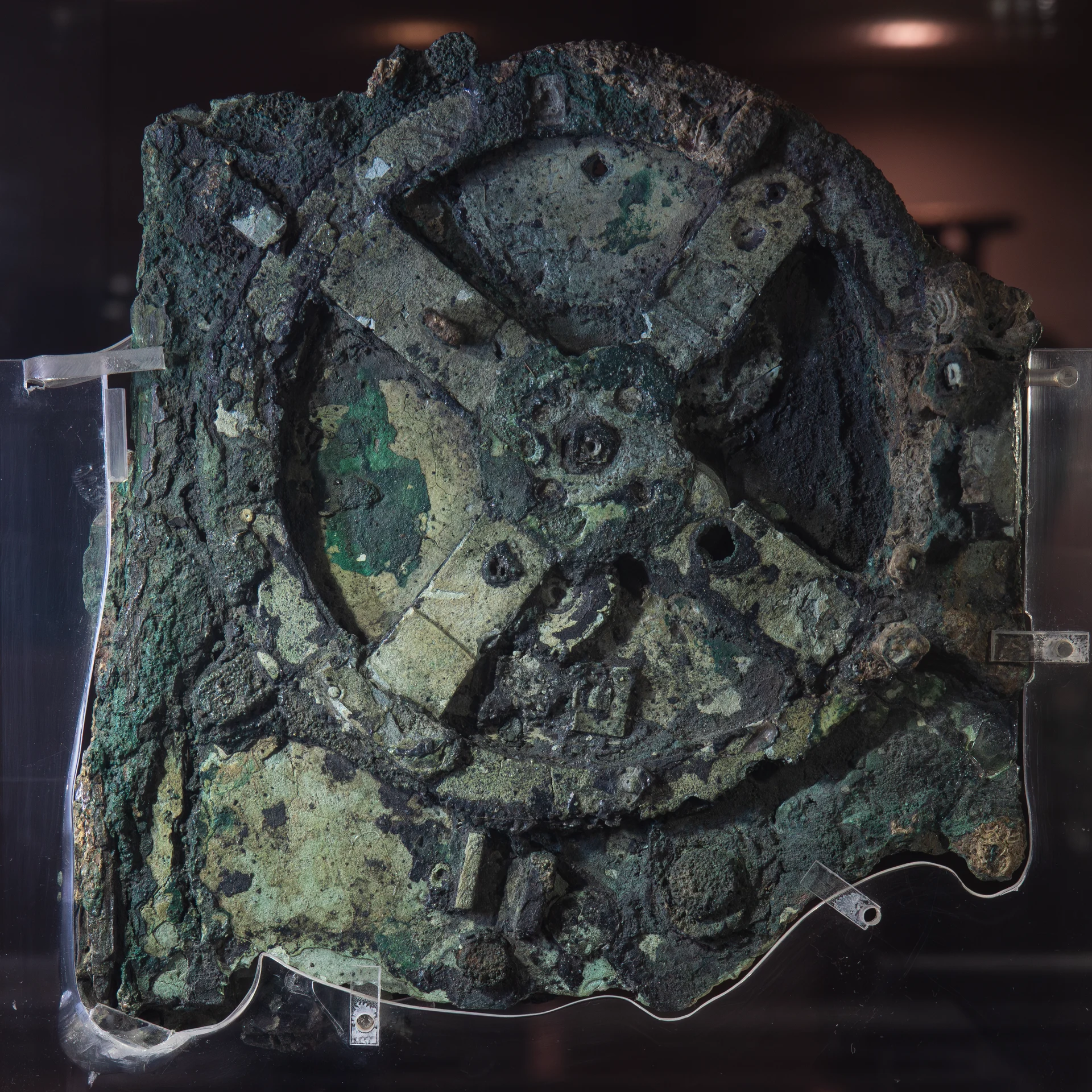
- The Antikythera mechanism, an ancient gear-driven calculator.
- How it went under
- It sank in a storm.




Lyra Kael can take you here on the globe, tell you the story out loud and answer your questions. Start the time jump.
Background
The Antikythera wreck (Greek: ναυάγιο των Αντικυθήρων, romanized: navágio ton Antikythíron) is a Roman-era shipwreck dating from the second quarter of the first century BC.
It was discovered by sponge divers off Point Glyphadia on the Greek island of Antikythera in 1900.
The wreck yielded numerous statues, coins, and other artifacts dating back to the fourth century BC, as well as the severely corroded remnants of a device many regard as the world's oldest known analog computer, the Antikythera mechanism. These ancient artifacts, works of art, and elements of the ship are now on display at the National Archaeological Museum of Athens.
Text from Wikipedia, licensed CC BY-SA 4.0.