No. 78
Ajanta Caves

- Where
- India
- Built by
- Buddhist monks
- Era
- 200 BCE-480 CE
- Known for
- Painted cave monasteries.
- How it ended
- Abandoned to the jungle and found by a British officer on a tiger hunt in 1819.

Lyra Kael can take you here on the globe, tell you the story out loud and answer your questions. Start the time jump.
Background
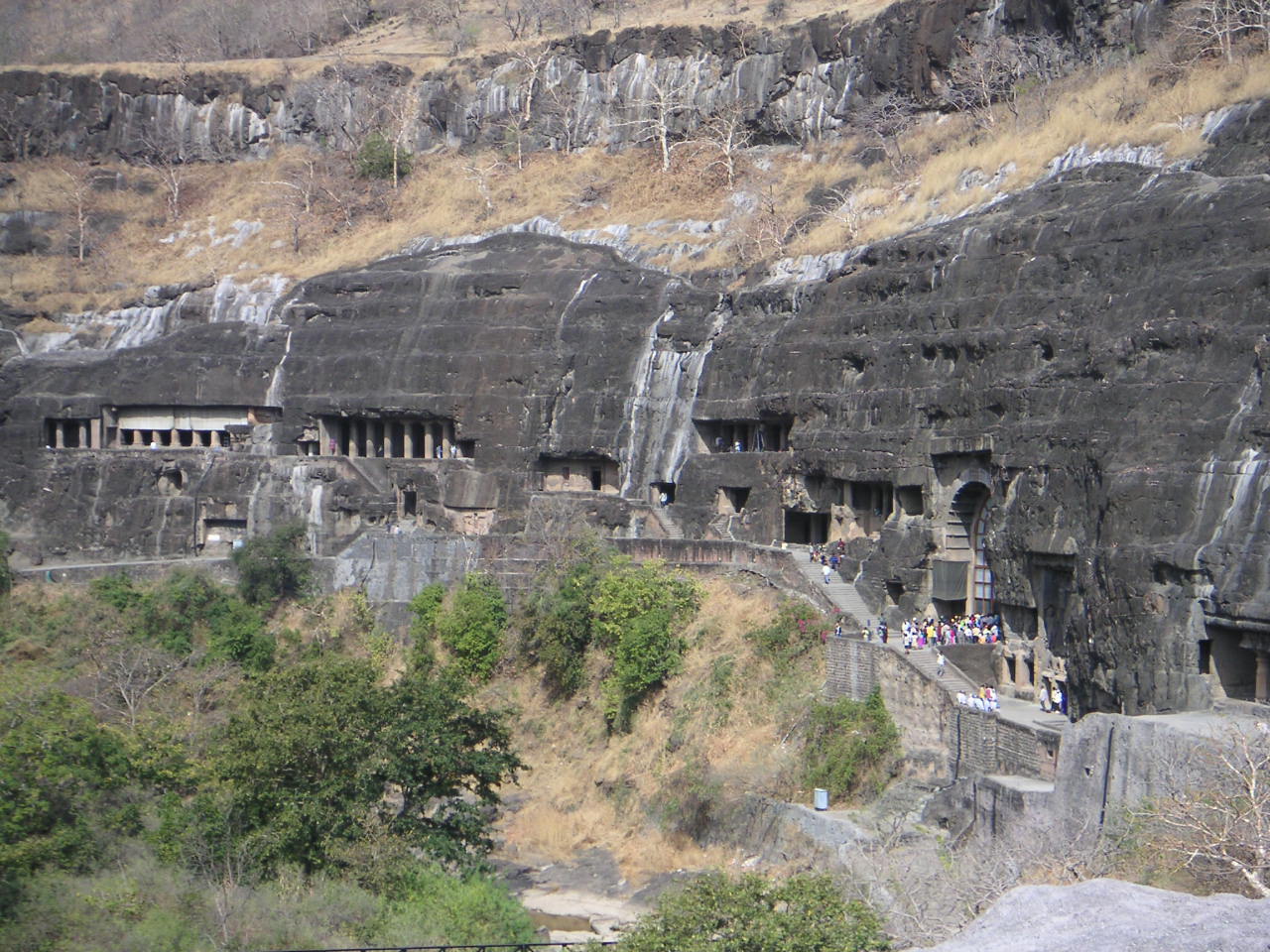
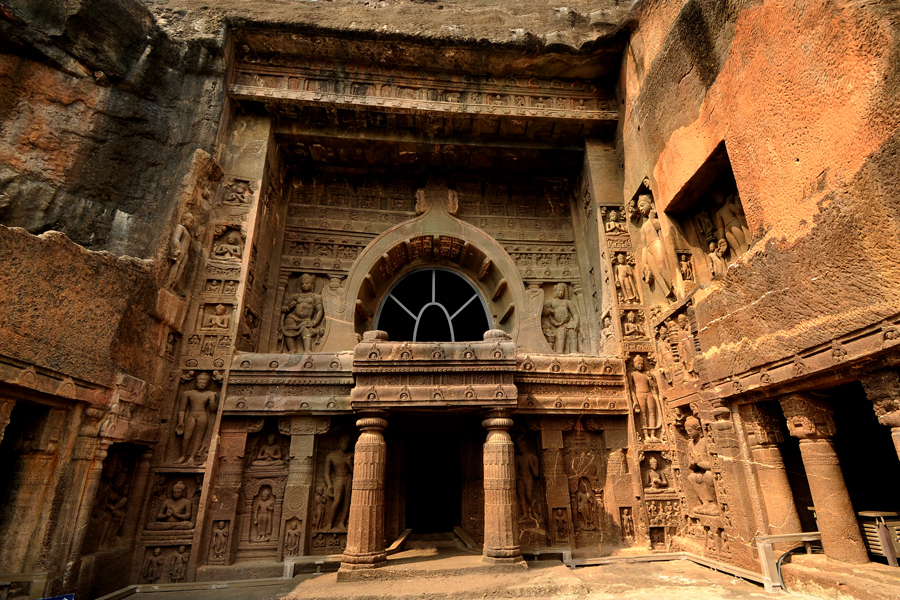
The Ajanta Caves are 30 rock-cut Buddhist cave monuments dating from the second century BCE to about 480 CE in Aurangabad district of Maharashtra state in India. Ajanta Caves are a UNESCO World Heritage Site. Universally regarded as masterpieces of Buddhist religious art, the caves include paintings and rock-cut sculptures, described as among the finest surviving examples of ancient Indian art, particularly expressive paintings that present emotions through gesture, pose and form.
The caves were built in two phases, the first starting around the second century BCE and the second occurring from 400 to 650 CE, according to older accounts, or in a brief period of 460–480 CE according to later scholarship.
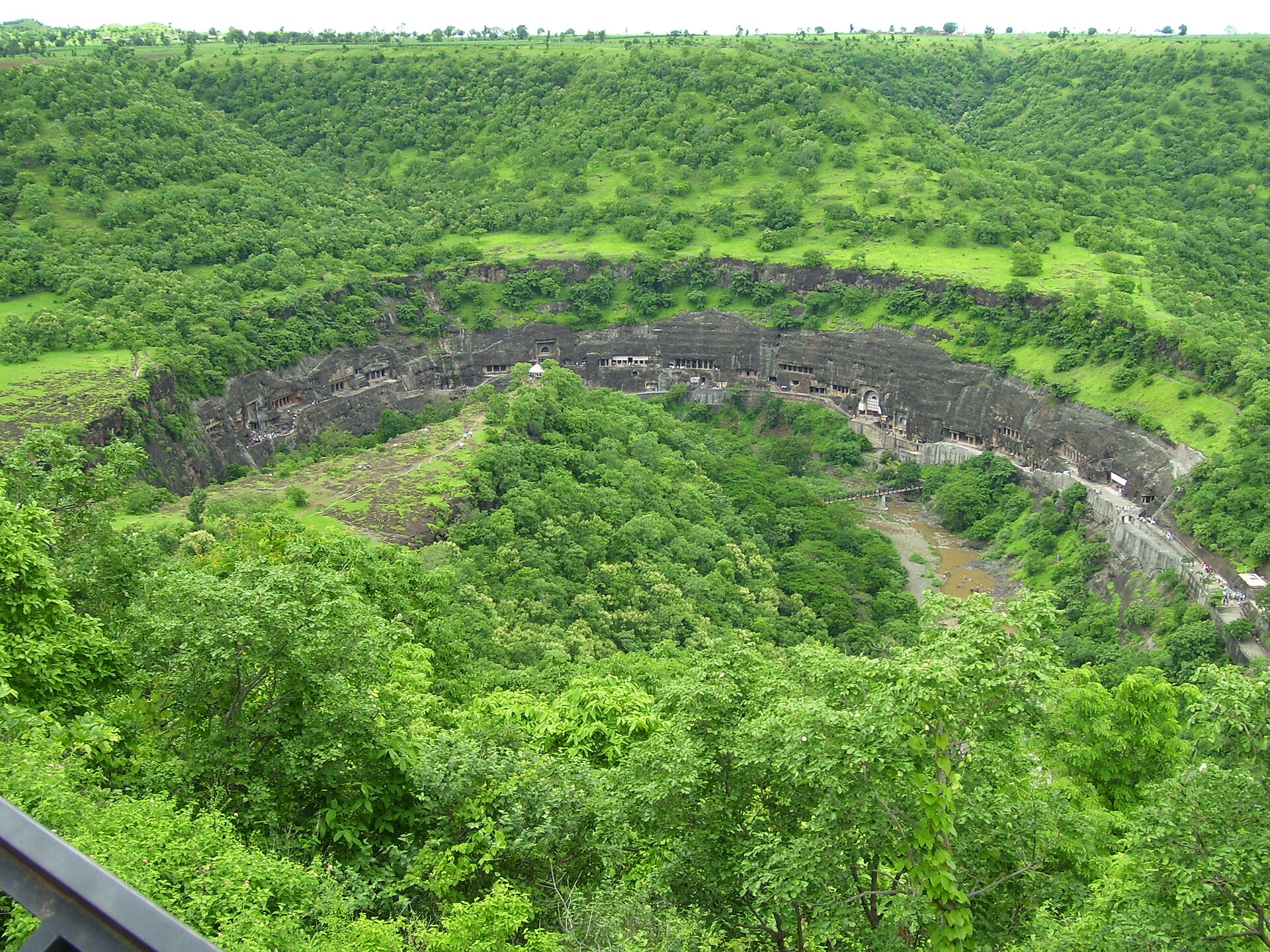
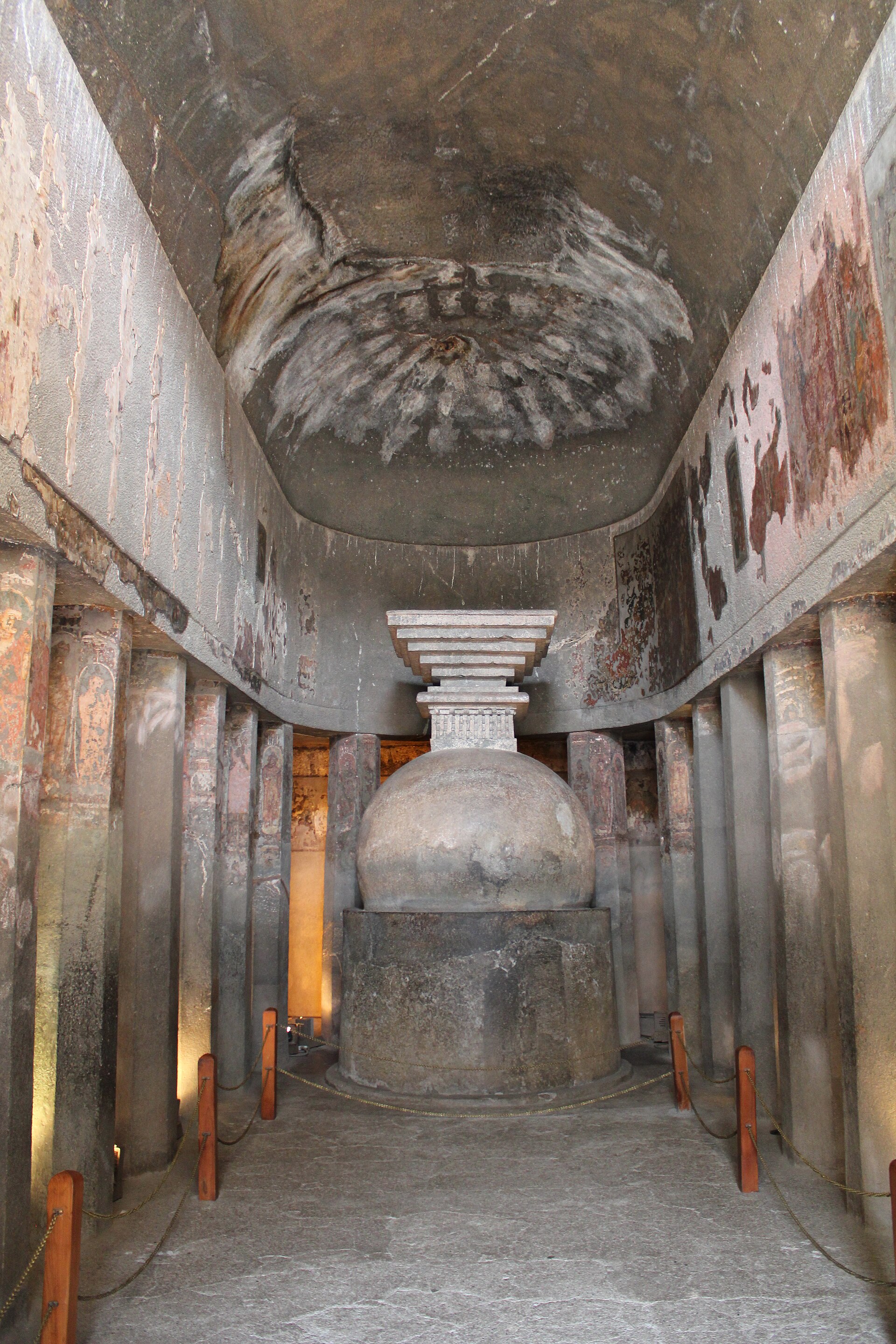
The Ajanta Caves constitute ancient monasteries (Viharas) and worship-halls (Chaityas) of different Buddhist traditions carved into a 75-metre (246 ft) wall of rock. The caves also present paintings depicting the past lives and rebirths of the Buddha, pictorial tales from Aryasura's Jatakamala, and rock-cut sculptures of Buddhist deities. Textual records suggest that these caves served as a monsoon retreat for monks, as well as a resting site for merchants and pilgrims in ancient India. While vivid colours and mural wall paintings were abundant in Indian history as evidenced by historical records, Caves 1, 2, 16 and 17 of Ajanta form the largest corpus of surviving ancient Indian wall-paintings.
The Ajanta Caves are mentioned in the memoirs of several medieval-era Chinese Buddhist travelers. They were covered by the jungle until accidentally "discovered" and brought to contemporary attention in 1819 by Colonel John Smith during a tiger-hunting expedition on a tiger-hunting party. The caves are located in the rocky northern wall of the U-shaped gorge of the River Waghur, in the Deccan Plateau. Within the gorge are a number of waterfalls, audible from outside the caves when the river is high.
Text from Wikipedia, licensed CC BY-SA 4.0.